I remember a time when self-driving cars were only discussed and shown. On stage, they were magnificent and cool, but in conversation, they were unnerving.
They are now being incorporated into daily life. From vision to early-market growth in plain sight, they transport people on highways, operate in a few cities, and appear on TV shows.
The post I wrote in October about physical AI and the emergence of self-delivery robots is expanded upon in this piece. The discussion focused on machines moving through warehouses and sidewalks.
This one advances to a higher level. Inside the car, people, software, and society share responsibility, and systems designed to make quick decisions are trusted.
The market is very small, and we are still in the early stages. Although there aren't many major players on the list, momentum is growing.
Every year, safety measures improve, public interest grows, and authorities keep a close eye on things. This topic will transition from novelty to everyday use by 2030.
Decades of study in robotics, computer vision, and control systems led to the evolution of self-driving cars. Lane detection and basic autonomy were the main topics of early research in the 1980s.
Fast forward to the 2010s; it marked the beginning of a new chapter. Advances in sensors, GPUs, and machine learning made perception reliable enough for real roads.
Global Acceptance Is Growing
Cultural acceptance always marks success or failure with new ideas and projects. Self-driving vehicles now appear in mainstream media without explanation. Viewers see them as part of the setting rather than the story. Familiarity reduces fear.
Last week, I watched a documentary and a TV show featuring a celebrity getting into a Waymo self-driving car during a normal journey.
Immediately, I thought, "smart marketing." Because we live in an era when many people feel less fear when they see a celebrity use a product.
The general trend is fewer accidents per mile in controlled situations, even though incidents do occur
Passengers feedback on the experience as serene and calm in the cities where cars operate. The cars consistently comply with regulations and don't text or speed. That dependability is reassuring for many users.
This notion is supported by safety facts. The general trend is fewer accidents per mile in controlled situations, even though incidents do occur.
Ultimately, regardless of the transport method we use, accidents are bound to happen; the same will apply with a new process.
Transparency always helps because companies publish disengagement reports, and regulators demand disclosure. Progress then becomes measurable and more comprehensible.
Players Worth Keeping An Eye On
Waymo leads the market. Its vehicles operate in multiple cities and countries. Its strength lies in long-term data accumulation and a conservative safety culture. With billions of miles driven, Waymo focuses on passenger transport and has set the benchmark for public trust.
Super Cruise is a General Motors (GM) subsidiary developing self-driving technology. In 2023, they had to suspend operations of their robotaxis following a crash. This summer, they restarted work on Super Cruise after shifting their focus to personal autonomous vehicles rather than the robotaxi service. Its trajectory shows how difficult this market is and how resilience shapes credibility and drives you further.
Sterling Anderson, Executive VP, Global Product, and Chief Product Officer, says, "GM has long been defined by innovation at massive scale with products you can trust. Our work in autonomy builds on that legacy to deliver safe, intuitive, self-driving technology to millions around the world."
Tesla relies on consumer-scale and camera-based technologies. Its methodology encourages quick iterations and practical learning across millions of cars. Although Tesla's model blurs the distinction between autonomy and driver assistance, you will still need to maintain control. At the moment, they have limited trials on fully unsupervised services.
The Coming Debate Around Self-Driving Trucks
Passenger vehicles capture attention, people are curious, and they talk about it. Trucks will also reshape the economy. Self-driving trucks promise efficiency in long-haul logistics.
They operate on highways with predictable patterns, alleviate the driver shortage, and reduce fatigue-related accidents.
It's important to keep in mind that technology will help people before it replaces them
There will be a major discussion about this development. As pilots go to commercial readiness, these discussions will become more frequent and normal.
It's important to keep in mind that technology will help people before it replaces them. Early adoption in this industry will be driven by hybrid models, as drivers are still required to manage fleets.
Future Expectations
Firstly, regulation will mature; governments will shift from experimentation to frameworks; and clear rules and outcomes will reduce investor concerns, as without them, the industry will not move.
Secondly, as more people drive autonomous cars without any major incidents, public mistrust should decrease.
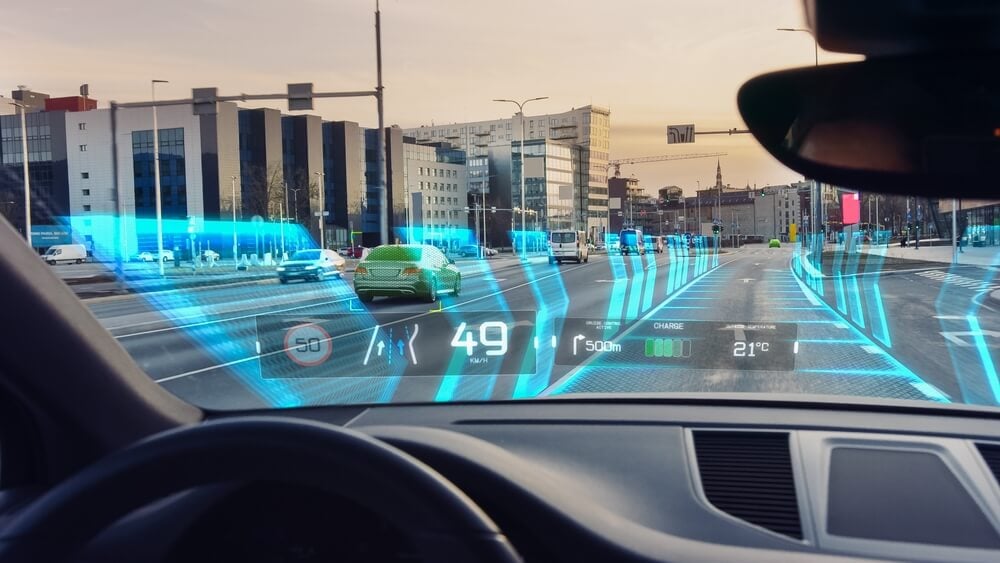 Self-driving systems will be integrated with smart infrastructure, logistics platforms, and urban planning technologies
And thirdly, self-driving systems will be integrated with smart infrastructure, logistics platforms, and urban planning technologies. A more comprehensive mobility ecosystem should include autonomy.
Every deployment should provide knowledge to the sector where human judgement is still required, but autonomy thrives.
Engineers, communicators, regulators, product leaders, and ethicists are all needed in this industry. Autonomy is a multidisciplinary issue and also a social one.
Will we see more coverage in 2026? Yes. Some optimistic, some fearful. Because the focus is on whether we build these systems in a way that people trust.
The future of mobility is evolving rapidly, and our feedback is important because it affects people's lives.
Would you get into a self-driving car or use self-driving technology in your own vehicle?
