Iranian-backed Houthi rebels entered the month-old war in the Middle East on Saturday, claiming a missile launch that Israel said it intercepted.
Pakistan said regional powers plan to meet Sunday to discuss how to end the fighting, while Iran expressed skepticism about the diplomatic efforts. And about 2,500 U.S. Marines arrived in the region.
The war has threatened global supplies of oil, natural gas and fertilizer and disrupted air travel.
Iran’s grip on the strategic Strait of Hormuz has shaken markets and prices. The United States and Israel continue to strike Iran, whose retaliatory attacks have targeted Israel and neighboring Gulf Arab states. Over 3,000 people have been killed.
The Houthis’ entry could further hurt global shipping if they again target vessels in the Bab el-Mandeb Strait off the Red Sea, through which about 12% of the world’s trade typically passes.
There could be limited relief in sight after Iran on Friday agreed to allow humanitarian aid and agricultural shipments through the Strait of Hormuz following a request from the United Nations.
U.S. President Donald Trump, meanwhile, has given Iran until April 6 to reopen the strait.
Israel's military said it targeted Iran's naval weapons production facilities. Iran fired missiles toward Israel, and rescue service Magen David Adom said 11 people were lightly wounded near Jerusalem.
And Ukraine's president visited Gulf nations as his country offers defense help with drones.
Houthi involvement could further complicate the war
Houthi Brig. Gen. Yahya Saree said on the rebels' Al-Masirah satellite television station that they launched missiles toward “sensitive Israeli military sites” in southern Israel.
If the Houthis increase attacks on commercial shipping, as they have in the past, it would further push up oil prices and destabilize “all of maritime security,” said Ahmed Nagi, a senior Yemen analyst at the International Crisis Group. “The impact would not be limited to the energy market.”
The Bab el-Mandeb, at the southern tip of the Arabian Peninsula, is crucial for vessels heading to the Suez Canal through the Red Sea
The Bab el-Mandeb, at the southern tip of the Arabian Peninsula, is crucial for vessels heading to the Suez Canal through the Red Sea.
Saudi Arabia has been sending millions of barrels of crude oil a day through it because the Strait of Hormuz is effectively closed.
Houthi rebels attacked over 100 merchant vessels with missiles and drones, sinking two vessels, between November 2023 and January 2025, saying it was attacking in solidarity with Palestinians in Gaza during the war there between Israel and Hamas.
The Houthis' latest involvement would complicate the deployment of the USS Gerald R. Ford, the aircraft carrier that arrived in Croatia on Saturday for repairs.
Sending it to the Red Sea could draw attacks similar to those on the USS Dwight D. Eisenhower in 2024 and the USS Harry S. Truman in 2025.
The Houthis have held Yemen’s capital, Sanaa, since 2014. Saudi Arabia launched a war against the Houthis on behalf of Yemen’s exiled government in 2015, and they now have an uneasy ceasefire.
Attempts at diplomacy as US sends more troops to the region
Pakistan said Saturday that Saudi Arabia, Turkey and Egypt will send top diplomats to Islamabad for talks aimed at ending the war, arriving Sunday for a two-day visit for “in-depth discussions on a range of issues, including efforts to de-escalate tensions."
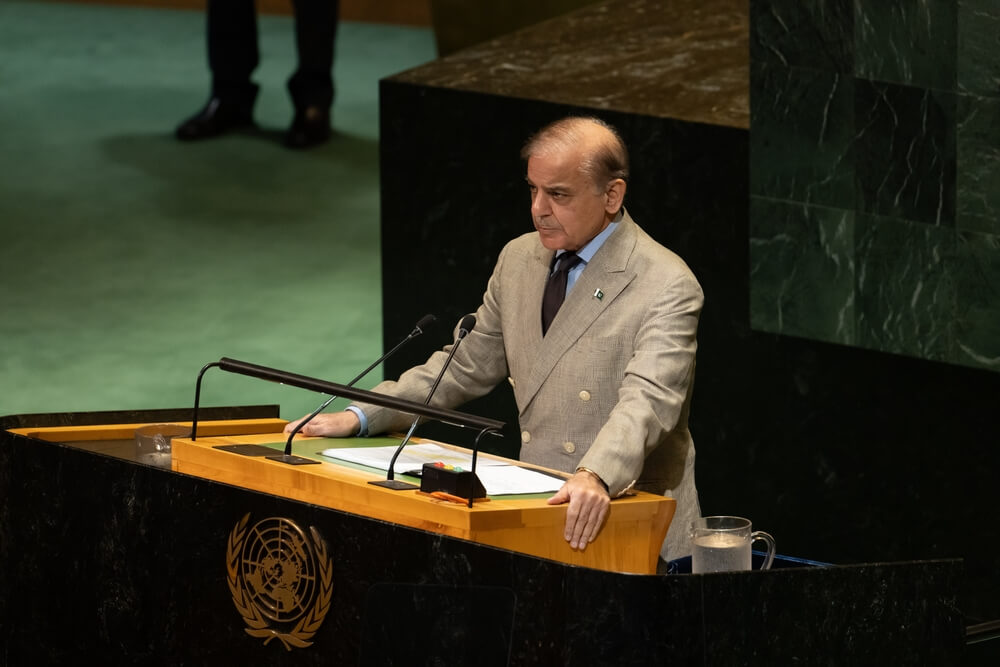 Saudi Arabia, Turkey and Egypt will send top diplomats to Islamabad for talks aimed at ending the war - PM Shehbaz Sharif
Pakistan’s Prime Minister Shehbaz Sharif said he and Iranian President Masoud Pezeshkian held “extensive discussions” on regional hostilities.
But the Iranian foreign minister, Abbas Araghchi, told his Turkish counterpart by phone that Tehran was skeptical about recent diplomatic efforts.
Iranian state-run media said Araghchi accused the United States of making “unreasonable demands” and exhibiting “contradictory actions.”
Trump envoy Steve Witkoff has said Washington delivered a 15-point “action list” to Iran for a possible ceasefire, with a proposal to restrict Iran’s nuclear program — the issue at the heart of tensions with the U.S and Israel — and reopen the Strait of Hormuz.
Tehran rejected it and presented a five-point proposal that included reparations and recognition of its sovereignty over the waterway.
Meanwhile, U.S. ships with some 2,500 Marines trained in amphibious landings have arrived, adding to the largest U.S. force in the region in over 20 years.
And at least 1,000 paratroopers from the 82nd Airborne, trained to land in hostile territory to secure key positions and airfields, have been ordered to the Middle East.
Secretary of State Marco Rubio has said the U.S. “can achieve all of our objectives without ground troops.”
