On 16 October, Donald Trump suspended the implementation of key sanctions on Russia that he had signed the previous month, just two days before they were due to come into force.
These include tariffs of 500 per cent on Russian goods and 100 per cent on goods from countries that are the largest buyers of Russian oil and gas, as well as measures against Russian banks and tankers transporting Russian oil.
Congress approved all those penalties together with the power to allow the president to waive them, without setting a deadline for their reinstatement.
The immediate trigger was the diesel deal that Trump announced on 9 October after talks with Russian President Vladimir Putin.
He announced more than 300,000 tonnes for US and global markets immediately, a further 500,000 tonnes in November, and one million tonnes soon after.
On the same day, the Department of the Treasury issued General License No. 135, allowing the sale and import of Russian diesel, including imports into the US, until 7 April 2027.
The average price of diesel in the US reached $6.18 per gallon, equivalent to 3.79 litres, on 12 October, compared with $3.48 in early January.
Diesel powers trucks and farm machinery, so its price directly raises the cost of transport and food, and the congressional elections are on 3 November.
Trump has declared lower prices for farmers and truck drivers to be his priority and is counting on political gains ahead of the vote.
Section 112 of the new law envisages a tariff of up to 500 per cent on Russian goods, including petroleum products.
To remove that obstacle to the diesel deal, it was enough to exempt the tariff from this article.
Trump also suspended tariffs on other buyers of Russian energy and a broad set of financial sanctions that had nothing to do with fuel supplies to the US. Easing the shortage became the rationale for concessions to Moscow far beyond what was needed to bring diesel to US ports.
A majority in Congress refused to restrict the exemption
The law is named after Republican Senator Lindsey Graham, one of Trump’s closest allies, who died on 11 July. It was signed on 18 September as a posthumous tribute to a politician known for advocating pressure on Moscow.
Section 117, which governs the lifting of measures against Russia, requires a peace agreement acceptable to a free and independent Ukrainian government and an end to hostilities.
Such a decision is subject to a 30-day congressional review period, during which Congress can block it, and key votes in the Senate require a three-fifths majority.
Section 115 permits exemptions based on an assessment of the national interest, supported by written certification and a report to Congress. In that process, Congress has no power to block the decision.
The administration has chosen a course in which it justifies the relaxation itself and determines how long it will remain in effect.
The current exemption stays in force until the President or the Secretary of State decides otherwise
The current exemption stays in force until the President or the Secretary of State decides otherwise.
Democratic Representative Gregory Meeks proposed that exemption be allowed only when it is vital to US national security.
The House Rules Committee refused, by seven votes to three, to allow consideration of that amendment.
Representative Brittany Pettersen sought to remove Section 115, warning of unlimited authority without congressional oversight, but the provision remained in the law.
On 13 October, 12 senators – six Democrats and six Republicans – requested that the diesel deal be withdrawn.
Republican signatories included Susan Collins, John Cornyn, Mitch McConnell, Lisa Murkowski, Thom Tillis and Alan Armstrong.
Two days later, 22 members of Congress from both parties, including Michael McCaul and Brian Fitzpatrick, called for narrow, time-limited exemptions tied to a measurable reduction in support for Russia’s war. The next day, the President approved a broad exemption with no deadline.
The legality of the Russian diesel licence remains disputed
The regulation also removes the obligation in Section 102(d) to maintain the existing sanctions based on Executive Order 14024.
Under that framework, the oil companies Rosneft and Lukoil were sanctioned in October 2025.
Those sanctions remain in force, but a legal obstacle to their future mitigation has now been removed.
The older 2017 CAATSA law also explicitly covers licences that significantly alter US policy towards Russia.
Such a measure is subject to a 30-day congressional review and may be implemented during that period only if Congress approves it by joint resolution. Licence No. 135 took effect on the day it was issued, 9 October.
If Section 216 of that law applies to it, the administration bypassed the mandatory review.
Scott Bessent said the administration was enforcing the deal using all the legal powers at its disposal
The licence also permits operations banned under the sanctions imposed in response to Russia’s aggression against Ukraine in 2014, which are already subject to congressional oversight.
The import of Russian energy products is also prohibited by the 2022 law, which stipulates that, for the ban to be lifted, there must be an agreement on Russian withdrawal and cessation of hostilities that is accepted in Kyiv.
Republican senators Susan Collins, Lisa Murkowski and Thom Tillis warned on 11 October, together with Democrats, that the diesel deal violates that ban.
On 15 October, members of Congress asked the administration to explain how the licence complies with the law.
Treasury Secretary Scott Bessent said the administration was enforcing the deal using all the legal powers at its disposal, adding that anyone who claimed an existing law or the current Lindsey Graham Act prohibited them from doing so was wrong. He did not list any of those powers.
An attempt to block Trump’s concession to Russia in Congress also failed in January 2019.
The House of Representatives voted 362 to 53 to block the lifting of sanctions on companies linked to billionaire Oleg Deripaska. In the Senate, the motion to end debate received 57 votes, three short of the required 60.
Sanctions on Rusal and related companies were then lifted, with changes in ownership and management, while Deripaska remained under sanctions. There was a majority in both houses, but it was not enough to stop the decision.
The fuel deal increases pressure on Kyiv
The war waged by the US and Israel against Iran has led to Iranian attacks on energy facilities and disrupted transit through the Strait of Hormuz, a key route for oil exports from the Persian Gulf. Ukrainian drone attacks have further reduced output from Russian refineries.
Trump is trying to alleviate the shortage with Russian fuel, a shortage to which the American war in the Middle East has also contributed.
On 10 October, Trump demanded that Ukraine stop targeting Russian refineries and suggested that Ukrainians elect a new leader who could reach an agreement.
The next day, he announced an “energy ceasefire”, while Ukrainian President Volodymyr Zelensky was still waiting for details.
Ukraine suspended attacks on Russian energy facilities for three days, then resumed them in response to new Russian strikes.
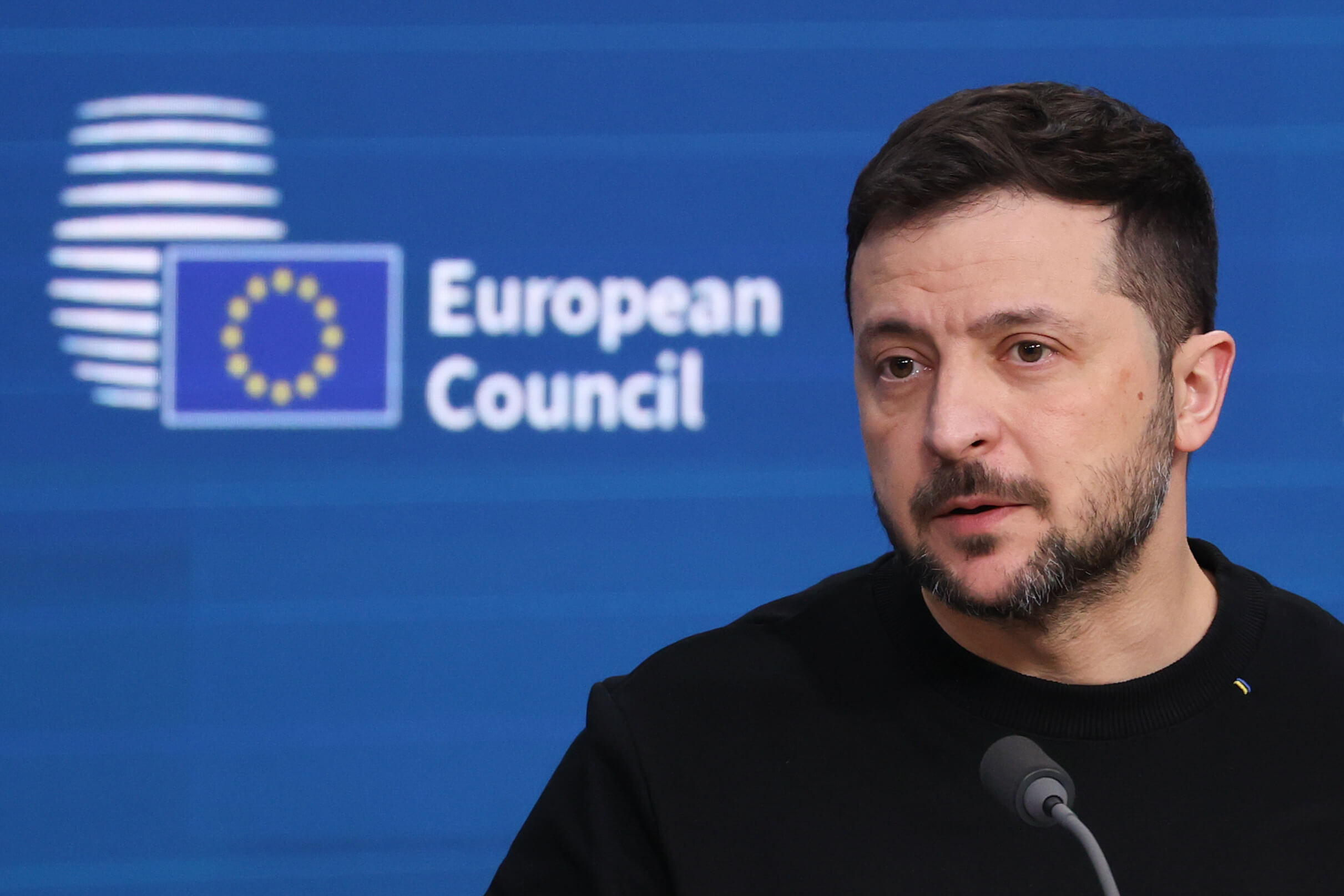 America had decided to completely ignore Graham’s law - Volodymyr Zelenskyy
On 17 October, Zelensky announced that Russia had attacked more than 15 energy facilities, and the Ukrainian air force reported four cruise missiles and 332 drones overnight.
On the same day, Zelensky wrote that America had decided to “completely ignore” Graham’s law.
Putin’s envoy for economic talks, Kirill Dmitriev, called the decision “an important and truly historic moment”.
Moscow gains a buyer for its diesel and benefits from US pressure on Kyiv not to target its refineries, while Russian attacks on Ukrainian energy infrastructure continue.
The first 300,000 tonnes correspond to approximately three-quarters of one day’s diesel consumption in US transport.
Trump also announced an additional three million tonnes, depending on the condition of Russian refineries.
According to an estimate by the Wall Street Journal, all 4.8 million tonnes, if they arrived at once, would make up for the global diesel shortage in about three weeks.
The International Energy Agency estimates that easing Russian export restrictions is unlikely to significantly change the situation in the market, because Russia lacks operating refinery capacity.
EU tightens sanctions while Washington suspends them
On 12 October, the EU Council imposed sanctions on a further 1,646 individuals and companies.
Of these, 1,569 are linked to Russia’s military industry – the largest single package of such listings to date – and 77 to illegal Russian elections in occupied Ukrainian territory.
The EU High Representative for Foreign Affairs and Security Policy, Kaja Kallas, stated that more than half of the industry-related sanctions concern ballistic missile production.
China, India and Turkey now have the opportunity to negotiate tariff exemptions directly with the White House
Four days later, Washington suspended further US measures. China, India and Turkey now have the opportunity to negotiate tariff exemptions directly with the White House, while European governments continue to put pressure on Moscow.
Trump can reactivate the measures and use them as leverage in bilateral trade negotiations.
At the same time, the US decision to allow imports of Russian diesel makes it difficult to demand that other countries stop buying Russian energy.
China and India can invoke the protection of domestic supplies and consumers, the same rationale Trump uses to justify his deal. Washington will ask them to renounce the very convenience it has just granted itself.
The licence to import Russian diesel expires in April
On 16 October, Meeks, with cross-party support, introduced a bill to block the diesel deal. Such a measure would require a majority in both chambers and a two-thirds vote to override a possible Trump veto.
 The law that Congress wrote to reduce Russia’s oil revenues would become the price list according to which Washington pays for Russian fuel by easing sanctions
The rejection of narrower waiver powers so far gives little reason to expect such a majority before Congress reconvenes in January 2027.
Until the elections on 3 November, Trump is likely to keep the deal, which he presents as a response to high fuel prices, and to use the tariffs as a threat to buyers of Russian energy.
The licence’s expiry on 7 April 2027 raises the question of its extension. The deliveries probably will not significantly lower diesel prices, so the White House will ask Moscow for larger quantities.
In return, Moscow will seek new concessions, above all for Rosneft and Lukoil, whose sanctions are no longer protected by any statutory obligations after the executive order of 16 October.
The law that Congress wrote to reduce Russia’s oil revenues would thus become the price list according to which Washington pays for Russian fuel by easing sanctions.
