On 27 July, France raised the issue of UK participation in the Scaleup Europe Fund, a European investment instrument worth approximately five billion euros, which is expected to close its first deals this autumn.
London is ready to invest 150 million euros in seed capital, but Paris wants clear rules on how much capital UK companies could withdraw, what the relationship would be between the UK contribution and the benefits for its technology industry, and how a country outside the European Union could participate in a fund designed as part of European industrial policy.
It is not yet a French veto. A formal proposal on UK accession has not even reached the member states. However, the dispute has already revealed where the next serious discussion between London and Brussels will take place.
The UK can rejoin European programmes individually, but each return will come with costs, conditions and restrictions.
In technology, price is particularly sensitive, as it will determine who finances the next generation of European companies in artificial intelligence, quantum technologies, semiconductors, biotechnology, robotics and the space industry.
A fund to keep companies in Europe
Scaleup Europe was created in response to one of the key weaknesses of the European economy. Europe produces cutting-edge research, university companies and technology start-ups, but there are often not enough large domestic investors when those firms need hundreds of millions of euros to expand globally.
At that stage, US funds take the lead, headquarters are moved, companies are listed on US stock exchanges, or they end up being owned by buyers from outside Europe.
The European Investment Bank estimates that EU companies in the accelerated growth phase raise approximately half as much capital as similar firms in Silicon Valley.
More than four-fifths of large European investment rounds are led by a foreign investor or have a foreign investor as the sole participant. US companies attract six to eight times more venture capital than EU companies each year.
The European lag becomes most evident when a young technology firm needs large amounts of capital to expand production, enter new markets, and secure a global position. At that point, European investors often lack sufficient capacity, and key financing rounds are taken over by US funds.
Planned investments will be around one hundred million euros or more, including follow-on rounds
The new fund is intended to change that pattern. The European Commission is investing one billion euros, and the founding investors include major financial institutions, pension funds, and investment groups from Denmark, Spain, Italy, the Netherlands, Sweden, and Germany.
Management has been entrusted to the Swedish group EQT, which is expected to make decisions on a commercial basis and independently of day-to-day politics.
Planned investments will be around one hundred million euros or more, including follow-on rounds. This is a level that European public programmes have so far been unable to match with the largest US funds.
Five billion euros is serious start-up capital, but it is still modest compared with the money currently invested in leading companies in artificial intelligence, chip production and biotechnology.
The fund will only make sense if it provides European companies with sufficient capital for several successive stages of growth.
Otherwise, the same pattern will continue: research and development will remain in Europe, while ownership, stock market listings and most future value will once again end up in the United States.
A UK Europe can hardly bypass
The UK is hard to bypass when it comes to financing European technology companies. It has the largest venture capital market in Europe and the most developed network of funds investing in young companies with strong growth potential.
In 2025, UK digital and technology companies attracted £8.3 billion through more than 1,200 individual investments. Around £6.4 billion went to companies in the fields of artificial intelligence, cyber security, quantum technologies, engineering biology and semiconductor manufacturing.
The strength of that market also explains French caution. The UK brings to the joint fund high-quality companies, universities, investors and experience in large technology deals. It also introduces competition that could attract a disproportionately large share of the capital.
If the fund invested exclusively according to commercial criteria and without geographical restrictions, UK companies would be among the most serious candidates.
States that view the fund as a means of building the EU’s industrial base could then conclude that common European capital was financing the growth of companies outside the Union.
The amount London is offering is also part of the dispute
The French request therefore reflects a specific concern. Paris wants to prevent a situation in which a UK contribution opens access to a fund without a strong link between the capital paid in and the overall benefit that UK firms obtain.
The French approach implies that European money should create productive capacity, intellectual property, jobs and strategic control within the EU. For a fund that invests in technologies related to security, defence, energy and industrial independence, that position carries more weight than it would in a typical research programme.
The amount London is offering is also part of the dispute. One hundred and fifty million euros is a serious contribution from one partner, but it remains small compared with the target size of the fund and the one billion euros invested by the Commission.
The UK therefore cannot expect that payment alone will provide it with fully open access to all benefits. Paris, however, risks undermining the fund’s value with excessive restrictions.
An instrument designed to build European technology champions can hardly ignore the most developed technological and investment centre on the continent.
Return through the door that has not yet been opened
In 2024, the UK rejoined Horizon Europe, the continent’s largest research and innovation programme. However, its current status does not include equity investments from the European Innovation Council.
From July 2026, UK companies can take part in procedures under the transitional regime, including Scaleup Europe, but actual investment decisions depend on an amendment to the UK’s association agreement.
That legal distinction explains why French pressure has emerged now. The fund was launched publicly at the beginning of June, the legal and management documents are being finalised, and the first investments are expected in the autumn.
The UK’s tech industry attracts more capital than any other European market
Once the structure of the fund’s first closing is defined, changing the conditions later will be politically and technically more difficult. Paris is therefore trying to incorporate the rules for the UK before the money starts being distributed.
London has good reason to hurry. The UK’s tech industry attracts more capital than any other European market, but it also relies on foreign investors when funding rounds become large.
In 2025, domestic UK investors provided only a small share of capital in the digital and technology sector, while the largest funding rounds mainly involved international funds.
Access to Scaleup Europe therefore offers London an additional source of large, long-term capital and a link to the EU industrial market.
A dispute over whose European technology is
The key question concerns the meaning of the word “European” in the name of the fund. Geographically and commercially, the UK technology industry remains part of the European system.
Companies employ people from both sides of the Channel, rely on the same university networks, use the same supply chains and seek capital from the same investors.
Institutionally, the United Kingdom is a non-EU country that wants access to an instrument supported by a billion euros from the Union budget.
The UK wants to be treated as a serious investor and an associated European country
The Commission has placed the fund between these two principles. It is open to companies from member states and from countries associated with the third pillar of the Horizon Europe programme, and its goal is to keep strategic assets, know-how and leading companies in Europe.
EQT will select investments based on commercial potential, while the Commission will measure the success of the fund by whether the production, jobs and future value of the financed companies remain in Europe.
France is trying to resolve this contradiction through political conditions before the market resolves it in favour of the strongest candidates.
The UK wants to be treated as a serious investor and an associated European country, without rules that would disadvantage its companies in advance. Both sides have a credible argument, so a complete victory for either side seems unlikely.
The compromise will be precise and restrictive
The most likely outcome is UK accession to the fund, subject to separate financial and geographical restrictions. London will be able to invest, and UK companies will be able to bid for capital.
The EU will in turn look for a measurable link between the UK contribution, the fund’s total exposure to UK companies, and the presence of funded activities within the territory of the Union.
A rule requiring a UK-based company to carry out a significant part of its investment, production, or research in the EU is also possible.
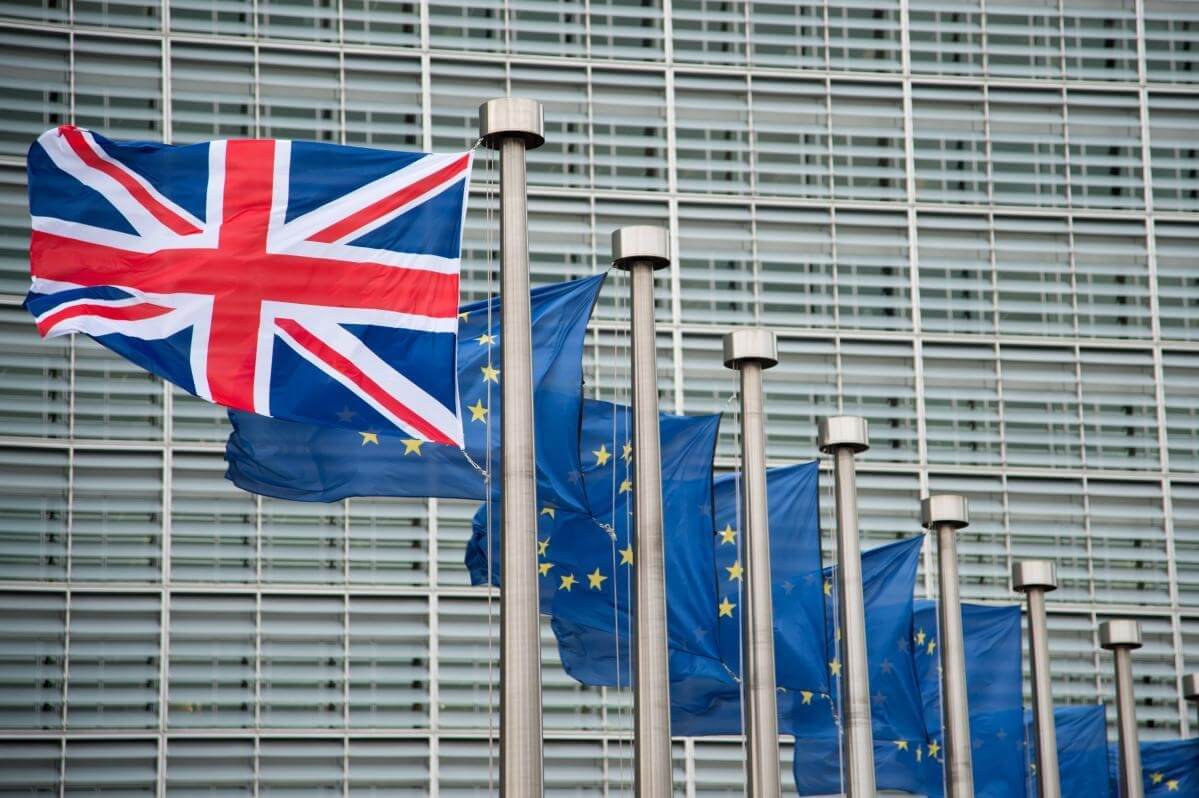 The UK will first receive transitional access and a political commitment, while full involvement will be tied to a broader agreement on relations with the EU
Such a solution would suit both the Commission and Paris. The Commission would preserve the fund as a major European instrument, capable of attracting additional capital and leading companies.
France would be protected from the more powerful UK technological system taking an excessive share of the benefits. London would avoid another period of long-term isolation from European public capital, albeit on terms that would fall short of full membership.
The deal is unlikely to be concluded in time for UK firms to participate fully and on an equal footing in the first investments in the autumn.
The legal amendment, the consent of the member states and the negotiation of restrictions can hardly be completed without political bargaining.
The UK will therefore first receive transitional access and a political commitment, while full involvement will be tied to a broader agreement on relations with the EU.
France is establishing a precedent here that will be repeated in other areas. The UK can participate in European projects when its capital, expertise and companies strengthen the shared outcome. Access will no longer be granted without restrictions that preserve the benefits for Union members.
Scaleup Europe will therefore become a model of post-Brexit cooperation, open enough to include the UK yet closed enough to demonstrate constantly the difference between partnership and membership.
