The Kremlin immediately accused Ukraine of being behind the assassination attempt on the second-ranking official in the GRU military intelligence service, General Vladimir Alekseyev.
"The assassination attempt demonstrates Ukraine's desire to undermine the peace process," Sergey Lavrov said a few hours after General Alekseyev was shot in his Moscow apartment and hospitalised in a critical condition.
This was a routine response from a seasoned diplomat to an event that is deeply troubling for his government and anything but routine.
Lavrov's linking of the assassination attempt on a high-ranking Russian general, with a distinguished intelligence career, to the ongoing peace negotiations in the UAE is unconvincing.
It is a reflex action by an experienced wartime minister to blame the Ukrainian enemy for any harm suffered by Moscow.
Lavrov's response will satisfy part of the Russian public, for whom it was intended, but it will not ease the anxiety of the Russian state apparatus on the eve of the fourth anniversary of its invasion of Ukraine.
Ukraine had no motive
In this case, the Ukrainians had absolutely no motive to attack the second-ranking officer of the GRU, which is known to many world governments, especially in the West, for its assassinations, espionage, and cybercrime.
"We are not stupid, believe me," a former senior Ukrainian security official told The Washington Post.
General Alekseyev was shot at a time when peace talks are underway in Abu Dhabi, from which Kyiv expects a breakthrough towards a peaceful solution and the beginning of the end of the exhausting fight against Russian aggression.
It appears that Moscow is facing a crisis within its own ranks
At the same time, one of the Russian negotiators in Abu Dhabi is Alekseyev's superior, the head of the GRU, Admiral Igor Kostyukov, so Ukrainian involvement in the assassination attempt would surely provoke the anger of the Russian delegation and possibly lead to their withdrawal from the negotiations.
Furthermore, with such an act, Kyiv risks losing favour with Washington, which initiated the negotiations in Abu Dhabi, and Ukraine cannot afford any more anger from Trump.
It appears, therefore, that Moscow is facing a crisis within its own ranks and that the assassination attempt on the one of its most important intelligence officers is an "inside job".
Series of deaths of senior generals
In the past year, as many as three high-ranking Russian generals have been killed in Moscow, culminating in today's assassination attempt. The last of these, Igor Kirillov, chief of nuclear, biological, and chemical defence forces, died in December 2024, in the explosion of a bomb hidden on a scooter in front of the building where he lived.
Kyiv then claimed responsibility for the assassination, considering the general a "legitimate target" because he was responsible for the use of illegal chemical weapons by Russian forces in Ukraine.
However, the attempt to kill another GRU officer will also provoke, especially in Moscow and among the military leadership, the already widespread unrest caused by "friendly fire".
General Alekseyev is an intelligence officer with an extensive record of conducting operations around the world.
What makes Alekseyev a possible target inside Russia is his role in crushing the 2023 Wagner paramilitary group rebellion
He coordinated military campaigns in Ukraine and Syria in the mid-2010s. He has been under US sanctions since 2016 as the mastermind of cyber operations during the 2016 US presidential election, which was won by Donald Trump.
The UK and the EU believe he orchestrated the 2018 chemical weapons attack on former Russian agent Sergei Skripal and his daughter in Salisbury.
What makes him a possible target inside Russia, however, is undoubtedly his role in crushing the 2023 Wagner paramilitary group rebellion.
General Alekseyev was one of the senior officers delegated by the Kremlin to negotiate with the rebels and their leader, Yevgeny Prigozhin.
The rebellion was halted near Moscow, the Wagner fighters were pacified, and their leader, Prigozhin, once one of Vladimir Putin's closest associates, was soon killed in a plane crash, which is widely believed to have been the work of the Kremlin and loyalists in the army.
Fostering paranoia
The Kremlin cannot afford to be calm about the latest assassination attempt on one of its most senior and trusted officers. This act introduces significant insecurity, perhaps even paranoia, to the military leadership itself.
Even if the investigation soon yields results and identifies the perpetrator or perpetrators, the credibility of the Kremlin's statements remains in question, given the long series of unsolved violent deaths among top military figures, influential businessmen, and high-ranking government officials.
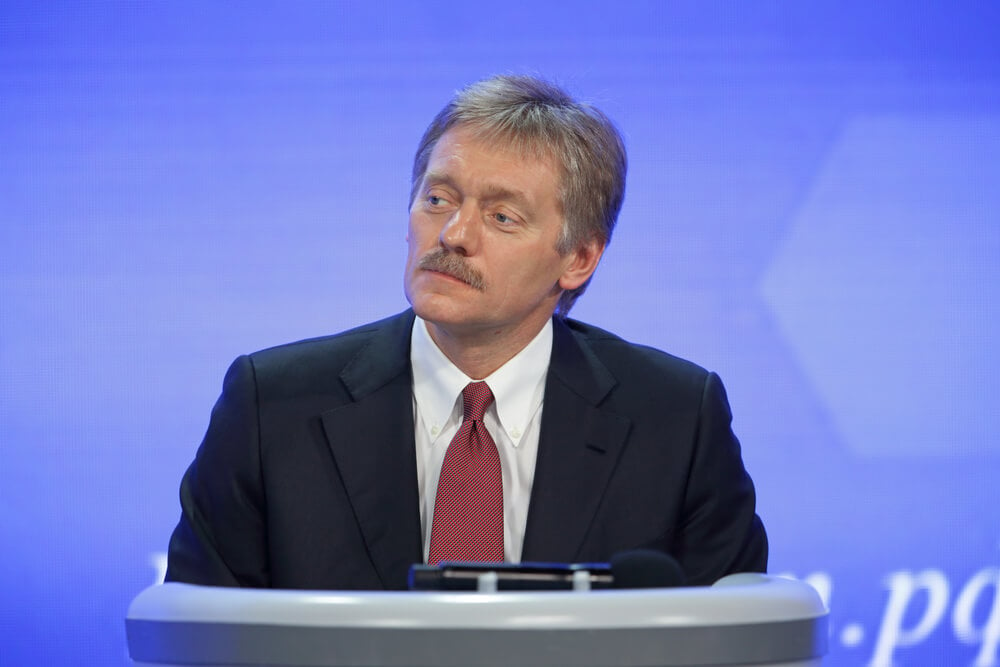 Dmitry Peskov shifted the responsibility for the security of top military brass from the Kremlin to the army and its services
Since the start of the aggression against Ukraine, the Russian army has lost at least 19 high-ranking generals. Most died in Ukrainian attacks, many deep inside Russian territory. Diversion and sabotage operations are associated with some of these cases.
The problem for the Kremlin is that it has not officially confirmed all these cases, leaving behind suspicion and distrust among the top military towards its civilian leadership.
Lavrov's routine transfer of responsibility for the assassination attempt on General Alekseyev to Ukraine served as some sort of government reaction, merely to break the uncomfortable silence.
Shifting the focus to Kyiv is risky for morale and loyalty at the top of the Russian army, as it portrays Ukraine and its services as capable of targeting the highest and most influential officers for an extended period.
Putin's spokesman, Dmitry Peskov, an experienced propagandist, recognised the risk of automatically blaming Kyiv, but in responding to the assassination attempt on General Alekseyev, he fell into another trap.
Regarding criticism on social media that the authorities are not sufficiently protecting the most important generals, Peskov admitted they are "definitely under threat" but shifted the responsibility for the security of top military brass from the Kremlin to the army and its services.
A series of assassinations of influential Russians, including dozens of senior generals since the start of the aggression against Ukraine, has narrowed the Kremlin's room for manoeuvre in managing public perception.
Even more, it has reduced the scope for encouraging the military leadership, which, after a series of assassinations and silent killings during war operations, has many reasons to be paranoid.
