Documents from the Syrian Air Force Intelligence Directorate, whose contents were published by Reuters, show that senior military officials approved executions at Mezzeh Airport in Damascus as early as 2012.
By the time the documents were released to the public, the airport was already being cleared of debris in preparation for receiving civilian aircraft.
The new Syrian government intends to turn the former military base into an airport for private and business flights, although the complex is suspected of containing two possible graves linked to people who died or were executed in detention facilities at Mezzeh.
The Syria Justice and Accountability Centre submitted the coordinates of those locations to the National Commission for Missing Persons in July 2025.
The Commission then replied that neither the construction of new facilities nor the reconstruction of existing ones was planned at the airport.
When the General Authority of Civil Aviation announced the conversion plan on 3 September this year, the Centre again warned the Commission five days later that excavation, clearance and the movement of heavy machinery could damage the remains and destroy evidence needed to identify the victims.
As of 12 September, the Commission, the Administration and the Ministry of Defence, which uses the airport, have not publicly responded to questions about protecting the possible graves.
The administration presented the project as a complement to the international airport in Damascus, but did not say who would finance and build it, how much it would cost, or when the first civilian flight is expected.
Mustafa Khairallah, the head of its media department, told the state-run SANA news agency that the conversion would be carried out in phases, alongside technical, operational, environmental and regulatory studies, and with consideration of legal and social issues. Possible graves and claims by people asserting rights to the airport land were not mentioned.
Executions in the hangar next to the runway
In addition to the military airport, Mezzeh housed air force intelligence units and detention facilities through which people suspected of opposing Bashar al-Assad's regime passed.
The Syria Justice and Accountability Centre estimates that at least 29,000 people were held in the compound between 2011 and 2017, and by 2020 more than a dozen hangars, dormitories and offices had been converted into prisons.
Documents obtained after the fall of Assad's government for the first time more precisely link the leadership of the security apparatus at the time with the choice of locations and the organisation of executions.
One piece of correspondence from 2012 contains a proposal to move executions ordered by military field courts from Sednaya Prison to Mezzeh, a closed and well-secured complex closer to Damascus.
Later documents consider using a shooting range and then a hangar next to the runway, with orders to build a platform, procure nylon rope and carry out the entire operation under service supervision and in secrecy.
Neither the documents nor the statements provide a reliable answer as to how many people were killed
The documents show that the executions in Mezzeh were authorised and operationally prepared, while testimony collected by the Syria Justice and Accountability Centre indicates that they were carried out there.
Neither the documents nor the statements provide a reliable answer as to how many people were killed, who the victims were or where their remains are located.
These answers can only be obtained by securing the site, reviewing official documentation and recordings, conducting controlled exhumations, analysing the remains and comparing the findings with data supplied by the families of the missing.
Construction machinery can move or destroy bones, personal items and other traces, as well as their arrangement in the ground, without which it is difficult for forensic specialists to determine reliably the identity of the victims, the time of death and the manner in which they were killed.
The search for those who died in Mezzeh leads to seven locations
Two internal Syrian intelligence databases show that between 2011 and 2017 at least 1,154 people died in detention facilities in Mezzeh.
The Syria Justice and Accountability Centre cross-checked those records against other documents and testimony from survivors and former service members.
This number does not include prisoners executed on the basis of verdicts issued by military field courts.
Among the recorded victims were those killed outright, while many others died as a result of torture, hunger, disease and denial of medical treatment.
Since the complex has never been examined forensically in its entirety, it is not known whether there are additional burial sites
These 1,154 people are not necessarily buried within the airport. The investigation linked their deaths to seven possible burial sites in and around Damascus, some within the airport complex and others outside it.
The Centre submitted to the Commission the coordinates of two locations inside the airport where graves are suspected.
Since the complex has never been examined forensically in its entirety, it is not known whether there are additional burial sites.
Before resuming excavation, experts would have to inspect the area affected by the works and compare satellite images with official documents and witness statements.
Fencing off the two reported sites would not be sufficient, as construction machinery in other parts of the airport could still destroy remains and evidence.
The airport was built on disputed land
The conversion plan also revived the old land dispute and brought it back into the public eye. According to Moadamiyah municipality records, the airport occupies about 2.76 square kilometres of land made up of plots with hundreds of registered private owners.
A former municipal official claims that the airport was built in 1956, before the expropriation decree under which the state subsequently tried to legalise the use of the land, and that the owners were never compensated.
These allegations have not yet been confirmed by the courts, and the authorities have not published a full list of the disputed plots and the owners’ demands.
Residents of Moadamiyah protested the day after the plan was announced. They did not call for an unconditional halt to investment, but for the participation of the owners in discussions about the future of the land and possible compensation.
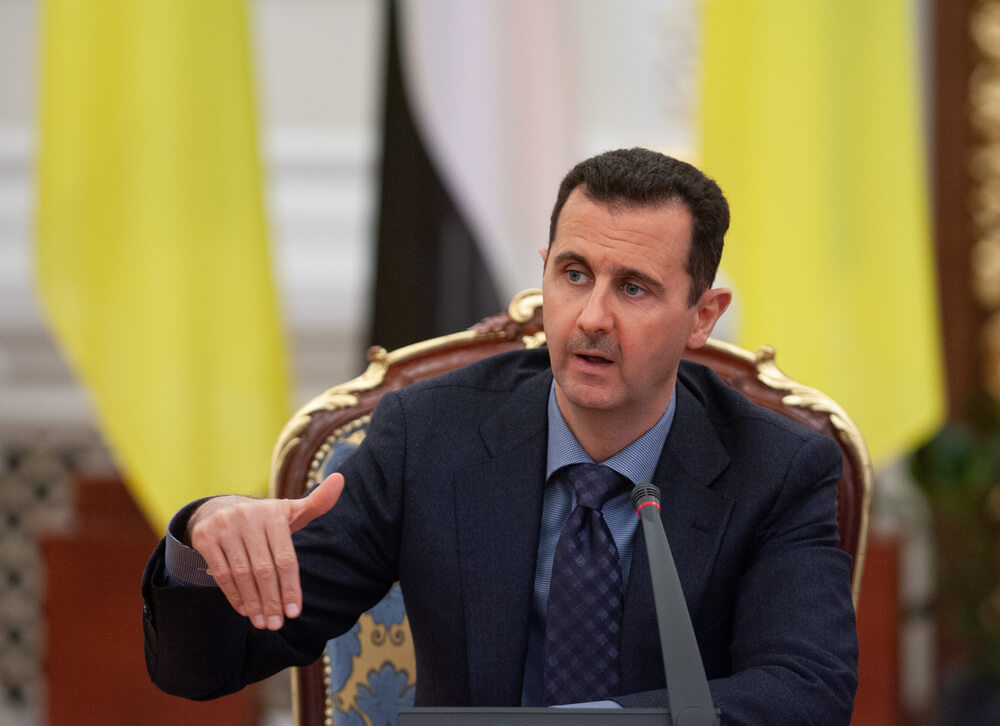 During the war and under Assad’s rule, the authorities used urban regulations and expropriation to seize property from displaced and politically ineligible citizens
During the war and under Assad’s rule, the authorities used urban regulations and expropriation to seize property from displaced and politically ineligible citizens, leaving many owners without cadastral documents.
Before signing any contract with an investor, the new government must determine who claims each parcel of land and what evidence those claims are based on.
United Nations experts on housing and land rights called on the Syrian authorities on 2 September to suspend and repeal regulations that allowed systematic property confiscation under Assad, and to establish procedures for the return of such property or appropriate compensation.
Ownership of land in Mezzeh will have to be determined by reviewing land records, expropriation decrees and evidence from people who claim the plots.
The intervention by the United Nations experts did not refer specifically to Mezzeh, nor did it set a deadline for verifying ownership before concluding a contract with an investor.
Their demand was straightforward: for the new government to abolish the regulations that enabled the confiscation of property and to establish procedures for its return or appropriate compensation.
If that fails, the dispute will concern not only the actions of the Assad regime, but also the current government’s decision to cede the disputed land to the developer.
The renovation does not justify the rush
The business case for conversion is clear enough. Mezzeh already has a runway, is close to central Damascus and has previously served presidential and other official flights.
Syria needs investment, more reliable air traffic and infrastructure that can accommodate diplomats, businesspeople and companies without adding to the burden on the main international airport.
Nothing in that assessment requires excavation to begin before forensic and property verification. Securing the site and surveying the terrain would represent a small fraction of the cost of the entire project, whereas remains, lost items and destroyed ground layout cannot be reconstructed afterwards.
The unnamed investor is unlikely to be comfortable with a project on land whose legal status has not been clarified
The unnamed investor is also unlikely to be comfortable with a project on land whose legal status has not been clarified, in a location where new discoveries could halt work after much larger investments.
The new government is not responsible for the executions in Mezzeh or for the old land-confiscation decrees, but from the moment it initiated the conversion it became responsible for access to the land, the protection of evidence and the verification of ownership rights.
The line between the inherited crime and the new decision is quite clear: what the previous regime did is its responsibility, while the destruction of traces during the current works would be the responsibility of an authority that had been informed of the risk.
Possible graves will determine the boundaries of the construction site
The Syrian government is likely to retain the project. The conversion is already included in the reconstruction of civil aviation, work has started and no commercial contract has yet been published, the termination of which would incur significant financial costs.
The authority can temporarily stop excavations at suspected sites and allow them to be forensically examined, while airport design and non-excavation work continue in other parts of the complex.
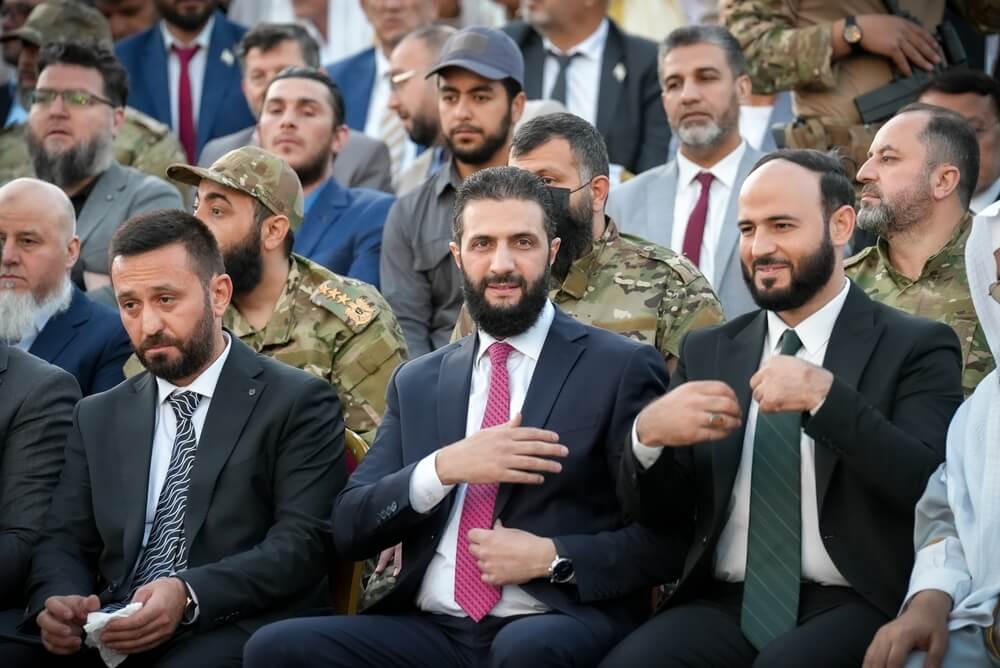 The Syrian government is likely to retain the project
Such a solution would be viable only if experts determined the boundaries of the protected zones after inspecting the entire airport, rather than management defining them solely around the two provided coordinates.
The National Commission for Missing Persons would need access to documents, witnesses and the terrain before adopting a final layout of airport facilities.
A property dispute requires a separate procedure, in which the included parcels would be published, the owners’ documents checked and specific conditions for restitution, compensation or voluntary inclusion of the land in the project defined.
If the government protects only a narrow area around the two known sites and continues work without a publicly established protocol, every new document, testimony or discovered remains will again halt the project and fuel suspicions that speed was more important than thorough investigation.
A more feasible route is phased conversion, whereby design, surface debris removal and non-ground-altering works can proceed while questionable parts of the complex remain closed for forensic investigation and ownership resolution.
The opening of the airport would be delayed, but the new government would avoid responsibility for destroying traces of crime and for handing the disputed plots to the investor before determining who has the right to them.
