The Somali government ordered the United Arab Emirates’ ambassador to leave the country within 72 hours and withdrew its own ambassador from Abu Dhabi.
Information Minister Abdulfattah Kasim Mohamud described the actions of the Emirates as an “open invasion” and threatened measures against those the authorities regard as collaborators in the alleged aggression.
President Hassan Sheikh Mohamud had previously accused Abu Dhabi of providing financial and political support to regional authorities that challenge Mogadishu’s decisions and of helping to create armed units outside the state chain of command.
The Emirates rejected the accusations, stating that it had already closed its embassy in Mogadishu in January, but in its statement it did not clarify where the ambassador was when the order for his departure was issued.
A day later, on 20 November, the New York Times published an investigation based on satellite imagery and flight data that showed the expansion of military facilities at Berbera and Bosaso, two ports on the Gulf of Aden. The investigation also highlighted US military visits to these airports.
While Mogadishu insists that foreign partners respect the authority of the central government, regional administrations continue to make decisions about facilities on which trade, revenue and parts of the security operations along the approaches to the Red Sea depend.
A government without authority over its own coast
On 12 January, the Somali government terminated agreements with the Emirates on port operations and security cooperation.
The very next day, DP World, the port operator owned by the government of Dubai, confirmed that it would continue running the port of Berbera. The port is located in Somaliland, a region in northern Somalia that broke away from the rest of the country, and DP World operates under a contract with the authorities there.
Mogadishu has since failed to enforce its decision in the territory. Control of the port has remained in the hands of the company whose contract the local government recognises, despite opposition from the internationally recognised government of Somalia.
The January decision followed a conflict between Saudi Arabia and the Emirates over Yemen. The Riyadh-led coalition fighting the Houthis in Yemen accused Abu Dhabi of helping Aidarus al-Zubaidi, the leader of the Southern Transitional Council, which advocates the secession of southern Yemen, to travel to the Emirates via Berbera and Mogadishu.
Abu Dhabi maintains an important position on the trade route between the Indian Ocean and the Suez Canal
Somalia has opened an investigation into the possible unauthorised use of its airspace. The Saudi allegations have not been independently verified, but they show that decisions about Somalia’s airports can have consequences for conflicts in neighbouring countries.
Berbera is in Somaliland, which declared independence in 1991 and established its own institutions. Israel recognised it in December 2025, while most countries still recognise Somalia’s territorial integrity.
The port, for whose development DP World has earmarked investments of up to $442 million, is connected by road to Ethiopia, a large landlocked country.
For Hargeisa, the capital of Somaliland, business in Berbera brings income and the opportunity to negotiate directly with foreign partners. Abu Dhabi thereby maintains an important position on the trade route between the Indian Ocean and the Suez Canal.
The port remains operational, and the extent of the military withdrawal is still disputed
Bosaso, in the Puntland Autonomous Region, presents a different case. P&O Ports, a company affiliated with DP World, holds a 30-year concession to develop and manage the port.
In January, numerous cargo flights were recorded, which local witnesses described as evacuating some Emirati security personnel and heavy equipment from a nearby airport.
On the basis of those reports, it has not been independently established how many personnel and how much equipment were withdrawn.
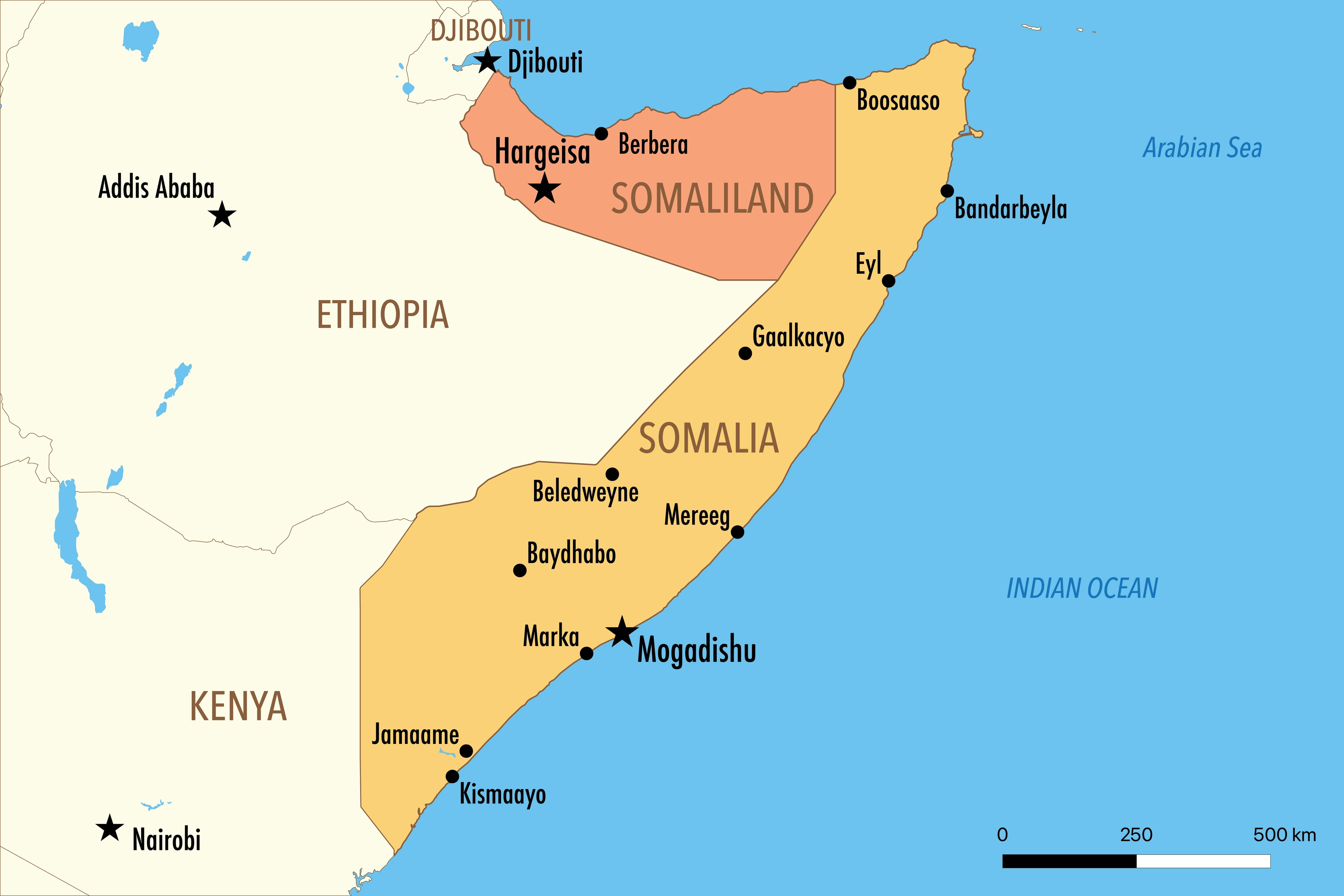 Somaliland seeks international recognition as an independent state, while Puntland and Jubaland operate within the Somali federation
A New York Times report from November shows hangars, containment facilities and military infrastructure at Bosaso, although the footage does not indicate whether the units withdrawn in January have returned.
In May, Human Rights Watch published the testimony of a former Colombian soldier who, in 2025, spent 10 days in underground accommodation at a military facility in Bosaso before being sent to fight in Sudan via the United Arab Emirates and Chad. The organisation also documented the earlier militarisation of the airport with photographs and satellite images.
According to those findings, the site was also used for activities extending far beyond Somalia’s fight against extremists. The Emirates rejects claims that it is providing military support to the Rapid Support Forces, a paramilitary group fighting the regular army in Sudan.
Regarding Kismayo, a port in the Jubaland region, the Somali president claims that the Emirates reached agreements directly with the local authorities. The contracts and management arrangements for Kismayo have not been publicly confirmed to the same extent as the Berbera and Bosaso concessions.
All three regional administrations rejected the January termination of the arrangement with Abu Dhabi, but their legal positions are not identical.
Somaliland seeks international recognition as an independent state, while Puntland and Jubaland operate within the Somali federation and contest jurisdiction with the central government.
Who grants permission to foreign military aircraft?
Managing a port is a commercial activity, whereas granting permission to use a military airport is a matter of state authority.
Somalia’s president accuses the Emirates of cooperating with armed units that do not answer to the national command, regional authorities insist on the right to conclude agreements independently, and Abu Dhabi denies interfering in internal affairs.
Satellite images show construction, but on their own they do not reveal who authorises individual flights, what tasks the units perform or to whom they report.
Washington is continuing operations against Al-Shabaab, an organisation linked to al-Qaeda
US involvement further complicates the dispute. The New York Times reported visits by US military aircraft to Berbera and Bosaso. According to the investigation, a plane carrying US special forces officers flew from Djibouti to Berbera in August, then continued to Bosaso.
At the same time, Washington is continuing operations against Al-Shabaab, an organisation linked to al-Qaeda.
The use of existing airports may be helpful for such operations, but for the government in Mogadishu any arrangement that bypasses its institutions would pose a serious problem. A permanent US base at these locations has not been confirmed.
Ankara and Cairo provide Mogadishu with support
Mogadishu is also relying on other military partners in this conflict. Turkey signed a 10-year agreement with Somalia in February 2024 to train, equip and develop its navy.
Egypt concluded a defence agreement with Somalia in August the same year and, in September, delivered additional weapons, including anti-aircraft systems and artillery, by warship.
Cairo and Mogadishu also share a dispute with Ethiopia over its approach to Somaliland. Egypt has been in conflict with Ethiopia for years over a large dam on the Nile, and military cooperation with Somalia is part of a wider struggle for influence in the Horn of Africa.
This gives Mogadishu an additional diplomatic opportunity but also increases the risk that its internal divisions will become part of disputes with neighbouring states.
Tensions between Saudi Arabia and the Emirates over Yemen further broaden the scope for Somali diplomatic moves, although there is no confirmation that Riyadh requested the ambassador’s expulsion in November.
These relationships allow Mogadishu to reduce its reliance on individual Emirati arrangements, but replacing security assistance will require both money and time.
Somalia met EU and international partners in Brussels to discuss the gradual assumption of responsibility for security
According to senior Somali officials who spoke to Reuters, the Emirates continued to fund salaries and logistics for approximately 3,400 members of Somalia’s military police and special forces after the January split.
Cutting this funding could affect forces already involved in the fight against Al-Shabaab, and the government must reckon with the cost of its decisions.
On 19 November, Somalia met EU and international partners in Brussels to discuss the gradual assumption of responsibility for security.
The African Union Support and Stabilization Mission in Somalia (AUSSOM) is also in the country, for which the UN Security Council has approved a maximum of 11,826 uniformed personnel, including 680 police officers.
That figure is an upper limit and does not indicate how many personnel are currently deployed, with the mission’s mandate due for review in December. Mogadishu is seeking greater independence at a time when it still relies on foreign troops, equipment and funding.
The president with the disputed mandate demands obedience from the regions
On 5 November, the Supreme Court of Somalia ruled that the mandate of President Hassan Sheikh Mohamud had expired and ordered that a political agreement on elections be reached within 30 days, with the elections to be held within 90 days.
The dispute concerns constitutional changes initiated in 2024 and completed in 2026, which extended the terms of the president and parliament from four to five years.
The UN political mission that had been assisting talks between opposing Somali leaders came to an end
The court considers that the extension does not apply automatically to the current office holders, while the government contests the legal effect of the judgment.
At the end of October, the UN political mission that had been assisting talks between opposing Somali leaders came to an end. Mogadishu is asking regional authorities to respect the decisions of the central government at the very moment when the president’s mandate is being challenged by a Supreme Court ruling.
Who will determine the rules in Berbera and Bosaso?
Responsibility also lies with Abu Dhabi, because investments in infrastructure and previous military aid do not justify support for security structures outside a unified command, if such support is confirmed. The same requirement for transparency must apply to Western countries that cooperate with regional authorities.
Mogadishu, for its part, should propose an agreement on the sharing of port revenues and the oversight of military facilities that will be accepted by the administrations that actually control those facilities.
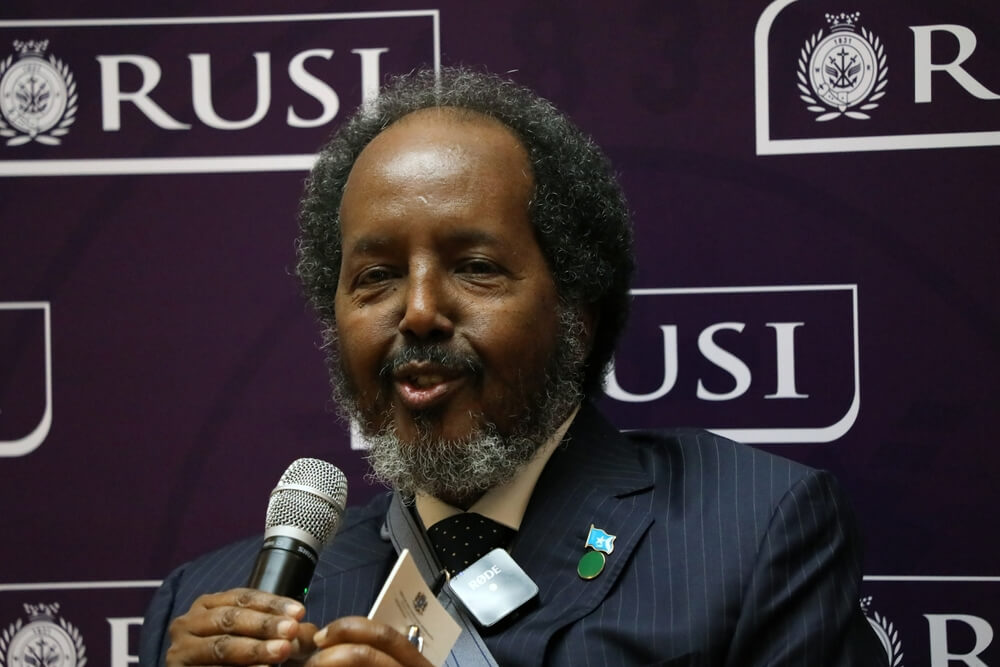 The Somali government stands to lose the most, as it still depends on Emirati funding for part of its own forces - Hassan Sheikh Mohamud
Over the coming months, the diplomatic stand-off is likely to continue. The main commercial arrangements in Berbera and Bosaso will be maintained, while the extent of Emirati military engagement will vary by location.
Regional authorities have a vested interest in protecting port revenues, and Mogadishu currently has no means of overturning their decisions. Pressure on the Emirates’ regional partners could trigger a new internal confrontation and weaken the forces fighting Al-Shabaab.
A way out requires agreement on who collects port revenues, who authorises military flights and who commands armed units. Without such an agreement, the decision to expel the ambassador may trigger a diplomatic crisis, while the use of key stretches of the Somali coast will continue to be decided in Berbera, Bosaso and Kismayo.
The expulsion of the ambassador costs Abu Dhabi little, as it says it closed its embassy in Mogadishu back in January, and it still controls ports, airports and connections in Somalia through regional authorities.
The Somali government stands to lose the most, as it still depends on Emirati funding for part of its own forces, and its decisions have not been respected by regional authorities for 10 months.
Mogadishu would achieve more by reaching agreement with the Somaliland, Puntland and Jubaland authorities on how port revenues are shared and who authorises military flights, as each foreign partner, from the Emirates to the US, would then have to seek permission from a single authority.
Until such an agreement is in place, the Emirates in Somalia will do business with whoever controls the coast, and the central government will remain internationally recognised yet powerless on its own shores.
