Regional tensions in the Horn of Africa have increased in recent weeks, with Cairo making repeated warnings to Addis Ababa over plans to construct three new dams on the Nile alongside the Grand Ethiopian Renaissance Dam (GERD).
It was officially inaugurated almost a year ago and has led to heightened concerns about water security in Egypt and Sudan.
Egypt’s diplomatic salvoes came amid simmering hostilities within Ethiopia’s Tigray region that involve some of the regional powers that are also deeply implicated in the conflicts in Sudan and Yemen. Many are asking if anyone can stop full-blown war breaking out in Tigray.
Ethiopia, Eritrea, Sudan, Somalia and Somaliland are the targets of an array of countries vying for control through political, economic and military ties for political backing, influence and resources, including fresh water, ports and gold.
Outside powers on one side include Egypt, Turkey, Qatar and Saudi Arabia, which have strengthened relations with several of Ethiopia’s neighbours, including Somalia and Eritrea, which has been backing Tigrayan nationalist forces.
On the other side are the UAE, which has heavily invested in Ethiopia, together with Israel, which drew Mogadishu’s anger when it became the first UN member state to recognise Somaliland as an independent state last year.
Concerted and constructive engagement by Washington has been notably absent. In a recent intervention, it urged strengthened UN sanctions against the warring parties in Sudan, where the brutal conflict has entered its fourth year.
Egypt and Saudi Arabia support Sudan’s military, while the UAE is accused of supplying a steady stream of arms to the Sudanese Rapid Support Forces.
Control the flow of the Nile
Now water security has again emerged as a prominent source of tensions in the Horn of Africa alongside heightened fears of war in Tigray.
Egypt, which gets almost all its fresh water from the Nile river system, has made three public warnings over the last three weeks to landlocked Ethiopia over its revived plans to build three new hydropower projects – Karadobi, Mandaya and Beko Abo.
Ethiopia strenuously maintains it has the right to manage its resources
“Ethiopia's bid to control the flow of the Nile lays bare a dangerous intention whose objective is not legitimate development,” a government official told Egypt's Mena news agency. “It's an attempt to impose a de facto situation, monopolise an international river and threaten the rights of the two downstream nations. Egypt will not allow this to happen.”
Ethiopia strenuously maintains it has the right to manage its resources. “Ethiopia does not need permission from anyone to develop its water resources as it is a sovereign country,” Habtamu Itefa, Ethiopian water and energy minister, told Pulse of Africa. “Who said that we need permission from anyone? Ethiopia is a sovereign country... Look, we built the GERD without the permission and we will also build other dams on other river basins whenever the needs arise.”
Hostilities have escalated
This year, hostilities have escalated between Ethiopian forces and rebel forces in Tigray, where a war in 2020-2022 left up to 600,000 people dead. Attacks have spilled over into the neighbouring Afar region, and there has been simmering conflict in the Oromia region since 2019 and in the Amhara region since 2023.
Regional actors have stepped up their involvement in Ethiopia. Eritrea, which had backed the Ethiopian government during the Tigray war, has switched sides to support the Tigray People's Liberation Front (TPLF) and has supplied troops and military equipment.
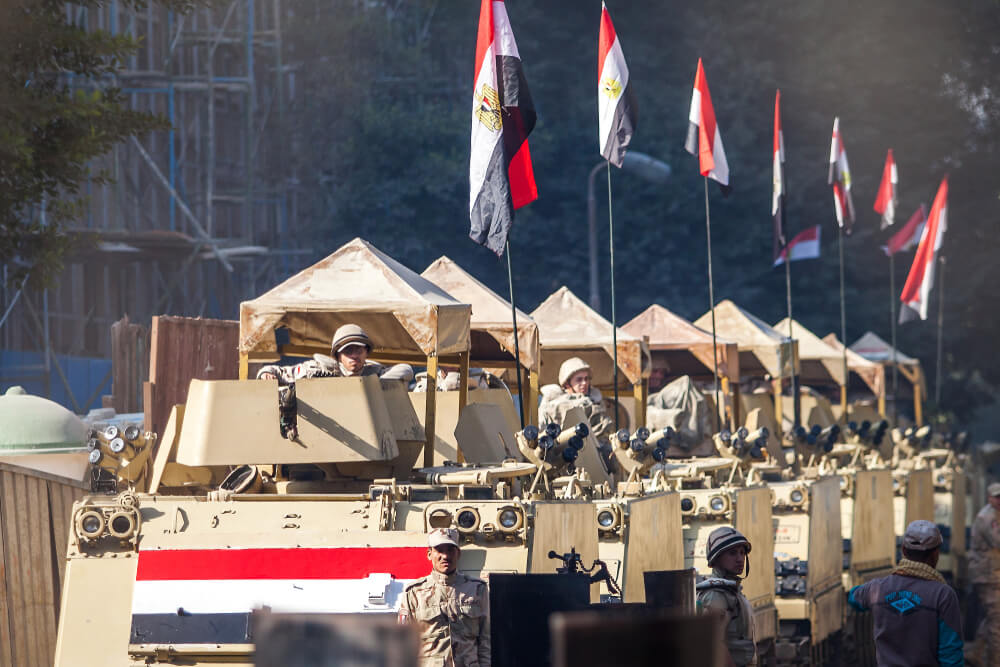 Should a wider war break out, Egypt is expected to stand close to its ally Eritrea, which gained independence from Ethiopia in 1993
There have been several clashes between the TPLF and Ethiopia’s National Defense Force, including drone attacks this summer.
Should a wider war break out, Egypt is expected to stand close to its ally Eritrea, which gained independence from Ethiopia in 1993.
Cairo is also suspicious of Ethiopian ambitions to gain access to the Red Sea. Since last year, Abiy Ahmed, the Ethiopian prime minister, has made repeated assertions to his country’s historic “right” to access the Red Sea through Eritrea.
The Sudanese Armed Forces, meanwhile, has accused Ethiopia of allowing the Rapid Support Forces – accused of genocidal atrocities in Sudan’s civil war – to establish bases and camps in western Ethiopia.
Adding to the volatile mix
Adding to the volatile mix is Yemen, where the Iran-backed Houthis this week claimed to have attacked a Saudi oil tanker in the Red Sea. The group has stepped up attacks in recent weeks in support of Iran, whose conflict with the US has persisted for months with no clear end in sight.
There are fears the Saudis may retaliate against the Houthis by mobilising Yemeni factions against them.
Few expect Cairo to respond militarily to Addis Ababa anytime soon over water
Back in 2020 during his first term, President Donald Trump suggested that Egypt might “blow up” Ethiopia’s GERD. “It's a very dangerous situation because Egypt is not going to be able to live that way,” Trump said. “They'll end up blowing up the dam. And I said it and I say it loud and clear – they'll blow up that dam. And they have to do something.”
Few expect Cairo to respond militarily to Addis Ababa anytime soon over water.
But there is plenty of regional kindling in the form of proxy conflicts and regional competition and an absence of outside pressure or mediation that could lead to wider conflagration even if inadvertently.
