Strikes on Iran resumed this week in what the U.S. claimed was a limited defensive response.
But as rumors hint at more ahead, it is worth remembering: Iran does not have to defeat the United States militarily to win strategically.
It only has to survive, adapt, and make the costs of confrontation increasingly painful for Washington and its allies. That is the lesson Tehran has learned from Russia's war in Ukraine.
And recent Iranian threats against airports, pipelines, and civilian infrastructure across the Persian Gulf suggest its leaders understand precisely how to exploit it.
American airpower can devastate Iranian military installations, destroy weapons stockpiles, and eliminate senior commanders. But can it break the regime's will to fight?
Or prevent Tehran from imposing escalating costs on its neighbors, the global economy, and American interests?
Russia's experience
Russia's experience offers Iran three important lessons about the next generation of warfare, lessons the United States should have considered before this war started.
The simple fact is that our adversaries are adapting to new-generation warfare faster than NATO, the U.S., and our allies.
First, in the new way of war and hybrid war, military inferiority does not preclude strategic endurance.
Nearly five years after invading Ukraine, Russia has suffered enormous casualties, devastating equipment losses, and unprecedented Western sanctions.
Yet Vladimir Putin remains in power. His war machine continues producing weapons, his security services have expanded their reach, and Russia has adapted its economy to prolonged confrontation.
Iran has not only been watching but also assisting Russia throughout the war. Both regimes are learning and adapting.
There are no easy ways out ahead with Russia, nor Iran
Tehran has endured decades of sanctions, economic isolation, and military pressure. Its leaders have developed sophisticated procurement networks, alternative trading arrangements, and underground military infrastructure designed to preserve their most important capabilities.
Russian military and intelligence writers have discussed what they call “new generation warfare” for decades.
Only now are the U.S., UK, and our allies considering the impact of hybrid war, the gray zone, and related escalation on traditional kinetic conflict – what are the boundaries between “real” war and hybrid attacks. Does it matter?
Autocracies are adapting faster to these changes. Like Moscow, Tehran understands that authoritarian regimes can inflict and transfer extraordinary suffering on their populations while protecting the institutions essential to the regime’s survival.
This transfer of suffering onto the people, rather than the regime, does not make Iran more vulnerable. Instead, it makes assumptions about its imminent collapse dangerous.
These are lessons that should have been learned from Russia and the unsubstantiated rumors rampant across Europe earlier this year (and every year since Russia’s full-scale invasion): “Putin will collapse soon.” There are no easy ways out ahead with Russia, nor Iran.
Strategy of coercion
The second lesson Iran has absorbed from Russia is that asymmetric warfare can turn an adversary's military superiority into a strategic vulnerability.
Iran pioneered the Shahed attack drones that Russia subsequently transformed into its increasingly sophisticated Geran family, now with jet drones that serve as cheap cruise missiles.
Moscow has improved navigation, electronic-warfare resistance, communications, and mass production through relentless battlefield experimentation.
This is no longer a one-way relationship. Russian combat experience and technological adaptations can now benefit Iran, while Chinese components and manufacturing networks sustain both countries' weapons programs.
The Russians have demonstrated how relatively inexpensive drones, deployed repeatedly and in large numbers, can exhaust defensive resources, disrupt infrastructure, and impose disproportionate economic costs on Ukraine and its allies. Iran has already demonstrated similar methods across the Gulf.
Tehran does not need to destroy an airport to cripple its operations. The credible threat of attack can ground aircraft, disrupt international commerce, drive up insurance premiums, and undermine confidence in regional stability. They are practicing the same math in the Strait of Hormuz.
Unlike conventional military confrontation, asymmetric warfare offers multiple avenues for retaliation
Their threats, much like Russia's constant nuclear saber-rattling, show a common strategy of coercion, one that Russia has practiced for decades with Europe and the United States.
The West has been unwilling to confront harsh realities about Vladimir Putin and his decades-long history of aggression and escalation.
Asymmetric attacks, or even the sustained threat of them, can have consequences that extend far beyond their immediate military effects.
Consider the imbalance: sophisticated defensive interceptors may cost vastly more than the drones they destroy.
Every successful interception protects lives and infrastructure, but it also consumes finite resources.
Importantly, the interceptors used in the Gulf now cripple the United States and Europe’s efforts to equip Ukraine.
Iran's military planners understand this arithmetic. And unlike conventional military confrontation, asymmetric warfare offers multiple avenues for retaliation: drones, missiles, maritime disruption, and cyber operations, all potentially with proxy forces (like the Houthis), capable of threatening America and its allies well beyond Iran's borders.
War can strengthen authoritarian regimes
The third and most important lesson of new-generation warfare: war can strengthen authoritarian regimes rather than weaken them.
Putin's war has substantially strengthened his Siloviki, or “men of power,” and what Russians call the state “organs”: the vaunted security services and intelligence/defense structures that they head.
The Kremlin has exploited wartime conditions to criminalize dissent, intensify surveillance, eliminate opposition, and portray domestic repression as essential to national survival.
This past month, the FSB forever stifled the final gasps of a free press with the closure of Novaya Gazeta. It was not a surprise, but it put a final note of despair on any hint of freedom in Russia.
Iran's Islamic Revolutionary Guard Corps and intelligence services understand this model instinctively.
But did we really study Iran’s success at repression?
They have spent decades suppressing opposition and protecting the Islamic Republic's ruling elite.
The U.S. and Israel launched this war in early 2026, just after a brutal regime crackdown, suggesting that “this was the moment” for an uprising. But did we really study Iran’s success at repression?
External military pressure can provide additional justification for arrests, surveillance, censorship, and increasingly brutal repression.
For ordinary Iranians who desperately want political change, this presents a cruel paradox: a war intended to weaken their rulers could instead strengthen the very security institutions keeping them in power.
Again, Russia set an example of endurance and strengthened repression for Iran.
America can win battles and still fail to achieve its strategic objectives
None of this means Iran’s regime is destined to succeed or survive. Russia's endurance has come at a staggering human and economic cost, and Tehran faces serious military, financial, and political vulnerabilities.
Nor should we in the West confuse regime resilience with popular legitimacy.
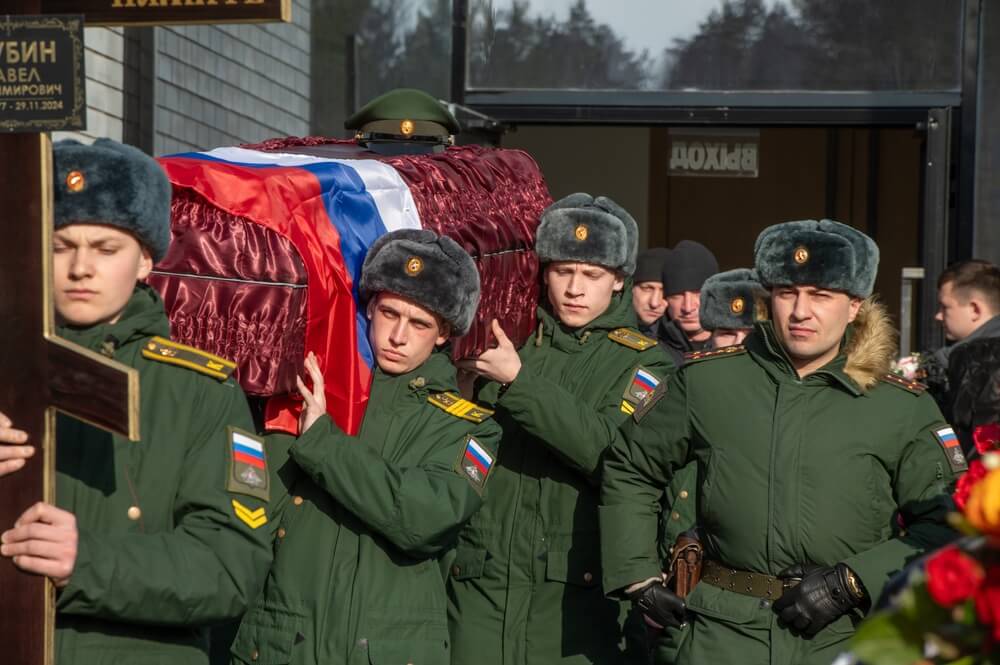 Russia's endurance has come at a staggering human and economic cost, and Tehran faces serious military, financial, and political vulnerabilities
Millions of Iranians reject the government's repression and disastrous policies. Yet surviving and winning are not necessarily the same.
For Iran's leadership, survival itself may constitute victory – particularly if continued resistance fractures regional alliances, disrupts global markets, or persuades Americans that further confrontation is too costly.
The United States must therefore think beyond destroying launchers, intercepting drones, and eliminating commanders. It must strengthen regional defenses, secure critical infrastructure, preserve alliance cohesion, and develop a strategy that accounts for an adversary prepared to absorb punishment while imposing costs elsewhere.
The greatest danger is not that Tehran misunderstands Russia's war or the threats made against it by both Israel and the United States.
It is that the Iranian regime understands this, and the lessons from Russia’s war, better than Washington does.
America can win battles and still fail to achieve its strategic objectives. Iran is betting on that as it prepares for more war ahead, just like Russia.
Sean Wiswesser is a former CIA Senior Operations Officer and an expert on Russian Intelligence, Espionage, and Defense Issues.
