In nine Latin American countries – Argentina, Bolivia, Chile, the Dominican Republic, Ecuador, El Salvador, Honduras, Panama and Paraguay – right-wing or extreme conservative governments are currently in power. Just a few years ago, that number was nearly half as many.
This shift is not a fleeting electoral wave or the routine change of government often seen in Latin America. It represents a broader political transformation with identifiable causes but also clear limitations.
Understanding this process requires distinguishing three aspects: the reasons why voters are increasingly choosing the right, the political profile of the new leaders who assume power, and the realistic scope of their policies once they begin governing.
The answers reveal that the so-called "blue tide" is not an ideological revolution. It is primarily a political reaction to the series of failures by the governments that dominated the region in the previous decade.
The weakness of the left as a driver of change
The rise of the right in Latin America is not due to its exceptional political strength but is primarily a consequence of the crisis of the left.
Bolivia illustrates this dynamic well. The Movement for Socialism (MAS) held power for almost two decades, since Evo Morales came to power in 2006.
That model succeeded for a long period thanks to high revenues from gas and other raw material exports. When those revenues began to decline, its weaknesses became apparent.
Inflation increased, fiscal space contracted, and a political system reliant on state spending and clientelist networks became increasingly unsustainable.
In these circumstances, the 2025 elections did not mark an ideological shift but rather a change of government. Many voters cast their votes against a model that was losing strength, rather than for a new political vision.
The proportion of respondents identifying as right-wing has reached its highest level since the beginning of this century
Chile demonstrates the same pattern. Gabriel Boric won in 2021 as a representative of the new left generation and the political wave that emerged after the 2019 protests.
His government soon faced issues dominating public debate: rising crime, slower economic growth, and a prolonged political conflict over constitutional reform.
The process of drafting a new constitution ended with a double rejection in referendums, further weakening the government's political authority.
In the 2025 elections, José Antonio Kast, who had lost to Boric four years earlier, won a clear majority of votes. This result reflects disappointment with the government's performance rather than a profound ideological change in Chilean society.
Argentina demonstrates this even more clearly. The election of Javier Milei in 2023 was a consequence of the deep economic crisis that had undermined the political system for years.
Inflation was among the highest in the world, real incomes were falling, and trust in state institutions was collapsing.
In these circumstances, many voters were prepared to support a radical break with previous economic policy. Milei offered precisely that: reduction of the state, sharp cuts in public spending, and deregulation of the economy.
Latinobarómetro data from 2024 show that the proportion of respondents identifying as right-wing has reached its highest level since the beginning of this century.
However, this change does not indicate an ideological conversion. It primarily reflects deep disappointment with the political elites who dominated during the previous economic cycle.
Security as a decisive political factor
Another key driver of the political shift is security. In much of the region, crime has become a dominant political issue.
According to CEPAL's analysis, Latin America and the Caribbean have the highest rates of homicide in the world, and organised crime is increasingly disrupting not only public security but also economic activity and democratic institutions.
Ecuador is a dramatic example. Until the beginning of this decade, it had a relatively low rate of violence compared to neighbouring states.
However, the infiltration of international drug cartels has turned the country into one of the key hubs of the cocaine trade. In just a few years, the homicide rate has skyrocketed.
Similar trends are evident in Honduras, Colombia, and parts of Brazil, where criminal organisations have a serious influence on local institutions.
In this context, El Salvador has become a point of reference for politicians across the region.
 Several Latin American politicians have visited El Salvador to learn about the government's crackdown on gangs - Nayib Bukele
In 2022, President Nayib Bukele launched a massive campaign against gangs, declaring a state of emergency that allowed for widespread arrests and severely limited the procedural rights of suspects.
At the same time, a large prison complex was built for tens of thousands of detainees, intended for members of criminal organisations.
This approach received strong criticism from international human rights organisations and numerous legal experts.
However, the results in terms of safety are clear. Just a few years ago, El Salvador had one of the highest homicide rates in the world; today, it is among the lowest in Latin America.
This change explains why Bukele's model is closely watched in other countries in the region facing similar problems of violence and organised crime.
Several Latin American politicians have visited El Salvador to learn about the government's crackdown on gangs, including the new prison complex built to house tens of thousands of detainees.
Some candidates have openly stated in their campaigns that a similar approach should be applied in their own countries.
Crime and personal security have thus become key issues of political competition in much of the region. For voters, they are a stronger argument than normative discussions about the rule of law.
Economy and foreign policy factor
In addition to security, economic stagnation and inflation represent another pillar of political change.
Argentina is the most dramatic example, but not the only one. In many countries in the region, wage growth is stagnating, while public debts and fiscal deficits limit the scope of social programmes.
In such circumstances, voters often choose political options that promise a radical break with the existing model.
Trump's administration favours governments it considers politically close
An external factor further complicates the picture. Trump's administration openly favours governments it considers politically close. Financial and diplomatic support to such partners has become an important element of American strategy in the region.
This approach also has a broader goal: limiting China's economic influence.
But this is where the key contradiction appears.
China as an inevitable partner
In almost all countries currently led by right-wing governments, China is one of the most important trading partners.
Chile exports a large proportion of its copper to the Chinese market. Argentina is a major supplier of lithium and soybeans. Peru and Brazil also maintain strong trade ties with Beijing.
Governments that politically align with Washington must simultaneously sustain economic relations with China
As a result, governments that politically align with Washington must simultaneously sustain economic relations with China.
In practice, this often leads to political compromises.
One illustrative example is the submarine digital cable project between Chile and Asia, considered during the previous administration in Santiago.
The project formed part of China's broader digital infrastructure strategy but faced strong opposition from Washington.
Such cases demonstrate how difficult it is for countries in the region to clearly align themselves amid the increasingly intense global rivalry.
The right is not a united bloc
Another common misconception in public discourse is the idea of a unified right-wing bloc.
In reality, the political projects of the new leaders differ greatly.
Javier Milei represents a radical libertarian experiment. Nayib Bukele is building a model of strong, personalised government. José Antonio Kast advocates a traditional conservative approach reminiscent of European right-wing parties.
In Ecuador, President Daniel Noboa pursues a pragmatic security policy focused on combating the cartels. In Panama, José Raúl Mulino came to power on promises of stability and economic growth.
These governments do not form an ideological bloc. Their political programmes and priorities differ significantly, and there is no coordinated regional strategy among them.
Limits of political progress
There is, however, a clear limit to this shift. The region's three largest economies – Brazil, Mexico and Colombia – are still led by leftist governments. Their importance for the continent's political balance is crucial.
Brazil and Mexico alone account for about 58% of Latin America's total GDP, and with Colombia included, these three countries represent approximately 62% of the regional economy.
The political trend in small and medium-sized countries cannot alone determine the direction of the entire continent
Therefore, the political trend in small and medium-sized countries cannot alone determine the direction of the entire continent.
Brazil, Mexico and Colombia continue to have significant influence in regional politics and seek to develop diplomatic frameworks not tied exclusively to Washington, including initiatives within CELAC (the Community of Latin American and Caribbean States – a regional organisation that includes all countries of the region except the US and Canada).
In these circumstances, the strengthening of the right in part of the region changes the political dynamics, but it does not mean that the political balance in Latin America has already been decided.
An election year that could change the balance
The upcoming elections in several countries this year will be an important test for the political changes that have swept parts of Latin America in recent years.
Special attention is focused on Brazil, the region's largest economy, because the outcome of its elections has a direct impact on the overall political balance of the continent.
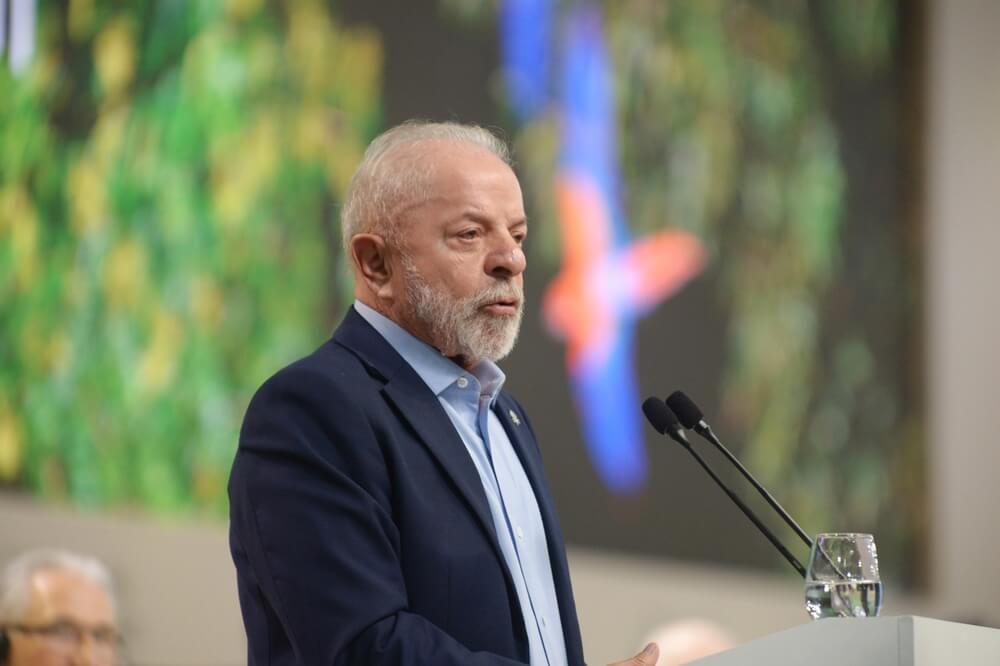 The upcoming elections in several countries this year will be an important test for the political changes that have swept parts of Latin America in recent years - Lula da Silva
At the same time, the political history of Latin America shows a consistent pattern: voters change political direction relatively quickly when governments fail to improve the economic situation or provide greater security.
This is why election cycles in the region often bring sudden changes in government and political direction.
The durability of this political shift will depend primarily on the results achieved by the new governments. In much of the region, voters supported change as economic stagnation and rising violence became central political issues.
The new administrations may strengthen their position if they successfully improve security and stabilise the economy. If not, the political space in many countries will open again for a change of government.
The experience of recent decades shows that Latin American voters do not tie political loyalty to ideology but to results. Governments that fail to stabilise the economy or curb violence quickly lose support, regardless of whether they come from the left or the right.
For this reason, the current strengthening of the right should be seen as a consequence of specific economic and security circumstances rather than as a permanent rearrangement of the continent's political map.
