Since the start of the US-Israeli campaign against Iran, only a handful of the 100 vessels that once transited the Strait of Hormuz each day have managed to pass through.
Now, with Iran reportedly laying sea mines in the narrow waterway, the possibility of its closure lasting days – or even months – is no longer hypothetical.
Shockwaves are already coursing through global energy markets, but the most immediate and dangerous consequences of a prolonged closure may show up at the dinner table, not the gas pump.
The Strait of Hormuz, after all, is not just a shipping lane for oil tankers; it is a critical artery of the global food system.
Key food staples – including wheat, corn, rice, soybeans, sugar, and animal feed – travel through the Strait on their way to the Gulf countries, and farmers around the world depend on the fertilizers and fuel that flow out of it.
The Gulf states, which rely heavily on imported food, are particularly vulnerable. To secure grain, rice, animal feed, and cooking oil, they depend on open waterways and a constant flow of international shipments.
As the COVID-19 pandemic showed, supply-chain fragility is not just a wartime problem.
Expanding strategic reserves
Over the past few years, many Gulf countries have taken steps to strengthen their food systems, expanding strategic reserves and investing in domestic production.
They have also explored alternative shipping routes, with some cargo moving overland or through ports that bypass the Strait of Hormuz, such as Saudi Arabia’s Jeddah Islamic Port on the Red Sea.
These measures have improved resilience, but they cannot fully compensate for a prolonged blockade of the Persian Gulf.
Supplying the Gulf under a blockade would require an unprecedented humanitarian operation
Roughly 70% of the food consumed in Bahrain, Kuwait, Qatar, the United Arab Emirates, Saudi Arabia, and Iraq moves through the Strait of Hormuz.
With a combined population of about 100 million, replacing disrupted imports in these countries would require moving approximately 191.3 million pounds of food into the region every single day, according to data from FAOSTAT.
Supplying the Gulf under a blockade would therefore require an unprecedented humanitarian operation, possibly through contested airspace.
For comparison, the United Nations World Food Programme delivered an average of just 15 million pounds of food per day to 81 million people in 71 countries in 2024.
For many Iranians, basic necessities have already become unaffordable
A full blockade would hurt Iran just as much as its Arab neighbors. Disruptions to maritime trade would squeeze the country from both ends, restricting energy exports while driving up the cost of imported staples such as wheat, rice, animal feed, and vegetable oil.
For many Iranians, basic necessities, from bread to rent, have already become unaffordable, fueling the mass protests that swept the country earlier this year.
Historically, food-price spikes and shortages have been major drivers of political instability.
Russia’s invasion of Ukraine drove up global grain, fertilizer, and fuel prices, contributing to a sharp rise in food insecurity
In 2008, rising energy and fertilizer costs, combined with extreme weather and persistent policy failures, nearly doubled the price of staple crops, sparking food riots in dozens of countries.
A few years later, in 2010 and 2011, a historic drought and heatwave in Russia slashed grain harvests and pushed the global food prices to record highs, setting the stage for the Arab Spring.
More recently, Russia’s invasion of Ukraine in 2022 drove up global grain, fertilizer, and fuel prices, contributing to a sharp rise in food insecurity.
With the global food system under growing strain from climate shocks and the lingering effects of the pandemic, it is hardly surprising that the world faces the largest surge in violent conflicts since the end of World War II.
Supplies of fertilizer and fuel
The impact of further disruptions in the Strait of Hormuz would extend far beyond the Gulf.
Farmers around the world, from South Asia to Sub-Saharan Africa – and even in Europe and the United States – depend on stable supplies of fertilizer and fuel.
Natural gas is a key ingredient in nitrogen fertilizer, a cornerstone of modern agriculture that has helped crop yields reach historic highs.
An estimated 30-40% of the world’s traded nitrogen fertilizers pass through the strait
An estimated 30-40% of the world’s traded nitrogen fertilizers pass through the strait.
When fertilizer and fuel become more expensive, farmers adjust by applying less fertilizer or planting fewer acres.
As a result, yields decline, and the effects ripple through the entire food system. From farmers and truckers to food processors, the supply chain passes along higher costs until they reach households’ grocery bills.
Water
While disruptions to food, fuel, and fertilizer shipments could drive up prices within weeks or months, another resource could be at risk within days: water.
If the conflict contaminates the Gulf’s waters or disables desalination plants, the consequences would be catastrophic.
The risk is already acute. Last week, both Bahrain and Iran – which is itself experiencing severe water shortages – reported that desalination plants had been attacked.
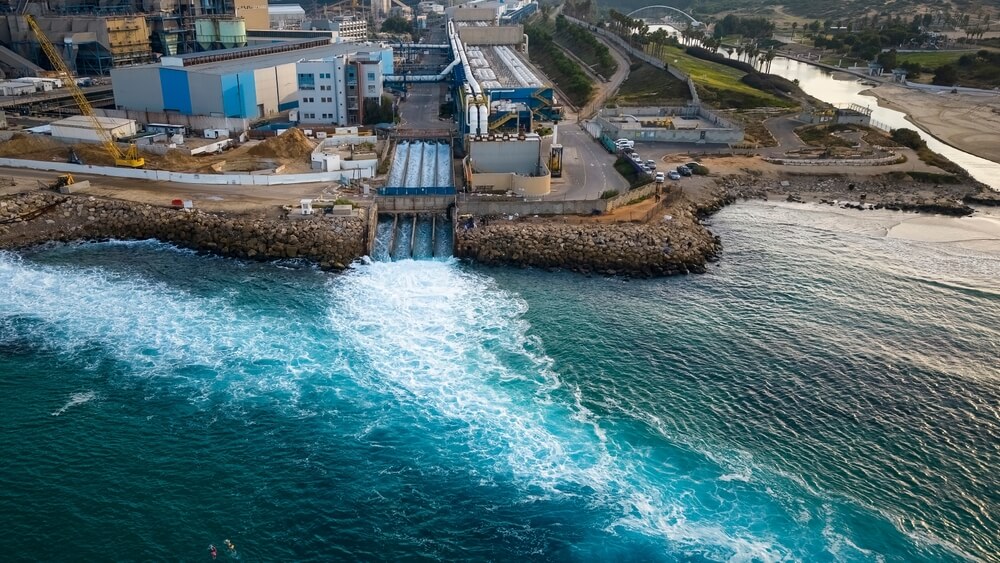 If the conflict contaminates the Gulf’s waters or disables desalination plants, the consequences would be catastrophic
If deliberate, such strikes would be considered war crimes under international law, as destroying or contaminating these facilities would immediately threaten millions of lives.
While Ukraine has demonstrated that critical infrastructure can be repaired under fire, desalination systems are highly complex, and there are few quick alternatives.
For decades, international security efforts in the Middle East have focused on preventing the proliferation of weapons of mass destruction.
Yet the closure of the Strait of Hormuz, whether through sea mines or sustained military conflict, could inflict civilian harm on a similar scale by disrupting global food and energy systems, as well as triggering a regional water crisis.
All parties to the conflict, along with the broader international community, must do everything possible to prevent such an outcome.
At the same time, this episode should serve as a warning: the global food system is dangerously vulnerable. Policymakers must act to shore it up before the next shock pushes millions more people toward a humanitarian cliff.
Bram Govaerts is Director General of CIMMYT.
Sharon Burke is Chief Engagement Officer at CIMMYT and a former US Assistant Secretary of Defense for Operational Energy.
