Is Yemen heading towards partition?
Following an offensive last week, UAE-backed separatists now control the oil-rich province of Hadhramaut and the rest of south Yemen, which was a separate country until its reunification with the north in 1990.
The offensive met little resistance in the south, but many fear a resurgence of the civil war that has been in stalemate over the last couple of years. Iranian-backed Houthis have controlled the north and its capital, Sanaa, for more than a decade.
Yemen’s future may hinge on the foreign policy rivalry between the UAE and Saudi Arabia, with each country responding cautiously so far.
Analysts believe that rather than quickly declare independence, southern separatists may take their time and wait for a referendum. More immediately, there is a risk of renewed violence, with the Houthis deciding to resume attacks on Israel, the UAE and Saudi Arabia, as well as on commercial shipping in the Red Sea.
Rise of the STC
In control of the south is the Southern Transitional Council (STC), made up of several armed groups trained and financed by the UAE since 2017.
The STC has raised the flag of South Yemen at government buildings while hundreds of its supporters paraded pictures of Aidarous al-Zubaidi, the STC leader, at a rally calling for independence.
The STC claims its offensive was aimed at restoring stability by eradicating smuggling and other operations in Hadhramaut by the Houthis, al-Qaida and the Islamic State.
The STC is nominally part of the PLC, which operates mostly from exile in Riyadh rather than the southern capital, Aden
But the Presidential Leadership Council (PLC) - which in 2022 took over the head of state duties of the internationally recognised government in the south and is backed by Saudi Arabia - urged the UAE-backed forces to withdraw.
The STC is nominally part of the PLC, which operates mostly from exile in Riyadh rather than the southern capital, Aden.
“We categorically reject any unilateral measures that would undermine the legal status of the state, harm the public interest, or create a parallel reality,” Rashad al-Alimi, PLC chairman and leader of the Saudi-backed Islah party, said in a statement from Riyadh on Sunday.
A humanitarian crisis long overshadowed by others in the region
Starting in 2015, the UAE and Saudi Arabia jointly led a massive bombing campaign against the Houthis, causing massive casualties and drawing widespread condemnation. But their foreign policy paths have diverged in recent years.
“This is probably the biggest turning point for Yemen since the fall of the capital, Sanaa, to the Houthis in 2015,” Maysaa Shujaa al-Deen, a senior analyst at the Sanaa Centre for Strategic Studies, told The Guardian.
The Yemen conflict, and its attendant humanitarian crisis, has long played second fiddle in terms of global attention to others in the region
“It has the potential to upend regional and local alliances, including bringing the Emirates into conflict with Saudi Arabia,” he said.
The Yemen conflict, and its attendant humanitarian crisis, has long played second fiddle in terms of global attention to others in the region, including Gaza and Syria, except when attacks on Red Sea shipping made it hard to ignore.
After the Hamas attack on Israel on 7 October, 2023, the Houthis launched a wave of attacks against Israel and shipping. In response, the US, UK and Israel earlier this year attacked Houthi forces. Houthi attacks ended after the Israel-Hamas ceasefire of 9 October.
An impasse in the political process
The UN says protracted conflict, economic decline, and extreme weather driven by climate change have left more than 19 million people out of a population of about 40 million in need of humanitarian assistance in Yemen, which is also home to more than 62,000 refugees and asylum-seekers, mostly from Somalia and Ethiopia.
Hans Grundberg, the UN special envoy for Yemen, had said the Gaza ceasefire offered an opportunity to push for renewed peace talks. Now, he believes a complete “erosion of trust” has led to an impasse in the political process.
The STC’s takeover of south Yemen will derail Saudi efforts to make a UN-backed ceasefire permanent via a roadmap leading to a federal government for the whole country.
“They [the STC and its allies] see Saudi Arabia working toward a political settlement with the Houthis in the north and want to ensure they hold full control of the south before any deal between Riyadh and Sanaa [the Houthi-controlled capital of Yemen] is reached,” said the Basha Report, a US-based risk consultancy.
Big players in the region
The UAE’s unilateral actions in Yemen - and in Sudan, where it also backs one warring party and Saudi Arabia backs its opponent - have failed to draw any opposition from the US.
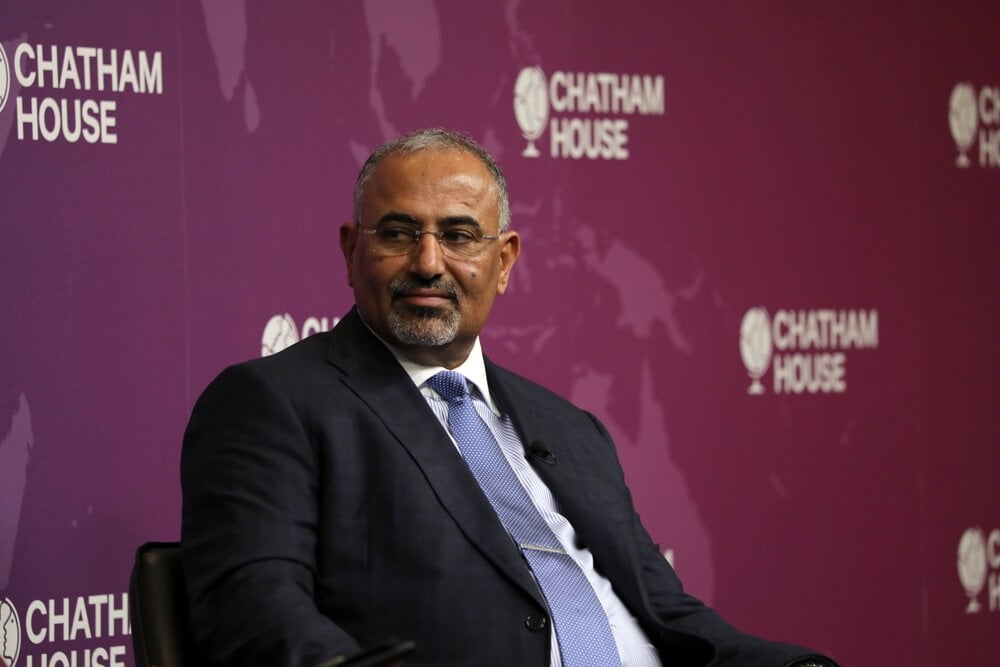
Aidarous al-Zubaidi, the STC leader, was quoted saying it planned a period of institution building for a future “south Arabian state”
One explanation could be Abu Dhabi’s ties with Israel have helped to appease the Trump administration.
Abu Dhabi’s intentions in southern Yemen are unclear, and officially it says it supports the aspirations of the Yemeni people, be that for one or two states.
Observers say the UAE seeks control along Yemen’s southern coast, long considered by Riyadh as its sphere of influence.
The STC, for its part, claims its priorities are autonomy over independence and fighting the Houthis. Zubaidi, the STC leader, was quoted on its web site saying it planned a period of institution building for a future “south Arabian state.”
He was also quoted as saying the STC’s “next goal must be Sanaa, peacefully or through war, until justice returns to its people and aggression is defeated.”
His words point not only to further conflict among Yemeni parties but also between the region’s big players.
“The prospects for escalation of renewed warfare in Yemen to quickly draw in regional and global parties, including not only the [Saudi] Kingdom and the UAE but also Israel and Iran, and potentially also the United States, are substantial,” said the Soufan Center research non-profit.
