It has been ten years since the United Nations Climate Change Conference in Paris (COP21), where 195 states made a historic commitment to work together to keep the long-term rise in global temperatures well below 2°C above pre-industrial levels, and to pursue efforts to limit the temperature increase to no more than 1.5°C.
France played its full part in making this great moment of cooperation and universal solidarity a success. A decade later, we can be proud of how far we have come.
In France, we have reduced our greenhouse-gas emissions by 30% compared with 1990, including 20% between 2017 and 2024.
We went from a reduction of less than 1% per year before 2017 to annual reductions of more than 2% on average from 2017 to 2021 – and more than 4% on average between 2022 and 2024.
Our goal is a 50% reduction by 2030, which means 270 million fewer tons of carbon dioxide in the atmosphere every year.
These results are France’s collective achievement – the success of our unique approach to ecology, which combines progress and protection, and enables us to reduce both emissions and unemployment at the same time.
We never impose a rule without providing an accessible alternative. We refuse to sacrifice our competitiveness.
We aim to combine sovereignty, employment, and decarbonization.
How? Through clear choices. I have placed ecology at the heart of all our economic, planning, energy, agricultural, and industrial policies.
I have also directly tasked the Prime Minister with ecological and energy planning.
The just-published National Low-Carbon Strategy is a case in point: it sets our course toward carbon neutrality, shaping all our policies.
Our principles
We rely on six essential principles:
Respecting and Protecting Science. We are guided by the consensus of the Intergovernmental Panel on Climate Change, which last week launched the preparation of its seventh report and held its first meeting with all its authors here in Paris.
This is why we invest so heavily in climate research and innovation – to find new decarbonization solutions.
Through our Research Programming Law and France 2030 program, we have funded highly practical research and hundreds of projects related to climate change in various fields, from small modular nuclear reactors and low-carbon hydrogen to sustainable fuels and water management.
At a time when scientific voices are being challenged, we will continue to accelerate in this area and attract the best researchers through our Choose France for Science programs.
We are choosing a decarbonized and sovereign energy system
Ending Dependence on Imported Fossil Fuels. We are choosing a decarbonized and sovereign energy system – essential for both national independence and climate protection.
As early as 2022 in Belfort, I outlined the main pillars of our energy policy: reducing fossil-fuel consumption, developing renewable energies, and relaunching nuclear power.
This has succeeded: In 2024, our electricity was more than 95% decarbonized – a world-leading achievement.
After unprecedented consultation and planning, we have identified the zones where offshore wind farms will be developed by 2050.
We have revived the nuclear sector, with initial construction and financing already underway on six new EPR2 reactors, and we are developing small reactors for heat production. We are building a truly sovereign energy industry, and I intend to go even further: by 2027, we will close or convert the last coal-fired power plants.
Green investment
Helping Our Industries Decarbonize. Reindustrializing France means helping to decarbonize the world.
Green investment in France has increased by nearly 30% over the past three years, and green industry accounted for one in three new factories in 2024.
We have already launched decarbonization efforts for the 50 largest industrial sites – the biggest emitters, representing about 10% of France’s total emissions. By 2030, these sites will have halved their emissions.
Our green industries are creating jobs throughout our regions. It is here, throughout France, that we plan to produce our electric vehicles (like the Renault R5 in Douai), batteries, heat pumps, and solar panels.
We must continue this effort as Europeans as well – to keep simplifying, innovating, and better protecting these industries against unfair competition.
I hope that the European Commission’s upcoming announcements will show that momentum is building, with a genuine “European preference,” so that Europe truly becomes the site of the world’s most ambitious decarbonization projects.
This ambition for progress requires constant attention to equality and purchasing power
Maintaining France’s Goal of Progress for People. Ecology must improve people’s daily lives.
Renovating our homes allows everyone to lower their energy bills, helps the country reduce dependence on fossil fuels, and increases everyone’s quality of life.
This ambition for progress requires constant attention to equality and purchasing power.
Through our social leasing program, 50,000 low-income households were able to acquire a new vehicle in 2024 for less than €100 ($117) per month, and another 50,000 will benefit this year.
Through MaPrimeRénov’ and the Energy Savings Certificates program, we have made this transition accessible. Making it to the end of the month doesn’t have to mean hastening the end of the world.
A time of collective success
Adapting to Climate Change. We must prepare for the consequences of climate change, which are already here and accelerating. We have adopted our third National Adaptation Plan and defined a reference pathway to align all our policies – from the local to the national level.
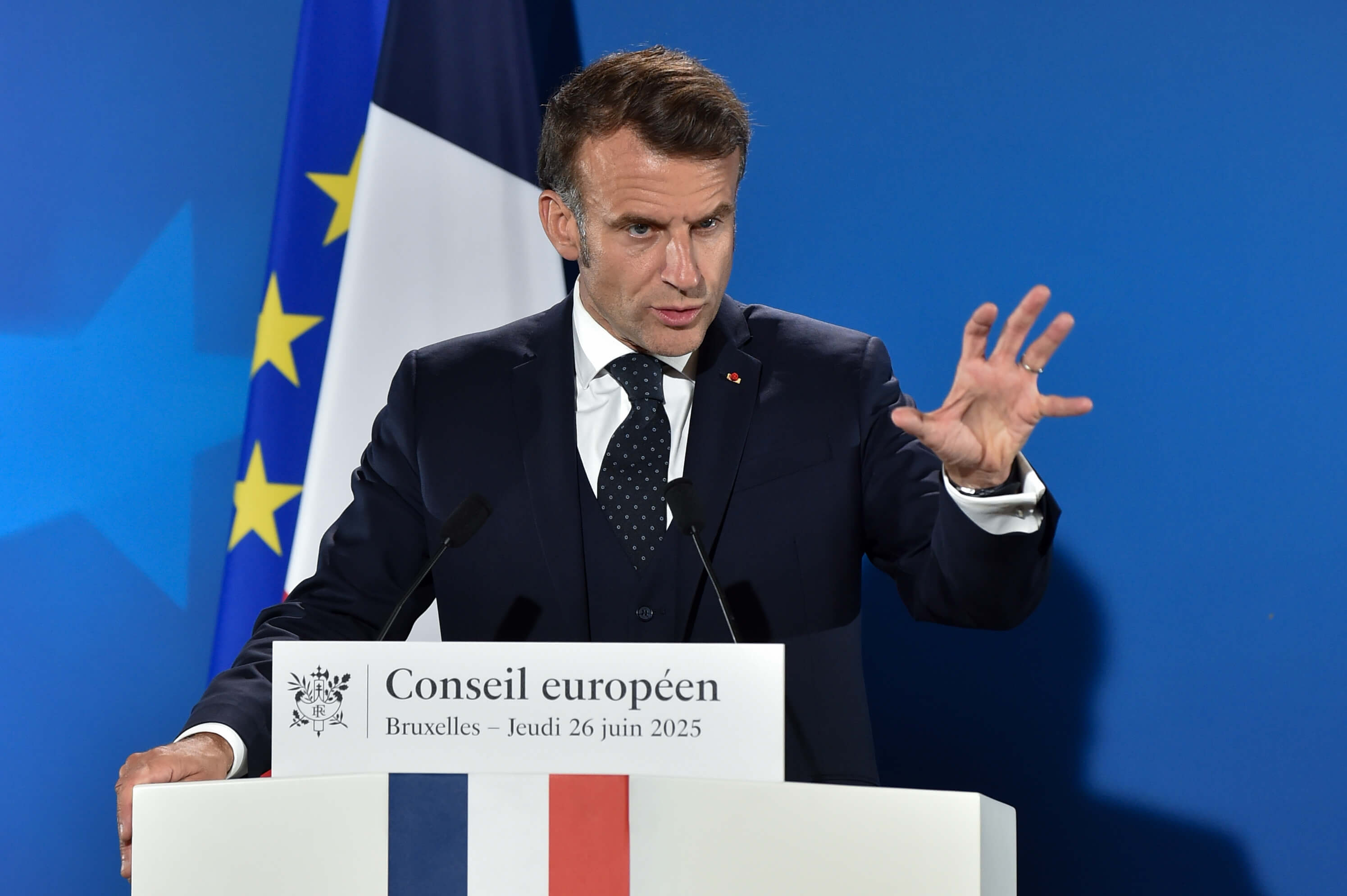 Let us make the coming decade a time of collective success. I am certain that we will – if we remain faithful to the commitments we made in Paris ten years ago - Emmanuel Macron
Carrying the Fight to Europe and the World. Europe is the most climate-ambitious continent, with the goal of carbon neutrality by 2050.
The European Union is also the world’s leading provider of climate finance. France fully embraces its role as a guarantor of the Paris agreement and of global climate ambition.
To this end, in 2017, I launched the One Planet Summit to build cross-sector coalitions capable of acting simultaneously on emissions reduction and adaptation projects.
Since then, we have launched 50 concrete initiatives to fight climate change. And our programs led, in record time, to the UN’s adoption of the Kunming-Montreal Global Biodiversity Framework and the High Seas Treaty, as well as to the mobilization of €4 billion to combat plastic pollution and over €19 billion for biodiversity protection and food security.
Ten years after COP21, France also hosted the UN Ocean Conference, aimed at protecting unique ecosystems that are vital to the climate.
We lead this effort with respect for the national sovereignty of all. We support Just Energy Transition Partnerships and seek innovative financing solutions that align private investment flows with global decarbonization goals. This was the message I carried at COP30 in Belém.
The decade since COP21 has been a period of success and ambition. But it has also been marked by international tensions, the questioning of science, international division, and efforts to erase the universal ideal of liberty and fraternity among peoples.
As always, France will play its full part in the struggle for our climate and our planet, guided by respect for science, industrial ambition, progress, solidarity, and the exemplary leadership of Europe.
Let us make the coming decade a time of collective success. I am certain that we will – if we remain faithful to the commitments we made in Paris ten years ago.
Emmanuel Macron is President of France.
