The UK’s populist right-wing challenger Nigel Farage just celebrated what he called a huge milestone in his Reform party’s journey to win the next UK general election.
He was heralding his party’s claim that it has overtaken Labour to become Britain’s largest political party in terms of numbers of paid-up members.
His optimism is reflected in polling numbers which show Reform leading its rivals by a comfortable margin for most of what has been a punishing year for Prime Minister Keir Starmer’s Labour government.
But the surge in Reform’s popularity tells only part of the story as politicians and pundits survey the prospects for the coming year. Speculation about the future fortunes of rival parties is intense. But the reality is that the next general election is still three years away.
Of more immediate interest as 2026 approaches is whether Starmer can survive as leader beyond local elections in May that are likely to see further losses for Labour after disappointing results this year.
From a Labour perspective, would the ruling party be better off switching leaders in mid-stream or should it stick with the man who led it to a resounding electoral victory barely 18 months ago?
Can Reform maintain its momentum given some recent setbacks that have touched on the competence of the party and the character of its leader?
Will the Conservative party, which dominated the UK’s two-party system for most of the previous century, even survive another electoral wipeout?
Perhaps Farage was right when he proclaimed this month that the age of two-party politics is dead.
The painful irony for Labour
In mid-2024, Labour won almost two-thirds of seats in the House of Commons on the strength of little more than one-third of the popular vote.
The outcome was more a reflection of public disillusionment with more than a decade of Conservative rule than it was a ringing endorsement of Labour’s manifesto.
Subsequent political developments have renewed the debate over whether Britain’s first-past-the-post electoral system, once vaunted as a guarantor of political stability, is still viable as politicians seek to appeal to an increasingly divided electorate.
Viable or not, it is the system that will govern the next election, in which Starmer has acknowledged that Farage’s Reform will be Labour’s main rival.
The future challenge for the contesting parties is that small shifts in public opinion will have a potentially decisive effect on the outcome of a future election, once again delivering a majority government on the strength of a minority of the overall vote.
It would be unwise to see the current Labour and Reform standings as the inevitable prelude to yet another two-horse race
Current polling projections are of limited value when it comes to predicting an outcome that is still three years away. Voter surveys only give an estimate of how the public might choose if an election were held today.
Given the number of known unknowns (let alone the unknown unknowns) facing the country, Europe and the wider world, it would be unwise to see the current Labour and Reform standings as the inevitable prelude to yet another two-horse race.
Sir John Curtice, the UK’s most respected polling guru, warned Labour at its annual conference this autumn that Reform was not its only electoral threat, pointing out that it was losing more support to the Liberal Democrats and Greens than it was to Farage’s party.
The painful irony for Labour is that haemorrhaging support to these centrist and left-wing rivals might actually favour Reform by splitting the progressive vote.
Taking too long to deliver on promised reforms
While Labour’s mounting problems, not least in tackling irregular migration, have contributed to Reform’s rise, many younger voters and disappointed Labourites have gravitated elsewhere.
Zack Polanski, leader of the Green Party since September, has emerged as the darling of the populist left.
One weekend poll rated him as the most popular party leader in the UK, which may say more about the UK’s current voter volatility than it does about the Greens’ prospects of gaining office.
Starmer still insists he can turn the party’s current fortunes around
In the coming year, the ruling party may opt to confront competitors on the left by attempting to unseat Starmer and picking a more left-wing leader.
The Manchester mayor Andy Burnham is seen as a potential frontrunner, although he would have to get himself elected back into parliament first.
Starmer still insists he can turn the party’s current fortunes around, while acknowledging frustration at the pace of progress since he moved to Downing Street.
In a session with a committee of MPs this week, he admitted that rumours were rife of a leadership challenge while also lamenting that it was taking too long to deliver on his promised reforms.
Tactical voting
In the meantime, it has not been plain sailing for Farage and Reform despite their advances in this year’s polls.
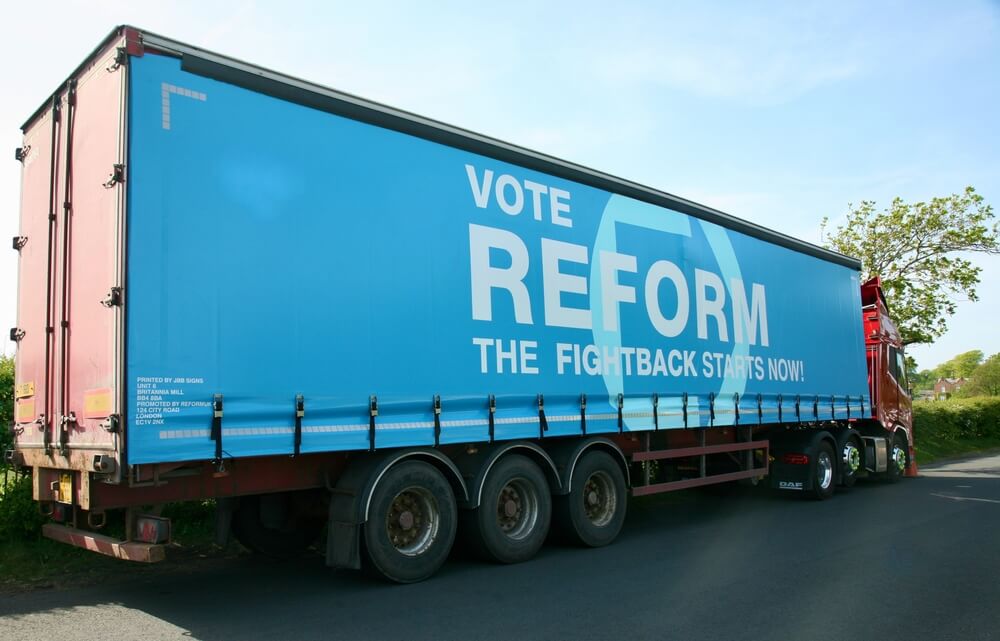 This rejection of right-wing populism per se may prove to be Reform’s Achilles heel
New claims about his alleged racist behaviour towards fellow pupils during his teenage school years clearly rattled him, even if they failed to make a significant dent in his popularity numbers.
Neither did the evidence of backbiting and incompetence within some of the newly-elected Reform councils.
With a recent funding boost and barring future mishaps, Farage might well believe he is set for a victory roll.
His main barrier, though, is not Labour or the Greens or even a revived Conservative party but rather a widespread sentiment within the UK of ‘anyone but Reform’.
Within the two-thirds of voters who do not currently back Farage’s, there are many who will never change their minds.
This rejection of right-wing populism per se may prove to be Reform’s Achilles heel.
With still three years to go, even staunch Laborites are thinking the unthinkable and confessing that they would sooner vote tactically for their local Conservative candidate if he or she had the best chance of heading off Farage.
