In early November, as Iran’s years-long drought reached an intensity “unprecedented in modern times,” crowds of worshippers gathered at a mosque in Tehran and tilted their faces upward, pleading for rain.
But no amount of prayer – in Iran or anywhere else – can offset an entrenched culture of water mismanagement against a backdrop of accelerating climate change.
Iran has a long history of irresponsible dam-building practices, ineffective urban planning, excessive subsidies, and resistance to technological upgrading.
Add to that desertification resulting from drought, deforestation, and unsustainable agricultural practices, and it is no wonder that water has emerged as a major risk factor for the country.
Six consecutive years of severe drought have now turned Iran’s water vulnerability into an acute crisis.
The reservoirs on which Tehran depends have reached critically low levels, creating a crisis so severe that President Masoud Pezeshkian has warned that the metropolitan area’s 15 million residents may need to evacuate. And it is not just Tehran: about 10% of Iran’s dams have run dry.
Iran is not alone. In 2006-11, Syria endured what the United Nations Development Programme called the “worst long-term drought and most severe set of crop failures since agricultural civilizations began in the Fertile Crescent many millennia ago.”
The drought’s impact was exacerbated by a brutal crackdown on social unrest by former President Bashar al-Assad’s regime, and the protracted civil war that followed, during which most water-treatment plants and pumping stations were destroyed.
It does not help that Turkey has built large dams and hydroelectric stations on the Tigris and Euphrates rivers, significantly reducing downstream flows to both Syria and Iraq, which has also endured years of conflict and poor water management.
Turkish projects have reduced Iraq’s water supply along the two rivers by an estimated 80% since 1975. But there is a glimmer of hope: last month, the two countries overcame tensions over Turkish military incursions in northern Iraq and reached a water-management agreement.
Israel - a regional water superpower
Israel, like many of its neighbors, has limited freshwater resources. Yet it has emerged as a regional water superpower, largely owing to its leadership in water preservation, recycling, and desalination technologies.
But it has also used diplomacy and military action to gain control over regional water supplies.
The Israeli military’s frequent incursions into Syrian territory are aimed not only at keeping President Ahmed al-Sharaa’s militias away from the border, but also at control of the Al-Mantara Dam, which provides water to large areas of southern Syria.
Israel has not hesitated to use its water dominance as geopolitical leverage
Israel has not hesitated to use its water dominance as geopolitical leverage. In its 1994 peace agreement with Jordan, it agreed to supply 50 million cubic meters of treated water annually.
In 2021, Israel agreed to double that volume. “This is what good neighbors do,” said then-Israeli Foreign Minister Yair Lapid.
But Israel’s relations with Jordan have deteriorated sharply since the country launched its war against Hamas in Gaza in 2023.
So, when the second water-sharing agreement expired last year, Israel held back on extending it.
Only after Jordan lent support to Israel’s defense from Iranian drone and missile attacks – and under pressure from the United States – did Israel grant the requested extension.
Palestinians are highly vulnerable to Israel’s hydro-hegemony
Few countries are as vulnerable to water-based power politics as Jordan. Not only is it one of the world’s driest countries; the government has long offered generous water subsidies to ensure social stability and the regime’s survival.
Subsidies were probably unwise in the 1980s, when the country’s population amounted to just three million.
With the population having surged to 11 million, owing to high birth rates and an influx of refugees from its conflict-affected neighbors, they are untenable.
While Jordan has devised plans for tackling water scarcity, the National Water Strategy for 2023-40 and the Aqaba-Amman Water Desalination and Conveyance Project are expensive, long-term initiatives.
Jordan will remain dependent on Israel and Syria
Moreover, Jordan will remain dependent on Israel and Syria, which controls the upper stretches of the Jordan and Yarmouk Rivers.
Palestinians are also highly vulnerable to Israel’s hydro-hegemony. Even before the large-scale destruction of the Gaza war, the Coastal Aquifer that provides water to the enclave was over-pumped, contaminated, and saline.
For Palestinians in the West Bank, the situation is somewhat better, but they still share their most important water source, the Mountain Aquifer, with Israel.
To safeguard their access, they are fighting for recognition of their rights to the aquifer and other resources.
The Nile conflict
Egypt has its own water woes. The Grand Ethiopian Renaissance Dam, inaugurated this past September, is Africa’s largest hydroelectric power plant, located on a tributary of the Nile.
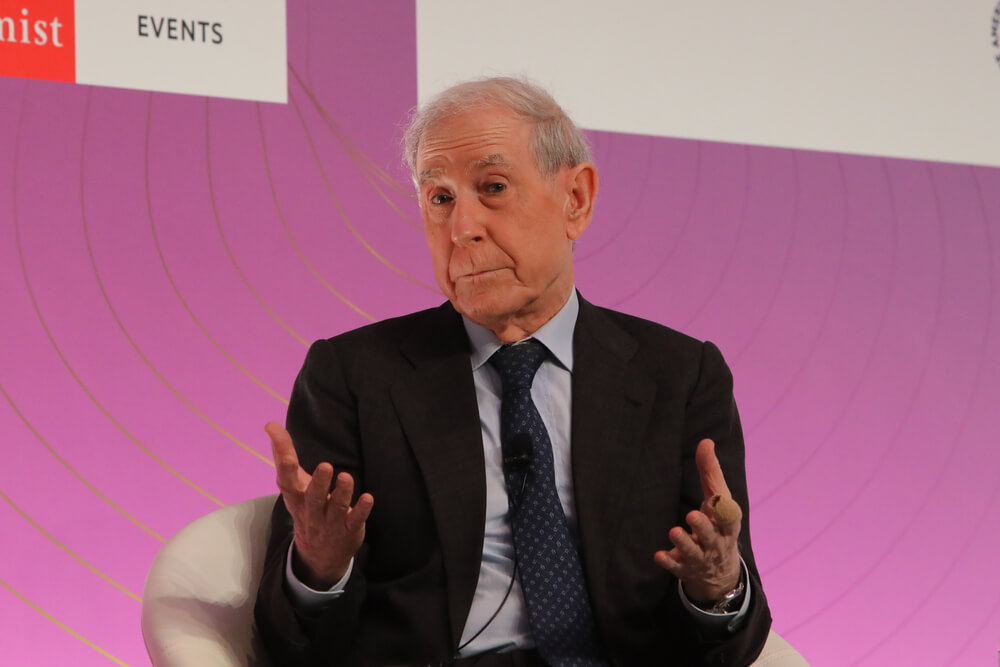 If Middle Eastern countries want to avoid a new wave of disasters and conflicts, they must place water at the center of their diplomatic strategies - Shlomo Ben-Ami
The project, which promises to deliver “energy hegemony” for Ethiopia, is fueling fears of water shortages in Egypt, which is 93% desert, with the Nile as its only freshwater source.
Israel has a long-standing strategic partnership with Ethiopia. From Israel’s early days, the country was seen as a vital component of an alliance of non-Arab, peripheral states surrounding the neighboring Arab enemies (in the 1950s, the alliance included Turkey and Iran).
While Israel is not directly involved in the Nile conflict, it is perfectly happy to see Egypt entangled in an existential struggle in its African backyard.
As climate change progresses, water scarcity, and the tensions it generates, will only escalate.
If Middle Eastern countries want to avoid a new wave of disasters and conflicts, they must place water at the center of their diplomatic strategies, beginning with more robust water-sharing arrangements and technology transfers.
Shlomo Ben-Ami, a former Israeli foreign minister, is Vice President of the Toledo International Center for Peace.
