If Russian President Vladimir Putin were to make a clearheaded assessment of the state of his war with Ukraine, he would seek a ceasefire.
But his head apparently is not clear, because all signs point to him pursuing some kind of escalation.
If he does indeed embark on such a course, he will make the situation worse for everyone, but primarily for himself.
Since his August 2025 meeting with US President Donald Trump in Anchorage, Putin has been seeking to persuade the United States to force Ukrainian President Volodymyr Zelensky into a deal that would leave Russia in control of the areas it has already stolen—a little less than 20% of Ukraine’s territory—as well as handing over the sliver of the Donetsk region that Ukraine still holds.
It is worth remembering that prior to the Anchorage meeting, Trump had the support of both Ukraine and the Europeans in seeking an immediate ceasefire.
But after talking to Putin, he suddenly abandoned his pursuit of a ceasefire and instead accepted Putin’s demand for Donetsk.
The Europeans naturally rushed to shield Zelensky from the pressure that Putin and Trump would try to apply on him, and political talks to end the fighting stalled. It was Trump—suckered once again by Putin—who prolonged the war.
The area in question lacks any economic importance, but it does matter for Ukraine’s defense, and it carries symbolic weight for Putin, who changed the Russian constitution in 2022 to claim Donetsk as part of Russia.
The idea that Ukraine would hand over its position is therefore a non-starter.
Death zone
Over the last year and a half, Russia’s military has suffered a gradual loss of capabilities, reflected in the declining quality of Russian troops, while Ukraine’s battlefield-technology capabilities have improved markedly.
As a result, the frontline has become a “death zone” that barely moves.
Putin still seems to believe that his forces can get full control of Donetsk, and his generals still fear the consequences of telling him that it cannot be done
Of course, Putin still seems to believe that his forces can get full control of Donetsk, and his generals still fear the consequences of telling him that it cannot be done.
But the odds are decidedly against him. Equally, Putin believes that striking civilian population centers and critical infrastructure can force Ukraine into submission.
But while he’s undoubtedly inflicting great pain, aerial bombing alone has never won a war, and that won’t change in Ukraine.
Over the past few months, Ukraine has expanded its own medium- and long-range drone strikes in Russia, where it has disabled a significant share of refinery capacity and triggered a politically painful fuel crisis across Russia. Ukraine will only continue to intensify these strikes.
The Crimea campaign
But the real game changer may be Ukraine’s effort to sever the supply chains linking Crimea to Russia.
The Ukrainians have been unremittingly striking freight trucks traveling through the occupied land corridor in eastern Ukraine, the bridge and ferries that cross the Kerch Strait, and ships attempting to deliver supplies via the Sea of Azov.
This campaign has already complicated matters for the Kremlin, and it could prove politically catastrophic if Russian control over Crimea becomes seriously contested.
Other than Putin, hardly anyone in Russia is likely to care deeply about the sliver of Donetsk that is now blocking the political process
At that point, even freezing the conflict at the existing “death zone” might no longer be an option.
Other than Putin, hardly anyone in Russia is likely to care deeply about the sliver of Donetsk that is now blocking the political process. But many—rightly or wrongly—do care about Crimea.
Indeed, it was Putin’s land grab of the peninsula in March 2014 that boosted his popularity and set the stage for his full-scale invasion in 2022.
Course to a cliff edge
Yet the goal of the 2022 invasion—subduing all of Ukraine militarily and politically—is unobtainable, which means that Putin has already failed.
Whether his hold on power can withstand a ceasefire in which he acknowledges this outcome is an open question.
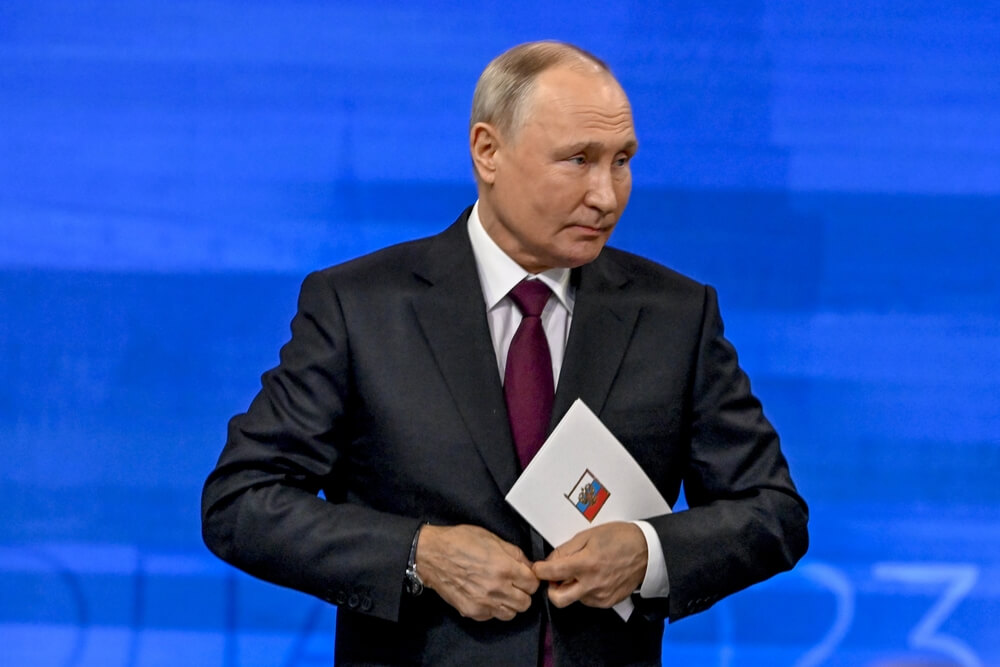 Putin almost certainly cannot survive a scenario in which he loses control of Crimea
But he almost certainly cannot survive a scenario in which he loses control of Crimea.
That’s why Putin, if he was rational, would forget Anchorage and accept a ceasefire now.
If he continues down his current path, he is unlikely to get the sliver of Donetsk he wants, but highly likely to lose his grip on Crimea.
Besides, opinion polls suggest that a large majority of Russians support ending the war.
A ceasefire would certainly end the conflict. A lasting political settlement would still lie far in the future.
But it would at least bring the conflict into the political realm, drive changes within both Russia and Ukraine, and allow for diplomacy involving more outside actors.
Unfortunately, Putin appears determined to remain on his current course to a cliff edge.
Carl Bildt is a former prime minister and foreign minister of Sweden.
