Iranian missiles over Doha, the capital of Qatar, and US bombs on bridges around Bandar Abbas, Iran’s largest port city on the northern coast of the Strait of Hormuz, marked the shift to a more dangerous phase of the war on 17 July.
After four months of conflict, a brief ceasefire, and a failed attempt to regulate navigation through Hormuz with a temporary agreement, both sides have broadened their range of targets.
The United States has expanded its list of targets from missile sites, radars and coastal military facilities to transport links and energy systems in southern Iran.
On the same day, Tehran retaliated by striking a Kuwaiti power plant and water desalination facility, while missiles and drones activated air defences in Qatar, Bahrain, Jordan, Oman, Iraq and Syria.
This war now has two connected axes. One passes over US bases, ports, radars, tankers and energy facilities throughout the Gulf.
The other runs through Washington, where the administration is trying to prolong the military campaign without new congressional authorisation and to spread its costs through the regular budget, special requests and party budget procedures.
Regional escalation and the US constitutional dispute can no longer be viewed separately. Each new strike in the Gulf increases the costs the White House must justify at home, while each delay in a political decision in Washington prolongs military uncertainty for the states facing the greatest immediate risk.
US bases turn host countries into battlefields
Qatar is the clearest example of this contradiction. Its air defences intercepted two waves of Iranian missiles on 17 July, and one child was injured by shrapnel that fell during the interception.
The Revolutionary Guards said the target was Al Udeid, a large US air base south-west of Doha and the most important US military stronghold in the Middle East, although Qatar and the United States have not confirmed that it was hit.
Iranian Foreign Minister Abbas Araghchi publicly offered his condolences to Qatar’s leadership on 12 July, following the death of former Emir Sheikh Hamad bin Khalifa Al Thani. He arrived in Doha on 15 July to deliver him in person.
The diplomatic channel remains open, but it does not shield Qatar from the war it is mediating.
For months, Tehran has claimed that American facilities are the sole targets, while trying to keep the host countries out of the conflict. That distinction has now lost its practical value.
A strike on a Kuwaiti desalination plant has more serious political consequences than a failed attempt to hit a military base
The Qatari government described the Iranian attacks as a violation of its sovereignty, Kuwait suffered damage to a facility on which it depends for electricity and water, and two Emirati tankers were hit on 13 July in Omani waters.
One crew member was killed and eight others were wounded. When a missile crosses a border, destroys infrastructure or hits a commercial ship, the rationale of targeting the United States no longer limits Iran’s political and legal responsibility.
The change is also evident in the choice of targets on both sides. US attacks on bridges, rail links, power lines and a control tower in Chabahar, Iran’s port on the Gulf of Oman, are intended to make it more difficult for Iranian forces to move and to monitor navigation.
At the same time, the civilian importance of these sites gives Tehran a justification for expanding retaliation against regional infrastructure.
A strike on a Kuwaiti desalination plant has more serious political consequences than a failed attempt to hit a military base, because it threatens infrastructure on which the population directly depends.
The US military presence no longer exposes the Gulf states only to attacks on bases. The war has reached their cities, ports, power plants and water supply.
Whoever controls Hormuz determines the price of war
The attacks on the ships have brought Hormuz back to the centre of the conflict. The dispute now concerns the right to set navigation conditions, while the physical passage of tankers has become a means of coercion.
The memorandum that Washington and Tehran concluded in June guaranteed free passage during the 60-day negotiation period. Iran then insisted on approving the routes and raised the issue of future fees for managing the strait.
Oman, a country on the southern side of the entrance to the Strait of Hormuz, rejects mandatory transit fees, though it is willing to discuss charges for specific security and environmental services. Washington rejects Iran’s right to charge for passage through international waterways.
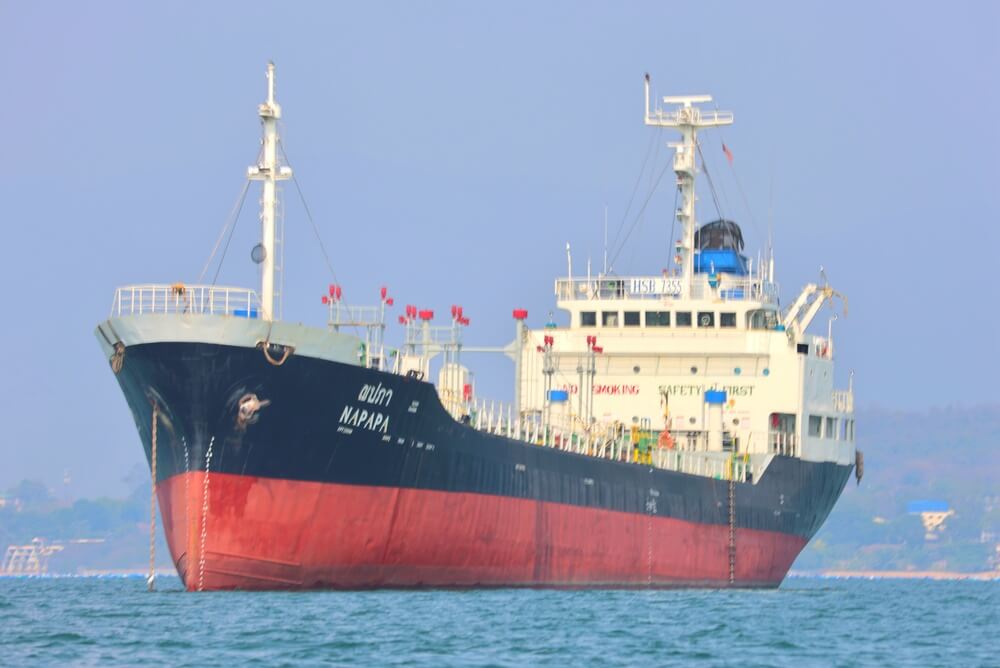 The stoppage of navigation through Hormuz immediately pushed up the price of oil
The renewed fighting turned the dispute over Hormuz into an open battle for control of navigation. After the attacks on commercial ships, President Donald Trump reimposed a naval blockade on Iranian shipping and ordered strikes on coastal facilities. Shipping traffic then almost stopped.
Only three cargo ships passed through the strait on 16 July, the lowest number since May, and for the second day in a row not a single large crude oil or liquefied natural gas tanker passed through.
The stoppage of navigation through Hormuz immediately pushed up the price of oil. On 13 July, Brent rose by almost nine per cent, to 83.30 dollars per barrel, and by the end of the week it was close to 86 dollars.
For Iran, restricting navigation is the most effective way to turn the United States’ military superiority into an economic liability. US air power can destroy radars, bridges and launch sites, but without permanent surveillance of the coast and naval approaches it cannot guarantee safe passage for every ship.
Any attempt by US forces to intercept and forcibly stop a tanker, as well as any Iranian attack on a ship or port, increases the risk of a direct conflict between the two armed forces.
Congress stalls legislation, White House finds money
On 14 July, Senate Democrats blocked the start of debate on the 2027 defence bill, worth roughly $1.15 trillion. The vote ended 50–46, short of the required 60 votes.
Chuck Schumer, a senator from New York and leader of the Senate Democrats, linked the decision to a war launched without congressional approval and without a clear plan to end it.
Tammy Duckworth, a Democratic senator from Illinois and a member of the Senate Armed Services Committee, called for a ban on new assets for offensive operations against Iran until Congress authorises the war.
That blockade carries serious political weight but does not itself cut off funding for operations. The NDAA sets defence policy and authorises programmes, while money is allocated through appropriations bills and supplemental packages.
The administration has already divided its military spending into three channels. The basic request amounts to about $1.1 trillion, another $350 billion is requested through budget reconciliation, which can pass in the Senate with a simple majority, and on 24 June the White House requested an additional $87.6 billion.
The Pentagon would receive 67.1 billion dollars, while the Center for Strategic and International Studies estimates that about a third of the entire package is directly related to the war and that military expenses so far are approximately 40 billion dollars.
The new proposal from the House of Representatives, which passed its first committee stage on 16 July, introduces another aternative.
The law does not provide for pausing or restarting the deadline during a ceasefire
The 95 billion dollar package includes 60 billion for the military and 13 billion for intelligence activities, but it faces resistance from some Republicans because of the lack of savings and unclear war aims.
The Pentagon can therefore continue operations by diverting existing funds, while the political dispute shifts from one budget procedure to another from month to month.
This creates a war with vast financial demands and without a single decision in which Congress clearly accepts its goal, cost, or duration.
The same pattern applies to war powers. In a letter dated 10 July, Trump informed Congress that hostilities had resumed on 7 July and that the administration considers this the beginning of a new sixty-day period.
Critics in Congress and legal experts dispute that claim because the law does not provide for pausing or restarting the deadline during a ceasefire. The dispute therefore goes beyond the question of timing.
Accepting the president’s interpretation would allow the executive branch to alternate between strikes and ceasefires, presenting each return to fighting as a fresh start.
The Gulf purchases US protection again
Amid the budget standoff, on 15 July the State Department approved a possible $1.96 billion sale of precision guidance systems to Saudi Arabia and a $484 million maintenance package for Kuwait’s C-17 transport planes.
The approval comes as the Houthis, a movement that controls much of northern Yemen, have once again targeted Abha airport, in the south-western Saudi Arabian city of the same name, not far from the border with Yemen, after several years of pause, while Kuwait suffers Iranian attacks, and its transport fleet supports US and coalition operations.
The American presence provides the Gulf states with the strongest defence available, yet that same presence exposes them to Iranian strikes
These deals do not cover the Pentagon’s operating costs, but they show how the war increases demand for American equipment and reinforces the dependence of countries that simultaneously pay the price of hosting American bases.
Congress can formally challenge the sale, but to stop it it would need to muster enough votes for a joint resolution and then overcome a possible presidential veto. Practical control is therefore weaker than constitutional competence.
The Gulf governments thus enter a vicious circle. The American presence provides them with the strongest defence available, yet that same presence exposes them to Iranian strikes.
Their response to that vulnerability is to purchase new American systems, pursue deeper integration of air defences and rely more heavily on Washington.
The ceasefire is only a respite
The Gulf monarchies will not abandon their reliance on the United States, because none of them has sufficient capacity to protect itself against Iranian missiles and drones.
They will demand more air defence systems, better-protected military installations, stricter rules for US operations from their territory, and stronger guarantees for the protection of ports, power plants and water facilities.
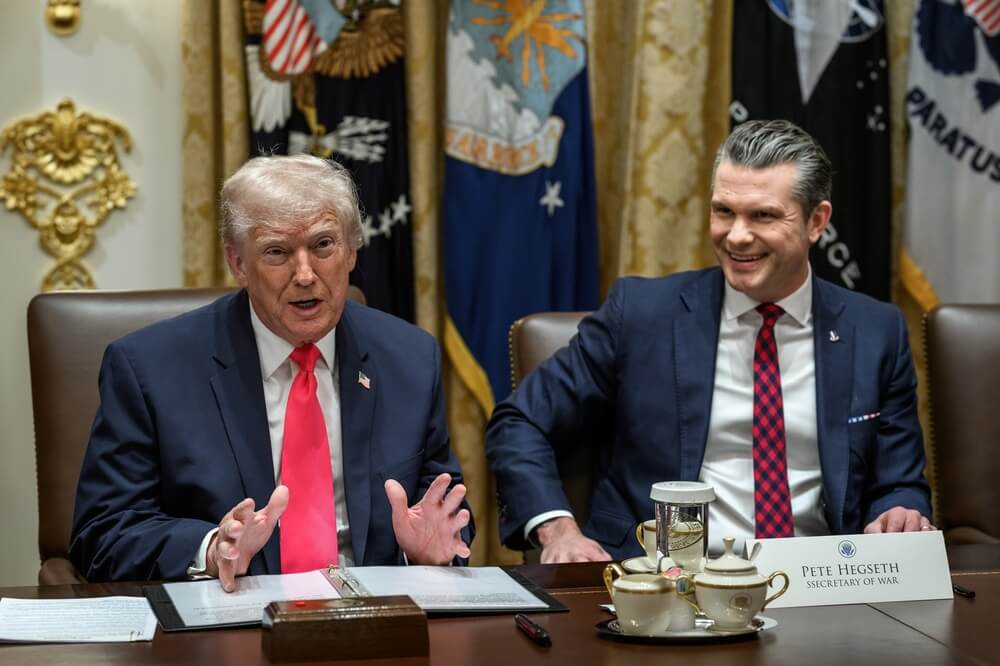 For now, the White House can continue the war by relying on existing appropriations, supplemental funding packages and a broad interpretation of presidential authority
Qatar and Oman will continue to mediate, but any new Iranian attack on their territory would undermine Washington’s confidence in their ability to negotiate with Tehran.
Washington will try to keep the campaign in the air and at sea, where it has clear superiority and can avoid a ground war.
Iran will respond where US supremacy offers the least political protection, targeting ships, bases in partner states, energy infrastructure, and long supply chains.
The continuation of this pattern leads to a war without a stable frontline, with occasional pauses to resupply and prepare for the next round.
For now, the White House can continue the war by relying on existing appropriations, supplemental funding packages and a broad interpretation of presidential authority.
This only delays Congress’s decision, while costs rise and American allies in the Gulf suffer increasing damage.
Without an agreement to limit US operations, Iranian attacks and the dispute over shipping through Hormuz, the next ceasefire will not end the war; it will only delay another round of strikes.
