The Crimean Peninsula has entered a severe energy crisis. According to media reports, following a Ukrainian drone attack, large parts of Crimea have been left without electricity.
Emergency services continue repair and restoration work and, although power has been partially restored in several districts, the timeline for the full recovery of the peninsula's energy system remains uncertain.
Damage to high-voltage infrastructure and key energy facilities has caused widespread power outages across cities and districts in Crimea.
The disruption of the power grid has significantly impaired the functioning of municipal services, transportation, and social infrastructure, and the lack of sufficient reserve capacity makes it impossible to predict when the consequences of the outage will be fully resolved.
The introduction of a regional state of emergency in Crimea and Sevastopol on 26 June underscored the seriousness of the situation and the need for centralised crisis management.
At the same time, strict fuel rationing was introduced, prioritising emergency services and the transport of socially essential goods.
Long queues of vehicles on the Kerch Bridge illustrate the growing pressure on transport infrastructure and the mounting disruption to logistics.
The large-scale power outage has cast doubt on years of Russian government claims about Crimea's high level of energy security.
In 2014, Vladimir Putin described the peninsula as an "unsinkable aircraft carrier" and a symbol of stability.
The current situation, however, demonstrates the significant vulnerability of critical infrastructure in wartime conditions.
Large-scale infrastructure crisis
These developments have exposed the Crimean power grid's critical dependence on a small number of key infrastructure nodes.
The widespread blackout has called into question the effectiveness of previously implemented projects intended to ensure the peninsula's energy self-sufficiency.
The lack of adequate reserve capacity, combined with the complexity of rapidly restoring damaged networks, has turned what began as a localised incident into a large-scale infrastructure crisis.
The region faces growing humanitarian, economic, and social risks
The current situation also raises questions about the effectiveness of crisis management by the federal authorities.
Despite years of Kremlin statements emphasising Crimea's strategic importance, the large-scale energy and logistics crisis has exposed the limited capacity of the federal centre to respond rapidly to emergencies of this magnitude.
Against this backdrop, the region faces growing humanitarian, economic, and social risks.
Power outages and diesel fuel shortages for generators have disrupted the operations of retail businesses, the food industry, the banking sector, and numerous other elements of critical infrastructure.
Covert mobilisation
As the humanitarian situation continues to deteriorate, Russian security agencies have intensified measures aimed at replenishing the armed forces.
According to media reports, raids and inspections targeting men of conscription age have been recorded in Crimea and several other regions.
Some reports also describe night-time detentions and large-scale identity checks.
Against this background, a growing number of observers argue that the Russian authorities are shifting towards mechanisms of covert mobilisation.
The intensification of these measures is linked to the need to compensate for substantial military losses and the gradual decline in the effectiveness of voluntary contract recruitment.
Conducting such campaigns ahead of elections to the State Duma of the Russian Federation further increases social tensions and undermines public confidence in state institutions.
Mass raids and inspections targeting men of military age have also sparked debate about compliance with the constitutional rights of Russian citizens
The war launched by Vladimir Putin has led to substantial loss of life, which, according to many experts, has forced the Russian leadership to seek new mechanisms for military recruitment.
Events in Crimea may indicate the testing of new mobilisation models that could eventually be extended to other regions of the Russian Federation.
The Crimean precedent demonstrates a possible shift in Russia's approach to mobilisation.
As the effectiveness of financial incentives declines, administrative and coercive methods of military recruitment may become increasingly important.
Limited public oversight and the restricted coverage of such practices in regional media create favourable conditions for their further spread.
Mass raids and inspections targeting men of military age have also sparked debate about compliance with the constitutional rights of Russian citizens.
The use of security forces to implement mobilisation measures reinforces an atmosphere of legal uncertainty, undermines public trust, and creates additional risks to the country's internal social stability.
The critical inefficiency of the governance system
The Russian authorities are increasingly unable to ensure the proper functioning of essential public services in occupied Crimea.
This has been accompanied by a deepening humanitarian crisis and the increasing involvement of the Russian Red Cross in functions that traditionally belong to state institutions.
The ongoing war is stripping Crimea of its status as Russia's "showcase of success," transforming what was once one of the country's premier tourist destinations into a frontline territory showing signs of systemic socio-economic decline.
The Kremlin continues to view the peninsula primarily as a military-strategic outpost
Repeated attacks on critical energy infrastructure have triggered cascading disruptions to water supply, communications, and transportation, forcing the population to live in conditions resembling wartime despite the region's formal status as a rear area.
Calls by federal authorities to "remain calm" stand in increasing contrast to realities on the ground, while the involvement of humanitarian organisations only highlights the scale of the accumulated problems.
The Kremlin continues to view the peninsula primarily as a military-strategic outpost, while the provision of civilian services increasingly exposes the critical inefficiency of the governance system.
Against this backdrop, public dissatisfaction continues to grow, as reflected in numerous appeals by Crimean residents urging the Russian leadership to officially recognise the situation as a federal-level emergency.
The crisis in the tourism industry
At the same time, the crisis in the tourism industry – which has long been one of Crimea's principal economic sectors – continues to deepen.
The Russian government has approved the allocation of more than 4.3 billion rubles from the Reserve Fund of the Russian Federation to support the tourism sector in Crimea and Sevastopol. Approximately 3.7 billion rubles have been earmarked for Crimea and an additional 584.5 million rubles for Sevastopol.
The very decision to allocate these funds constitutes an official acknowledgement of the severe crisis affecting the 2026 tourist season.
In previous years, Crimea's tourism industry generated an estimated average of around 150 billion rubles during the summer season, whereas the current compensation package amounts to only about three per cent of potential seasonal revenues.
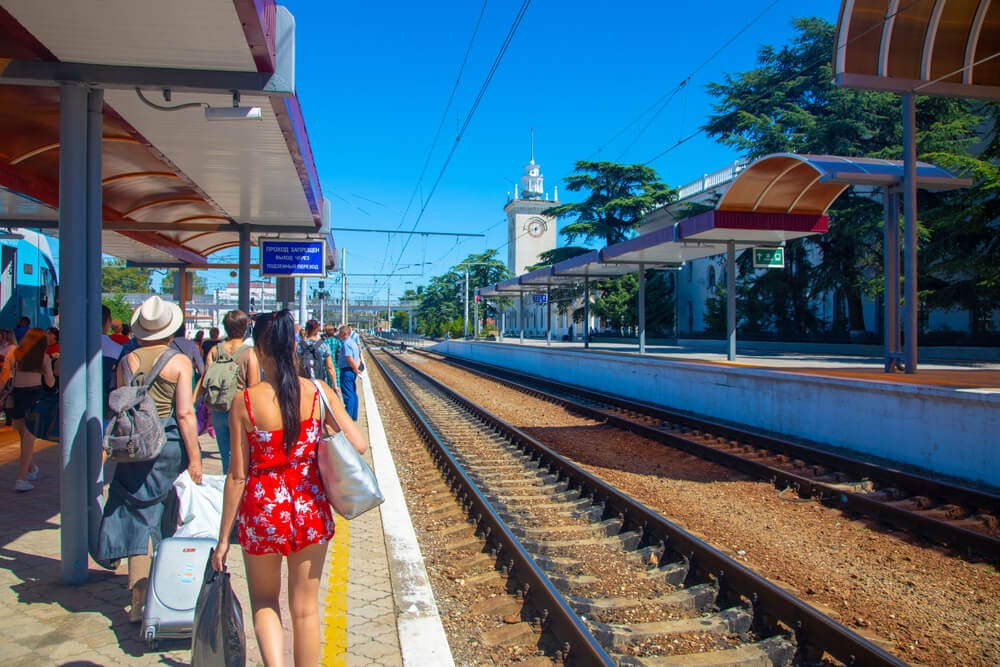 The sharp decline in tourist arrivals has been driven primarily by the deteriorating security environment and the regular strikes carried out by Ukraine's army against Russian military and logistical infrastructure on the peninsula
The sharp decline in tourist arrivals has been driven primarily by the deteriorating security environment and the regular strikes carried out by Ukraine's army against Russian military and logistical infrastructure on the peninsula.
Even before the active summer season began, the Association of Tour Operators of Russia requested that the government allow Crimean hotels to postpone reservations or issue refunds to tourists through the end of 2026.
According to data from the Travelline booking system, approximately 79% of reservations in Crimea and over 70% in Sevastopol were cancelled.
Additional factors contributing to the crisis include prolonged power outages, fuel shortages, and disruptions to transport.
Much of the railway network effectively terminates at Kerch, forcing tourists to arrange onward travel independently.
Tourism enterprises rely heavily on generator power, significantly increasing operating costs.
Financing the tourism sector from the Russian Reserve Fund demonstrates that the industry has lost its ability to function independently.
The Russian government has effectively taken responsibility for paying the salaries of employees at more than 4,600 tourism-related enterprises in an effort to prevent mass bankruptcies, layoffs, and the further collapse of the sector.
These emergency support measures underscore the critical nature of the crisis, as the loss of skilled personnel could have long-term consequences for the industry's recovery, even after the security situation stabilises.
The growing number of problems affecting daily life on the Crimean Peninsula increasingly raises a broader question: is the Kremlin still capable of ensuring the peninsula's basic functioning and life-support systems, or is Crimea gradually becoming an unsustainable burden for Moscow?
Oleksandr Levchenko, a former Ukrainian diplomat, is a professor at the State University (Kyiv) and a member of the Academy of Geopolitics and Geostrategy (Kyiv).
