Pakistani authorities confirmed yesterday that the suspended Chief Minister of Khyber Pakhtunkhwa province, Sohail Afridi, had been placed in preventive detention the previous day, along with the Provincial Assembly Speaker, Babar Salim Swati, and the president of the provincial branch of the opposition PTI party, Junaid Akbar.
According to information provided to AFP by two police sources, a total of 278 members of that party have been detained since 11 October.
On the same day, President Asif Ali Zardari suspended the elected provincial government and imposed a state of emergency in 12 border and southern districts of the province.
Islamabad claims that the ruling PTI, the party of jailed former Prime Minister Imran Khan, has hampered the fight against terrorism.
The opposition sees this as an attempt to deprive it of its last major stronghold, just as its supporters are demanding Khan’s release with a protest march.
A week later, the march was still under way in the province, and the provincial police were ordered to stop it.
The decision comes at a time when Pakistan is engaged in armed conflict with the Afghan Taliban, and Islamabad’s takeover of the provincial government has given it direct control over the police and civil administration in areas where cross-border fighting has recently occurred.
The war that began before the takeover
On 27 February, Pakistani Defence Minister Khawaja Asif publicly described the conflict with the Taliban authorities in Afghanistan as “an open war”. Pakistan’s air force struck targets in Kabul, Kandahar and Paktia, and both sides reported casualties in cross-border fighting.
After several months of relative calm, clashes resumed in September. The immediate trigger for the renewed escalation was the suicide attack on the police complex on 18 September, for which a faction of the Pakistani Taliban claimed responsibility. Thirty-one people were killed in the attack.
This was followed by Pakistani air strikes in the Afghan provinces of Kandahar, Paktia and Khost, and renewed fighting along the border.
Islamabad accuses Kabul of harbouring Tehrik-e-Taliban Pakistan
At the end of September, heavy fighting also took place in Kurram, one of the districts that have now been placed under special administration.
Tehrik-e-Taliban Pakistan (TTP) is separate from the Afghan Taliban, but Islamabad accuses Kabul of harbouring it, a claim Afghan authorities deny.
Balochistan invites an awkward comparison
The government in Islamabad has cited information from Law Minister Azam Nazeer Tarar that terrorist incidents in Khyber Pakhtunkhwa have risen by 196 per cent over the past two and a half years.
No data or methodology has been published alongside this claim to allow independent verification. The comparison period almost coincides with the PTI provincial government’s tenure following the 2024 elections.
The independent Centre for Research and Security Studies (CRSS) reports that, in the third quarter in Khyber Pakhtunkhwa, the number of people killed in attacks and counterterrorism operations rose from 475 to 556.
In Balochistan, the number increased from 265 to 829 over the same period, an increase of 213 per cent.
Balochistan is governed by the Pakistan People’s Party, an ally of Shehbaz Sharif’s government, and Islamabad has not suspended the provincial administration there.
The number of dead alone cannot determine the constitutional justification for the measures
The two insurgencies have different causes and methods, so the number of dead alone cannot determine the constitutional justification for the measures.
The comparison, however, clearly shows that the intensity of the violence was not the sole criterion for the federal decision.
From the dispute over the military operation to the march on Islamabad
On 26 September, Interior Minister Mohsin Naqvi said that the federal government was considering imposing governor’s rule in Khyber Pakhtunkhwa, while the PTI was preparing a protest.
After negotiations on 3 and 4 October failed, Sohail Afridi led a protest march from Lakki Marwat district, demanding the release of Imran Khan. On 11 October, President Asif Ali Zardari suspended the provincial government and transferred its powers to the governor, while the protest march was still under way.
According to PTI Secretary General Salman Akram Raja, a key point of contention during the negotiations was the demand that the federal and provincial governments jointly decide on counter-terrorism operations, in consultation with local political representatives.
Minister Naqvi claims that the PTI refused to provide the necessary cooperation.
Governor Faisal Karim Kundi, of the Pakistan People’s Party will govern the province with an 11-member council appointed by the federal government
The conflict over how the army was used had very concrete consequences back in January, when residents of the Tirah Valley in Khyber district left their homes ahead of the announced operation.
The federal government denied ordering the evacuation, while the provincial government claimed it had not been consulted about the military operation and that it had allocated about $14.3 million to support the displaced population.
Federal Information Minister Attaullah Tarar is now accusing PTI officials of collaborating with militants, citing undisclosed intelligence reports.
Governor Faisal Karim Kundi, of the Pakistan People’s Party will govern the province with an 11-member council appointed by the federal government. Healthcare has been entrusted to retired Lieutenant General Nigar Johar, former Surgeon General of the Pakistan Army and the first woman to attain that rank.
Her appointment shows that Islamabad has placed former senior military officers in the new civilian administration.
By taking over the police and provincial institutions, the federal government simultaneously assumes responsibility for the work of the services whose failures it has so far attributed to the PTI authorities.
The borders of the former tribal areas
The special regime covers Bajaur, Mohmand, Khyber, Kurram, Orakzai, North Waziristan and South Waziristan, with South Waziristan now divided into two districts. Until 2018, these areas were managed directly by the federal government, outside the regular provincial system.
Now, four southern districts – Dera Ismail Khan, Tank, Lakki Marwat and Bannu – which previously formed part of the regular provincial administration, are included in the special administration.
The new decision therefore applies to a much larger territory than the former tribal areas.
Until 2018, residents of Pakistan’s former tribal areas lived under a 1901 regulation inherited from British colonial rule.
That regulation permitted collective punishment, so members of a man’s family or wider community could be punished for a single transgression by that man.
The civil servants who administered these areas also exercised judicial powers, allowing them to decide civil and criminal disputes.
The right to independent judicial decision-making was one of the most important achievements of the 2018 reform
The constitutional reform of 2018 annexed these areas to the province of Khyber Pakhtunkhwa and paved the way for the establishment of a regular court system.
When administrative officers retained part of these judicial powers through transitional regulations, the Peshawar High Court declared this unconstitutional. Its decision was upheld by the Supreme Court of Pakistan.
Eight years later, Islamabad established a separate administration in 12 districts, with its own secretariat and a council of representatives from those areas.
At the same time, it temporarily suspended the constitutional provision requiring the separation of judicial power from the executive, that is, from the state authorities that manage the area.
This has reopened the possibility for certain judicial powers to be exercised by officials who simultaneously implement the decisions of those authorities. For residents of these areas, this raises very specific questions.
Who will decide on their detention, disputes over land ownership or complaints against state authorities, and what protection will they be able to obtain before an independent court?
The right to independent judicial decision-making was one of the most important achievements of the 2018 reform, which the current emergency regime is once again calling into question.
The governor has a deadline, the state of emergency does not
Islamabad has implemented two different constitutional measures, each with its own time limit.
Under Article 234 of the Constitution, the federal government can take over the administration of a province through the governor, but this measure expires after two months unless it is confirmed by a joint session of parliament.
With parliamentary approval, it can then be extended in two-month increments, up to a maximum of six months in total.
Article 232 allows a state of emergency to be imposed in response to internal disturbances that the provincial authorities are unable to control.
As the provincial assembly has not passed a resolution supporting the imposition of a state of emergency, the president’s decision must be approved separately by both houses of the federal parliament within 10 days.
The sessions are scheduled for today, and the deadline for confirmation is 21 October.
The joint session of parliament must then consider the decision within 30 days, because without its confirmation the state of emergency ends after two months.
Unlike the governor’s administration, which can last for a maximum of six months, the state of emergency in the 12 districts has no predetermined deadline.
Once approved by parliament, it can remain in force until a decision is made to abolish it. For residents of those areas, this means that the government gains broader powers to restrict freedom of movement, public gatherings, political organisation and freedom of speech.
The Pakistani Constitution makes it even more difficult to challenge in court the decision to impose a state of emergency
The army is deployed to assist the civil authorities, and in the areas in which it operates the powers of the high courts to protect citizens from the actions of state authorities are limited.
The Pakistani Constitution makes it even more difficult to challenge in court the decision to impose a state of emergency.
Islamabad’s decisions have already been challenged before the Peshawar High Court, and the chairman of the opposition PTI, Gohar Ali Khan, has announced that he will request their annulment today.
However, the legal situation is further complicated by the constitutional reform of November 2025, which established the Federal Constitutional Court, responsible for resolving disputes between central and provincial authorities.
For this reason, the question now arises as to which court can rule on specific decisions of Islamabad and to what extent it can annul them.
Constitutional limits on judicial control of the state of emergency, together with expected parliamentary support for the federal government, make it unlikely that suspended provincial powers will be restored by court order in the short term.
Islamabad is now also managing the civilian part of the war
Khyber Pakhtunkhwa Governor Faisal Karim Kundi, who was entrusted by Islamabad with governing after the suspension of the elected provincial administration, chaired a security meeting in Peshawar yesterday.
The meeting was attended by Federal Interior Minister Mohsin Naqvi and the commander of the Pakistan Army corps stationed in the city.
The army and the federal government previously controlled military operations on the border with Afghanistan and directed policy towards Kabul, while Imran Khan’s provincial administration ran the police, its counter-terrorism units and the civil administration.
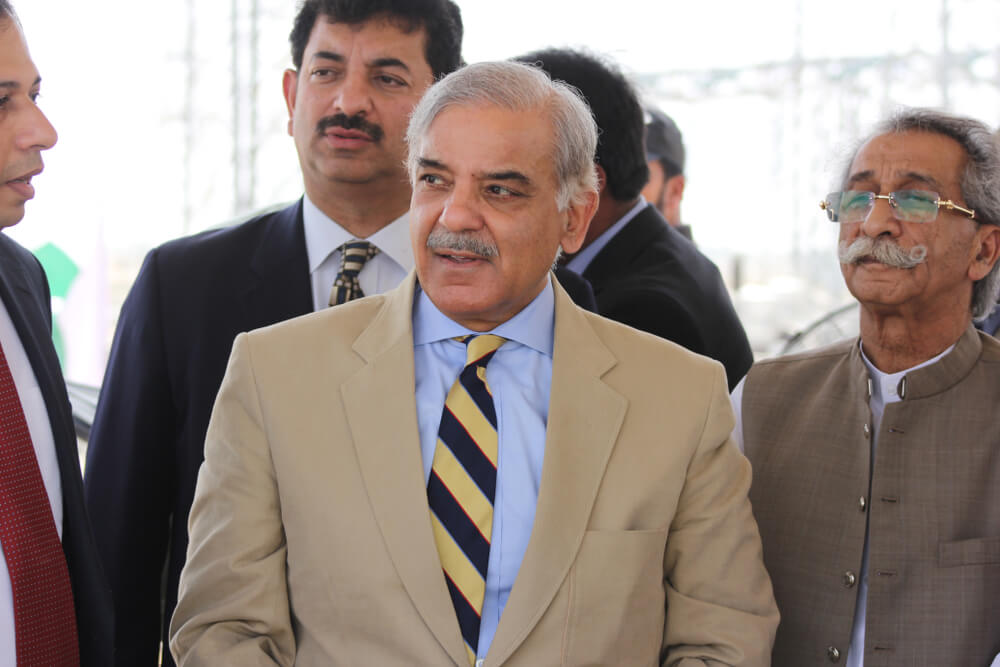 The ongoing armed conflict with the Afghan Taliban gives the federal government a strong basis for extending emergency measures - PM Shehbaz Sharif
With the suspension of that government, Islamabad took over these responsibilities, along with responsibility for the safety of the population and the functioning of public services.
The ruling coalition holds a majority in both houses of Pakistan’s parliament, so decisions on emergency measures are expected to receive the necessary support.
Direct administration of a province by a governor can last for a maximum of six months, while the state of emergency in the 12 border and southern districts, once confirmed by parliament, can remain in force for much longer.
The ongoing armed conflict with the Afghan Taliban gives the federal government a strong basis for extending emergency measures.
However, even complete control over the provincial administration will not solve the problem of militant groups operating from Afghan territory.
The most important consequences of Islamabad’s decision will become apparent in the coming months.
The number of terrorist attacks, civilian and police casualties, the performance of state services and the treatment of detainees will indicate whether the takeover of provincial power has improved security.
Sharif’s government and the military leadership have so far placed some responsibility for security failures on the PTI leadership, accusing it of non-cooperation and police mismanagement.
Now they have removed that leadership and assumed its responsibilities. If the violence continues, responsibility for the performance of the provincial police and civil administration will rest with the authorities installed by Islamabad.
Responsibility for military operations and for securing the border with Afghanistan has already been in the hands of the federal government and the military leadership.
