Money is an enigma. But if there is one thing we know for sure, it is that money begets money.
The best way to make more of it is to control the money-making machine, as traditional banks have done for centuries. By creating credit money denominated in official currency out of thin air, commercial banks decide who gets it and on what terms.
And better yet, their money creation is backstopped by central banks that extend them liquidity in normal times, and that bail them out in bad times.
But this business model is now under threat from two directions, owing to the rise of privately issued cryptocurrencies and central bank digital currencies. Of these, CBDCs are arguably the more serious challenger.
After all, banks can fend off competition from the crypto industry by creating or investing in cryptocurrencies themselves (albeit within regulatory constraints); but they cannot produce the one money that everyone wants in a crisis: state-issued currency.
Banks well know that if states get into the business of digital currencies, they can, in theory, cut out the middlemen.
Convenience has come at a price
For centuries, states have relied on, and supported, privately operated payment systems – from transferable bills of exchange to bank-created money.
Doing so was convenient and helped in promoting economic growth. But this convenience has come at a price.
Banks’ prominent role in the payment and savings system has enabled them to hold the economy hostage in times of crisis
Banks’ prominent role in the payment and savings system has enabled them to hold the economy hostage in times of crisis, which in turn has encouraged them to expand credit and take on greater risks over time.
States have not been oblivious to this. Consider the US Glass-Steagall Act, enacted in response to the financial crisis that preceded the Great Depression.
Glass-Steagall separated investment banking from commercial banking. Those engaged in the former could take on as much risk as their clients and investors would tolerate, while those in the latter group were closely regulated and supervised to ensure that savers and the payment system were protected from those risks.
But under pressure from the financial industry, Congress and the Clinton administration dismantled Glass-Steagall in 1999, setting the stage for the 2008 financial crisis.
Central banks’ caution
Now, however, CBDCs have the potential to shield the payments system from banks’ profit-maximizing and risk-tolerating enterprises.
Central banks could offer to hold citizens’ digital wallets and conduct instant payments with them directly, while banks could still offer loans and other financial services – though their deposit base might shrink, leading them to rely more on their own resources.
One might think that central banks would jump at the opportunity finally to create a monetary system that serves the people rather than the banks.
But most central banks have tiptoed around the issue. Only a few have developed serious plans to introduce CBDCs, and they have gone to great lengths to assure commercial banks that they are not a threat.
In Europe, for example, one proposal would limit the amount of digital euros a customer may hold, even though no such limits exist for bank deposits.
The apparent reason for central banks’ caution is that they do not want to destroy commercial banks’ business model, for fear that doing so might introduce financial uncertainty or even trigger a meltdown that would once again land on their own balance sheet.
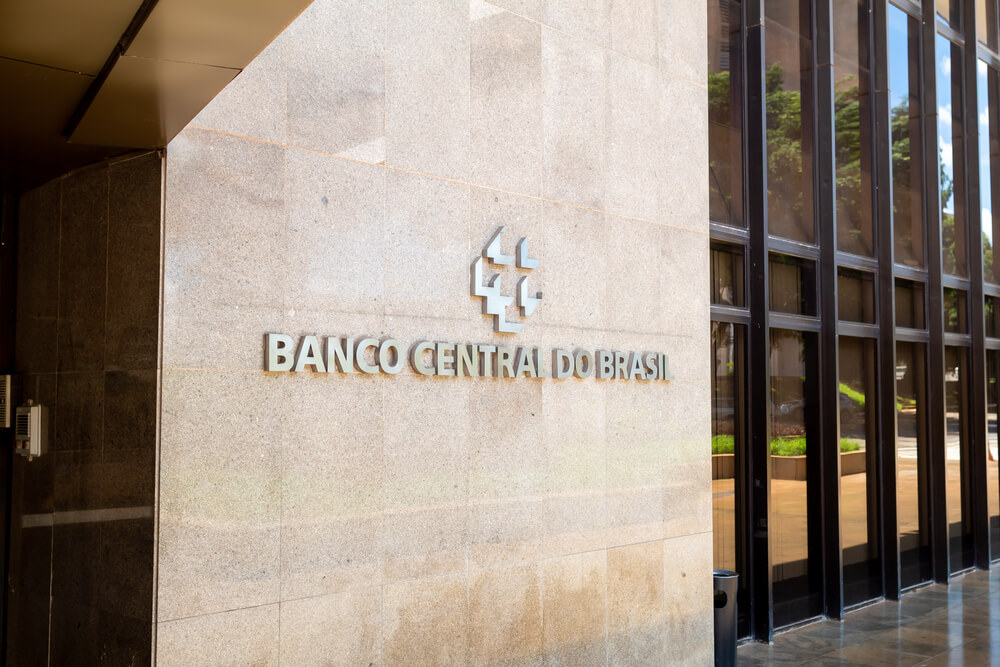 The Brazilian central bank created Pix, an instant payment system for all citizens, companies, and government agents
But such worries are misplaced, because with a functioning digital payment system established, central banks would not necessarily have to bail out private banks.
That said, some central banks have been more adventurous, perhaps because their domestic banking sector is not as powerful, and because CBDCs offer a way to secure their monetary sovereignty.
The Brazilian central bank, for example, created Pix, an instant payment system for all citizens, companies, and government agents; and the European Central Bank is moving ahead with plans to introduce a digital euro by 2029.
The reaction to these initiatives has been telling. Under President Donald Trump, the United States has launched an investigation into Pix, arguing that it amounts to an unfair trading practice (creating tariff or non-tariff barriers to entry).
But that is rather rich coming from an administration that has taken a wrecking ball to the international trading system by imposing unilateral tariffs on countries around the world.
Creative destruction
In Europe, banks are decrying the retail digital euro as a threat to their business model, and to their own efforts to introduce a credit card for the eurozone.
But this is hardly convincing, considering that banks have had ample time to develop a euro credit card (of which Wero is just one example).
There is no reason why governments and their central banks should not take the lead in creating the best possible model for the twenty-first century
While there are good reasons to promote competition with the dominant US-based payment providers, that doesn’t mean the alternatives must be private.
New technologies offer new opportunities to revamp payment and credit systems.
It would be a shame if these were foregone because banks believe that they have a right to a business model inherited from political compromises struck centuries ago.
Creative destruction is an important force for social and economic progress, and there is no reason why governments and their central banks should not take the lead in creating the best possible model for the twenty-first century. Their duty is to citizens, not to the banks.
Katharina Pistor is a Professor of Comparative Law at Columbia Law School.
