The UK government has provoked a backlash from lawyers, politicians and rights groups with plans to respond to a critical backlog in the justice system by scrapping jury trials for all but the most serious of crimes.
What was billed as a series of reforms to end the plight of victims trapped for years in a legal limbo awaiting justice has been branded by opponents as the abandonment of ancient rights and even as an attack on democracy.
The controversy erupted even before David Lammy, justice secretary, formally set out measures to parliament this week to tackle what he called a courts emergency.
Both sides seized on rights enshrined in the eight-centuries-old Magna Carta to justify arguments for and against Lammy’s plan after a leak revealed that thousands of jury trials would be turned over to judges to determine a defendant’s guilt or innocence.
The debate has echoed concerns in other jurisdictions with a jury tradition, including the US, where reliance on panels of ordinary citizens to deliver justice is also in decline.
A cornerstone of the legal system for centuries
Although the UK reforms, which will apply to courts in England and Wales, are designed to tackle an immediate crisis, there is little doubt that the new regime will persist even if and when the current backlog is resolved.
The question then is whether a curb on jury trials is a necessary measure in the short term or whether it signals the beginning of the end for what has been a cornerstone of the legal system for centuries.
Juries have a noble history of resisting pressure from judges or the state to reach decisions that conflict with their own considered views
A central argument for preserving the jury system is that it works. The deliberations of ordinary men and women have been shown to be at least as effective in determining the truth as is the judgement of those charged with handing down justice from above.
Drawn from the general public as part of a civic obligation that offers no prospect of personal reward, deliberative juries have been shown to reduce the impact of societal prejudices rather than reflect them in the context of a trial.
Juries also have a noble history of resisting pressure from judges or the state to reach decisions that conflict with their own considered views.
Preserving the presumption of innocence
This historic resistance to overweening justices, acting in support of the state or the crown, also helped enshrine the presumption of innocence of defendants as a fundamental element of the judicial system.
Tyrone Steele of Justice, a cross-party law reform charity, wrote last month that the public intuitively understands that “fairness flows from the common sense of the people, based on their assessment of the facts as they are, not as the state would prefer them to be.”
The jury room is one of the few forums where disinterested individuals are asked to make determinations, based on facts and experience, that fundamentally affect other people’s lives.
An erosion of the jury system threatens this traditional link between justice and the common man and woman
Fears have been expressed that an erosion of the jury system threatens this traditional link between justice and the common man and woman.
Lawyer Riel Karmy-Jones, who chairs the Criminal Bar Association, said: “The erosion of the right to jury trial will break the increasingly thin connection between the state and ordinary people, and risks undermining social cohesion and trust in the criminal justice system.”
Most would agree about the parlous state of the current courts system, although they might argue about the causes.
The rights of defendants under threat
After decades of neglect, exacerbated by Covid restrictions, around 80,000 cases are waiting to be heard, with trials in some Crown Courts being listed as far ahead as 2029.
Sir Brian Leveson, a former High Court judge appointed by the government to head an independent review, reported this year that funding and efficiencies alone would not mend a “broken” system and that a radical package of measures was required to prevent its total collapse.
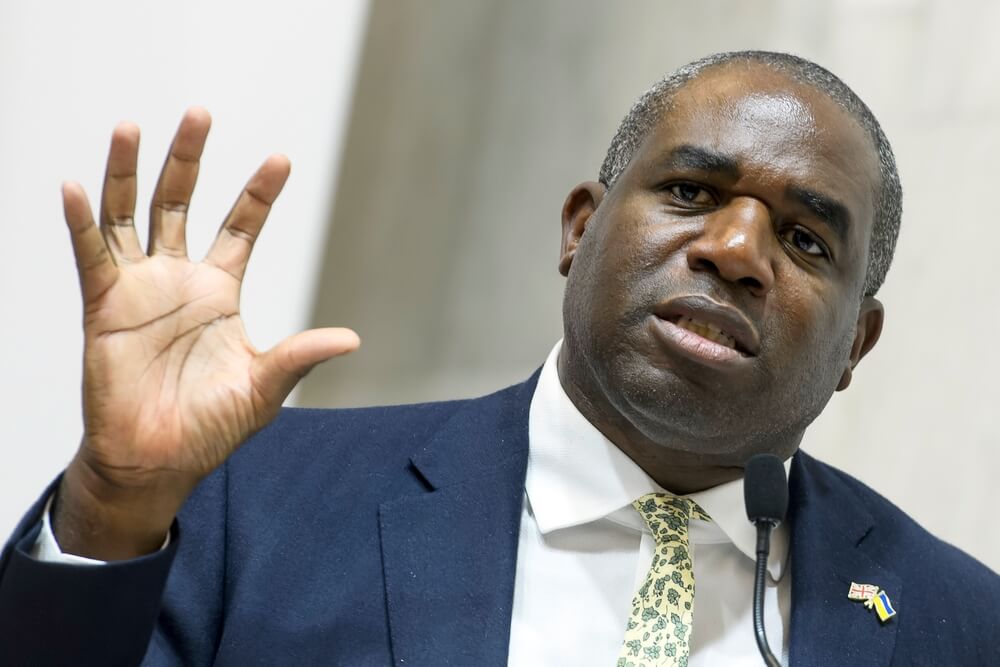 David Lammy has pitched his reforms heavily towards the plight of victims of crime, arguing that their current limbo contradicts the Magna Carta pledge to deliver justice without delay
Among the factors behind the ballooning caseload, Leveson listed the increasing complexity of jury trials and the focus of successive governments on the policing and targeting of violent and sexual offences.
Lammy has pitched his reforms heavily towards the plight of victims of crime, arguing that their current limbo contradicts the Magna Carta pledge to deliver justice without delay.
Others, also citing Magna Carta, have highlighted the rights of defendants, some of whom will inevitably lose the right to opt for a jury trial whatever the extent of the reforms that are eventually adopted.
Small changes reflecting a wider trend
Already 90 per cent of routine cases are dealt with in lower magistrate courts, whose powers of sentencing would be extended to judge a wider range of alleged crimes.
Critics of reform have argued that defending the jury system is more important than ever in the face of eroding democratic processes and declining public trust in institutions.
“Cutting ordinary people out of the judicial system, weakening the scope of jury trials and leaning even more upon magistrates and judges,” wrote Observer columnist Kenan Malik, “will reinforce a more technocratic system and only deepen public mistrust.”
He is scarcely alone in lamenting a decline of democracy and a rise of technocracy, a scenario in which small changes, such as limiting jury trials, might reflect a wider trend.
Greater public participation in decision-making
Such concerns extend beyond the law in traditional democracies in which communities and individuals express growing frustration about a lack of control over decisions that determine their lives.
One response has been the growth in enthusiasm and support for citizens’ assemblies in which randomly selected members of the public deliberate on local and national policy issues.
In an era of societal uncertainties, there is an argument for greater public participation in decision-making rather than less
Some activists would like to take the process further and give such assemblies the power to make the kind of binding decisions that are currently assigned to elected politicians. Their model, of course, is the jury trial.
In an era of societal uncertainties, there is an argument for greater public participation in decision-making rather than less. It may be truer than ever that both politics and the law are too important to be left to those who claim to be in charge.
