For 16 years, Hungary offered what appeared to be a durable new model of “illiberal democracy”: a system in which elections continued to be held, but the institutions that constrain the arbitrary exercise of power were progressively hollowed out.
The architects of this model—Prime Minister Viktor Orbán and his Fidesz party—never intended to lose. Now they have.
This was not merely an electoral upset. It was a reminder that, while the collapse of illiberal systems is not inevitable, it is always possible.
When economic dissatisfaction, institutional fatigue, and public frustration converge, even the most carefully engineered structures of political control can unravel—and fast. Mexico should take note.
Over the past several years, Mexico’s institutional landscape has undergone a profound reconfiguration.
Under former President Andrés Manuel López Obrador and his successor, current President Claudia Sheinbaum, the governing coalition has sought to consolidate power in much the way that Orbán did.
As in Hungary, the process has been incremental, mostly legal, and electorally legitimized, but its cumulative effect has been to weaken the checks and balances that underpin liberal democracy.
Electoral dominance
This process begins with establishing electoral dominance. When Orbán won, he considered himself to have not just an ordinary democratic mandate, but carte blanche to rewrite the rules of the game.
As institutions were redesigned, the playing field was increasingly tilted in Orbán’s favor, leading to a self-reinforcing cycle of electoral success and erosion of political competition.
But limiting political competition is only the first step. Under Orbán’s leadership, independent state bodies were gradually subordinated to the executive.
Courts were restructured, regulators were weakened, and independent media were put under tremendous pressure.
The government claimed it was correcting inefficiencies or biases in the system, but what it actually did was erode checks on the executive.
International indicators captured this shift, with Hungary slipping in global rule-of-law rankings and democracy indices.
In the 2024 election that brought Sheinbaum to power, the ruling coalition used dubious tactics to secure the two-thirds majority required for constitutional reform
A similar pattern is emerging in Mexico. In the 2024 election that brought Sheinbaum to power, the ruling coalition used dubious tactics to secure the two-thirds majority required for constitutional reform.
This supermajority has fundamentally altered the balance of political power in Mexico, allowing the executive to advance sweeping institutional changes without meaningful opposition.
Within months, seven independent regulatory and oversight agencies responsible for monitoring, evaluating, and controlling the executive were eliminated, supposedly to cut costs.
Other independent institutions meant to check executive power, such as the National Human Rights Commission, have effectively been taken over by the government.
Moreover, the ruling Morena party passed a sweeping judicial reform mandating that thousands of critical positions—including judges, magistrates, and even Supreme Court justices—be decided not by appointment, but by popular election.
This was framed as a democratizing measure, but it raises serious questions about judicial independence.
The first nationwide judicial elections, held last year, drew barely 13% of eligible voters, highlighting the gap between democratic procedure and substantive legitimacy.
Poor economic performance
But there is a key difference between Hungary under Orbán and Mexico today. For all its democratic backsliding, Orbán’s Hungary enjoyed periods of robust growth, sustained gains in living standards, and a meaningful income convergence with the rest of Europe over the last decade.
By 2023, Hungary’s GDP per capita reached roughly three-quarters of the European Union average. This lent the Orbán government an economic legitimacy that complemented its political dominance.
The same cannot be said for Mexico. Despite a favorable external environment—including strong demand from the United States, which is eager to “nearshore” its supply chains—growth has been modest, productivity has been weak, and income gains limited.
In Mexico, the concentration of executive power has not been accompanied by strong economic performance
Over the last seven years, GDP growth per capita has stalled. Far from converging with the advanced economies, the country has been falling further behind.
The political implications are significant. Orbán could plausibly argue that his model delivered order, stability, and rising living standards.
But in Mexico, the concentration of executive power has not been accompanied by strong economic performance.
If anything, the weakening of institutional constraints—particularly in sectors requiring regulatory certainty, such as energy and infrastructure—risks undermining the kind of investment Mexico needs to capitalize on global supply-chain shifts.
A cautionary tale for Mexico
This suggests that Mexico’s government might be more fragile than it seems.
While electoral dominance can sustain political authority in the short term, systems that concentrate power appear robust only to the extent that they are able to suppress institutional friction. Orbán’s rule appeared stable until it ended.
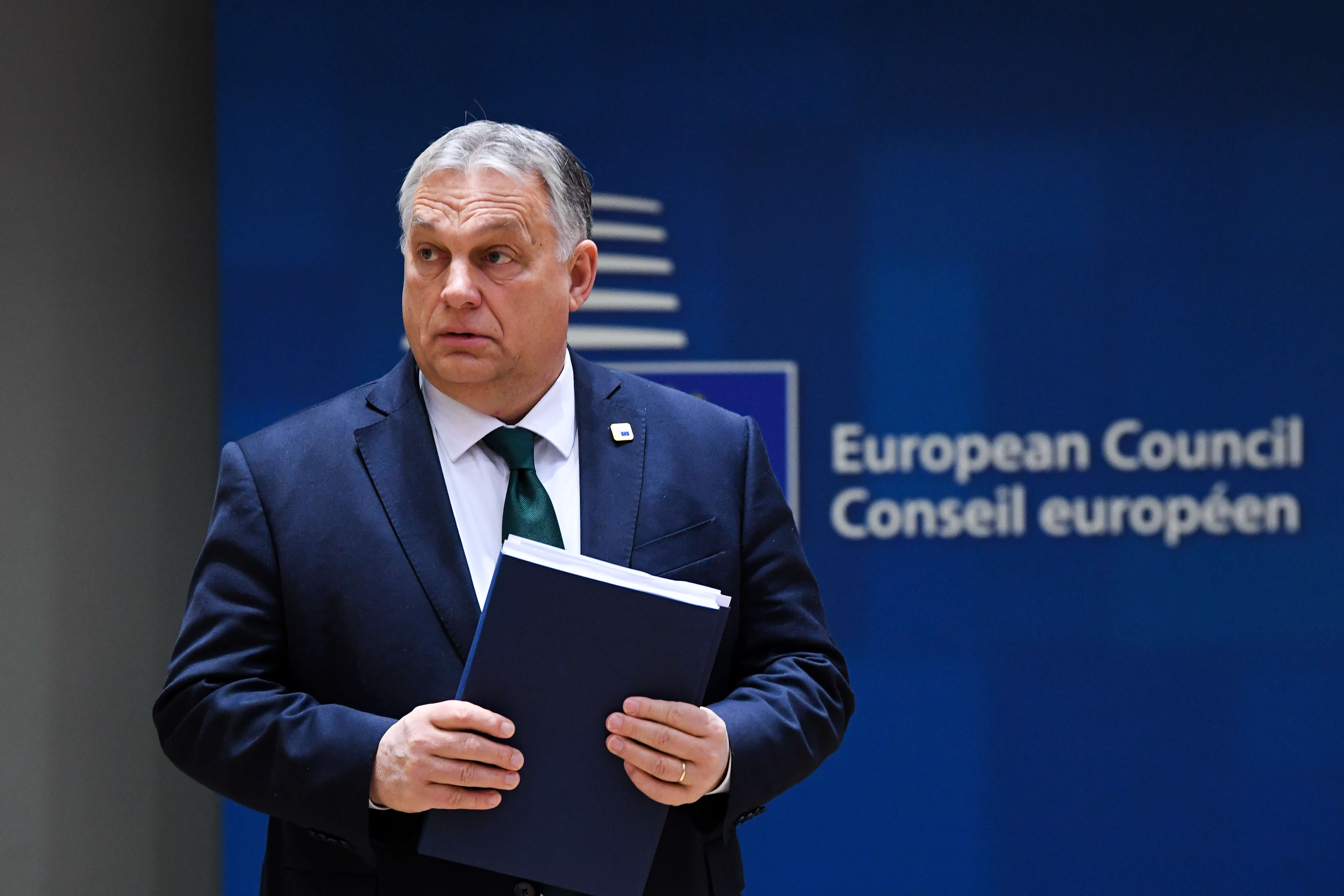 Hungary should serve as a cautionary tale for Mexico - Viktor Orbán
If economic conditions deteriorate and public support fragments, Mexico’s government could also find itself ousted, despite its efforts to cement its rule.
Because the concentration of power masks cracks as they form, the transition out of illiberal democracy may be sudden and destabilizing.
The lack of strong institutional buffers, which could have mediated political change and contained instability, compounds the risks.
None of this is to say that Mexico will replicate Hungary’s trajectory. The two countries have major differences, from their economic structures to their geopolitical circumstances.
But both have seen the gradual centralization of political power, justified by electoral success. In this sense, Hungary should serve as a cautionary tale for Mexico.
Guillermo Ortiz, a former finance minister of Mexico and governor of Banco de Mexico, is Treasurer of the G-30.
