Coming just a couple weeks after the far-right Alternative für Deutschland (AfD) won the largest share of the vote in Saxony-Anhalt’s state election, the electoral results in Mecklenburg-Vorpommern confirm that Germany has entered the same cycle of hyper-political polarization already visible across much of Europe.
If the trend intensifies in 2027, when France, Italy, Greece, and Poland hold general elections, Europe could find itself in a post-liberal realm with no limits on popular sovereignty.
Among the many factors pushing Europe toward post-liberal politics are deindustrialization, the high cost of living (made worse by repeated energy-price spikes), and the Trump effect, which has emboldened illiberal copycats far from the United States.
But the most powerful factor by far is migration, which has held considerable weight in European political life ever since then-German Chancellor Angela Merkel’s 2015 decision to welcome a million refugees fleeing from turmoil in the Middle East and elsewhere.
Over the past 11 years, European states have managed to curb migrant flows substantially through tighter border controls, agreements with source and transit countries, and stricter asylum and entry conditions.
But Europe remains in the grips of migration politics, as we saw this summer when more than 70,000 migrants abruptly crossed the border between Morocco and the Spanish exclave of Ceuta.
Fearing an influx of migrants, Italy immediately excluded Spain from the Schengen visa-free zone and other countries considered doing the same,, even though not a single migrant crossed the Strait of Gibraltar.
Migration-fueled panic
It is well established that the fear of migrants is not directly correlated with the presence of foreigners in a country’s territory.
The German states where the AfD thrives are those where the proportion of foreigners in the population is lowest—half the national average, in Saxony-Anhalt’s case.
Like other social fears, migration-fueled panics are not necessarily tied to objective risk assessments.
Fears of burglary are highest where the actual risk is lowest
According to a recent report from the French Interior Ministry, fears of burglary are highest where the actual risk is lowest.
Identity-based anxieties always reflect a complex mix of factors, generally linked to a sense of social, cultural, or ethnic decline, compounded by a broadening of the category of “migrant.”
In some circles, the term no longer applies only to illegal/undocumented migrants or asylum seekers, but also increasingly to naturalized citizens or those with foreign-born parents.
When rioting breaks out, populists and post-liberals tend to blame migrants, even though most participants are European citizens.
When “the people” have the final word on everything
Migration fears have benefited those promising tighter control over foreign or foreign-origin populations, and this has opened the door to post-liberalism. Marine Le Pen of the far-right National Rally, for example, wants French citizens to be prioritized over others in the allocation of social housing, even though the French constitution currently prohibits discrimination based on origin or nationality in access to social services.
Excluding legally resident foreigners from benefits for which they are eligible would leave them with little option but repatriation, thereby shifting the issue from immigration control to the far right’s favored policy: re-migration.
Similarly, although veiling is already banned in French schools in the name of secularism (which requires the state to remain neutral toward all religions), the National Rally wants to ban it in all public spaces.
French law would not permit such a policy, so the National Rally wants a popular referendum on the matter.
The National Rally solution is to extend the scope of referenda to all subjects, holding that no legal principle should stand in the way of the exercise of popular sovereignty
But this proposal runs into another problem: organizing a referendum on the veil would require amending Article 11 of the Constitution, which excludes matters of lifestyle or morals.
The National Rally solution is to extend the scope of referenda to all subjects, holding that no legal principle should stand in the way of the exercise of popular sovereignty.
In other words, even if the Constitutional Council found that banning the veil in public spaces was unconstitutional, a referendum would make it possible to override the Council’s opposition.
It is at such moments—when “the people” have the final word on everything, and nothing, including the rule of law, can stand in their way—that a liberal system becomes a post-liberal one.
Shift from a liberal society to a post-liberal one
A liberal state rests on the idea that certain principles are enforceable against popular sovereignty itself, that the popular will must be counterbalanced; otherwise, hostile majorities could trample on individual rights and the rights of minorities.
If popular sovereignty trumps everything, everything becomes permissible. For example, a recent poll finds that a majority of French voters favor restoring the death penalty for the murderers of children.
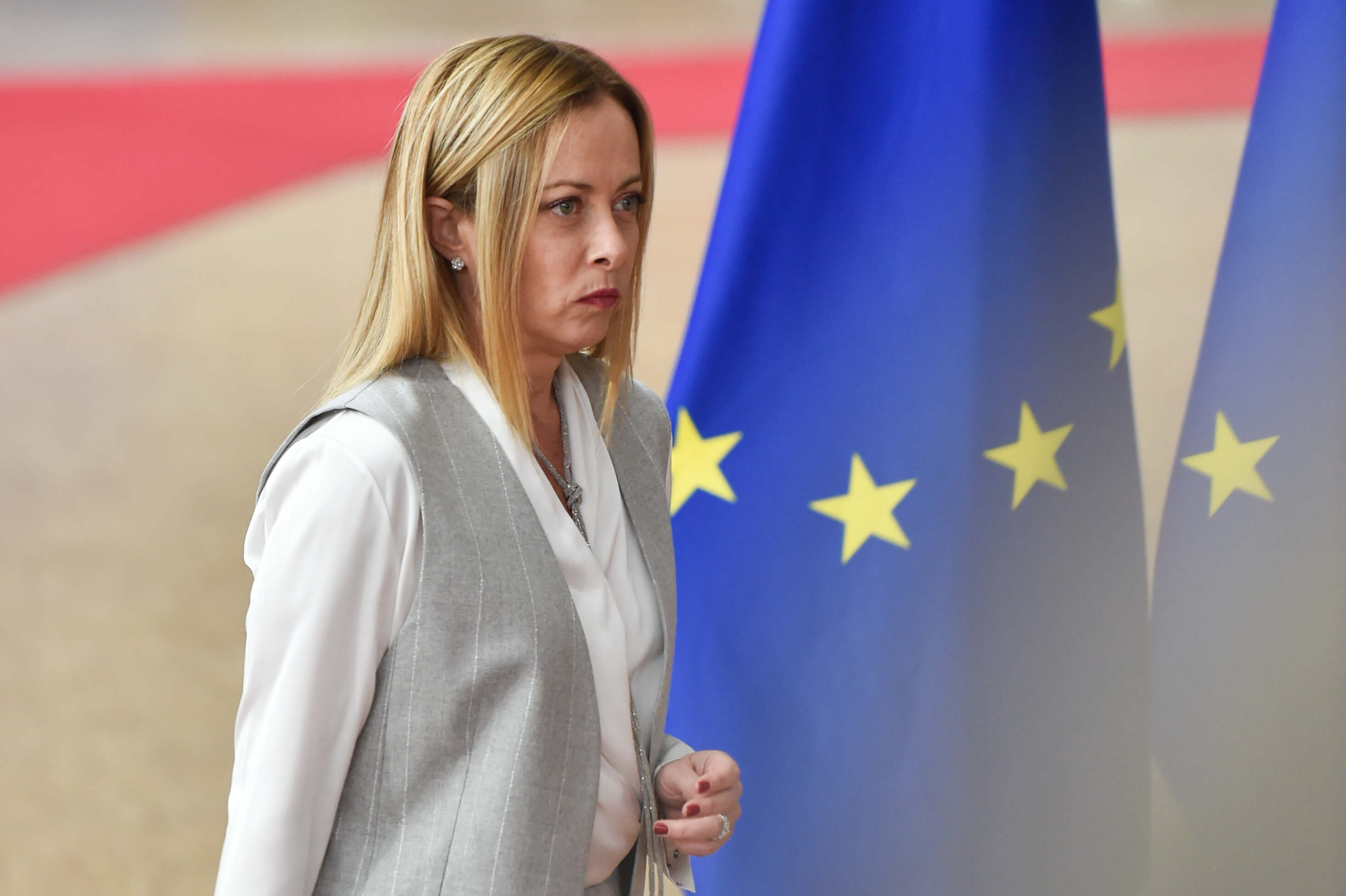 Giorgia Meloni has attacked the judiciary for blocking her government’s attempts to deport foreigners to third countries
Debates over the limits of popular sovereignty and other tenets of liberalism are now of paramount importance, and France is hardly the only country grappling with them.
In Italy, Prime Minister Giorgia Meloni has already attacked the judiciary for blocking her government’s attempts to deport foreigners to third countries.
Europe’s next electoral cycle could tell us whether voters still accept that limits should be placed on popular sovereignty.
To reject that principle is to welcome the shift from a liberal society to a post-liberal one.
Should that happen, Trump-style hysteria could sweep Europe, doing as much damage here as it has already done in the US.
Zaki Laïdi, Professor of International Politics at Sciences Po, is a former special adviser to the High Representative for Foreign Affairs and Security Policy of the European Union (2020-24).
