Will the energy crunch caused by the Iran war push us back to a “lockdown lite” version of the days of remote working and staying at home seen during the Covid-19 pandemic?
Adaptation to save fuel has already started in Asia, where government offices in the Philippines moved to a four-day work week in mid-March, Pakistan closed markets and shopping malls at 8pm, and Malaysia ordered civil servants to work from home.
During the pandemic, many countries legally enforced stay-at-home orders to make people isolate and prevent the spread of the virus. Greater choice is involved in this latest crisis, particularly around working patterns and travel in much of the industrialised world.
Holiday bookings are already down as would-be tourists instead plan “staycations” within their own borders amid fears of getting stuck should military action again block the skies over the Middle East. Concern over costs and availability of flights are also leading many people to cancel their travel plans.
Some countries have also encouraged their citizens to ensure they have sufficient food and other stocks needed during a crisis. So far, there has been little of the panic-buying seen during the early days of the pandemic. Inevitably, motorists hastened to fill up their half-filled tanks in response to potential shortages.
But the longer the energy crunch lasts, inflation along with food shortages caused by a lack of fertilisers and other supplies compounded by climate change may change the picture if supplies of staples fall short.
Europe’s latest measures
This week, the European Commission presented non-binding recommendations to cut energy demand, such as driving less and reducing energy use in buildings. It also plans to co-ordinate with member states to avert a shortage of aviation fuel while airlines have slashed thousands of flights to save kerosene.
But the oil crisis is raising the hopes of a bonanza among the producers of green energy, including sustainable aviation fuel (SAF), as airlines look to cut costs in the longer-term.
Europe has barely recovered from the energy crisis provoked by Russia’s 2022 invasion of Ukraine, and fears are running high of a prolonged economic fallout from the US and Israeli war against Iran that provoked the closure of the Strait of Hormuz.
“For the second time in less than five years, Europeans are paying the price of Europe’s dependency on imported fossil fuels,” the European Commission said in a 22 April statement.
The OECD Europe region imports more than 30% of its jet fuel, with much of this going through the Strait of Hormuz
Europe had spent an additional €24 billion on energy imports since the start of the war due to higher prices “without receiving a single extra molecule of energy,” it said.
Its latest measures include changing the rules on state aid to cushion consumers, mobilising investment in electrification, and encouraging less driving and more public transport.
Public transport was in short supply in London this week as tube drivers went on strike, prompting City firms to relax rules on ordering workers back into the office in a bid to bring back pre-pandemic working conditions.
Amazon, for example, which ordered a five-day return to the office in 2024, has now given team leaders greater discretion in giving staff the option of working from home, the FT reported.
Workers may celebrate if the Iran war hastens a permanent move to a four-day-week, but they will not be so happy if they cannot fly to a sunny beach for their holiday.
The OECD Europe region, which includes Britain and Norway, imports more than 30% of its jet fuel, with much of this going through the Strait of Hormuz.
Europe faces summer of travel disruption
Tourism, which had rebounded to high rates of travel post-pandemic, is expected to take a big hit this summer regardless of how much aviation fuel manages to flow as consumers tighten their wallets and worry about paying the bills. There were 747 million international arrivals in Europe in 2024.
Fatih Birol, executive director of the International Energy Agency, said recently that Europe had as little as six weeks' supply of jet fuel left.
“We have also estimated that by the end of May we could start to see some cancellations in Europe for lack of jet fuel,” said the International Air Transport Association on 17 April. “This is already happening in parts of Asia.”
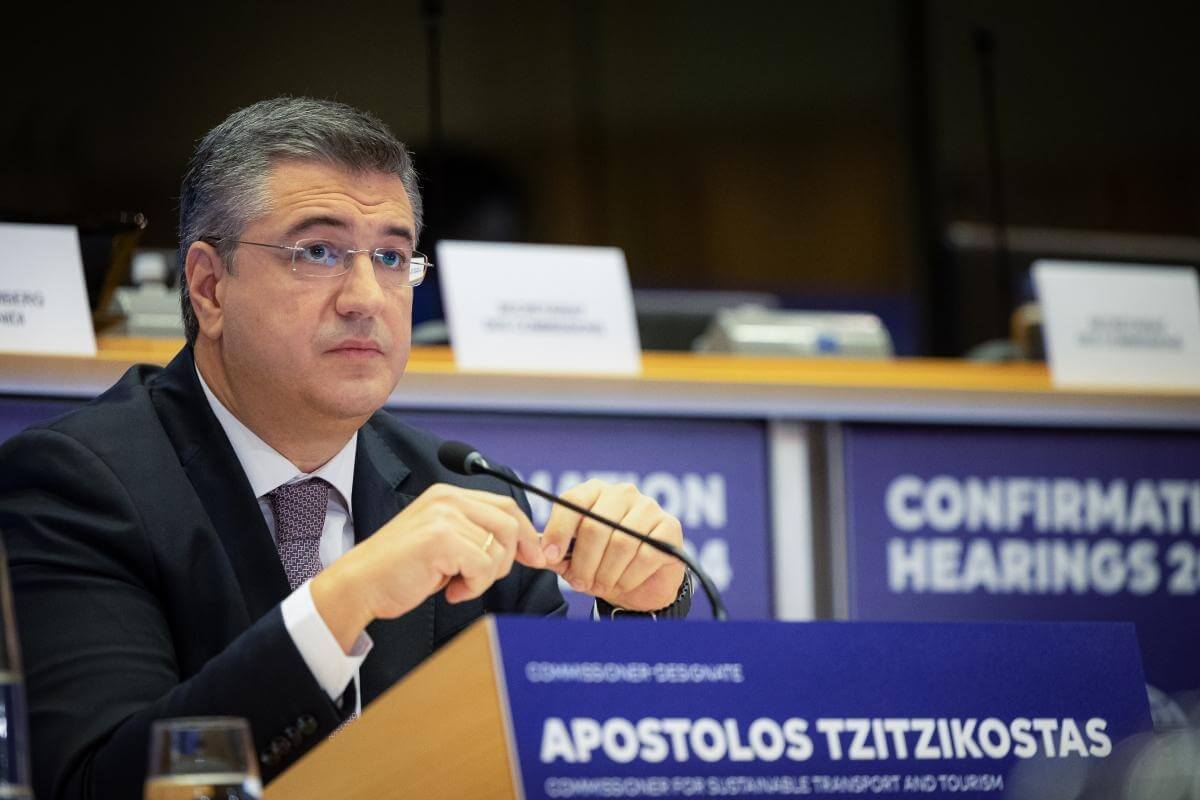 A prolonged blockage of the Strait of Hormuz would be catastrophic for Europe and the global economy - Apostolos Tzitzikostas
After a meeting of EU transport ministers on 21 April, Apostolos Tzitzikostas, the EU’s Transport Commissioner, said a prolonged blockage of the Strait of Hormuz would be “catastrophic” for Europe and the global economy.
He said there were no indications of jet fuel shortages yet, but the use of emergency stocks is under consideration “if real supply issues arise.” New inflows from the US and Nigeria are expected to arrive in Europe soon, according to global trade intelligence firm Kpler.
Global flight capacity for May was cut by about 3 percentage points, with all but one of the 20 largest airlines slashing flights, according to analytics firm Cirium Ltd. It is revising an initial prediction of 4%-6% growth for the year and says a decline of as much as 3% is possible.
The crisis has led to some bullish predictions about biofuels and SAF. “We are disruptors of the industry,” Matti Lievonen, CEO of bio-renewable energy company EcoCeres, told Euronews. It uses existing feedstocks like used cooking oil, animal fat and fish fat to make SAF.
But it will take time to scale up production of such biofuels, so they are only likely to be a solution for airlines in the longer-term. On 21 April, Lufthansa announced it had cancelled 20,000 flights between this May and October, “equivalent to approximately 40,000 metric tons of jet fuel, the price of which has doubled since the outbreak of the Iran conflict.”
Memories of the pandemic may have faded, but people will have to remember how they coped as the energy crisis takes its bite.
