Judging by what one sees coming out of all the European Union’s various meetings—at the European Council, the European Commission’s offices, and elsewhere—the bloc’s limited bandwidth is obvious.
There are simply too many challenges and too many tasks. The world is a messy place, and so too is the Brussels political scene.
The first challenge, then, is to agree on priorities. This should not be too difficult, because some are patently obvious.
Continuing to confront Russia’s territorial aggression is a clear strategic imperative, with financial support to Ukraine helping to pave the way to peace and a new round of EU enlargement.
This month’s election in Hungary, which ousted Prime Minister Viktor Orbán after 16 years, has removed an embarrassing roadblock that was increasingly jeopardizing the EU’s security.
But achieving stronger economic growth across Europe is no less urgent, given that a strong industrial and technological base is a prerequisite for security and strategic autonomy in an increasingly dangerous world.
Major reports on EU competitiveness and gaps in the single market, by former European Central Bank President Mario Draghi and former Italian Prime Minister Enrico Letta, respectively, have highlighted major challenges and identified the necessary remedies.
Yet beyond generating a wave of headlines when they were released, Draghi and Letta’s findings have barely registered on the EU’s policy agenda.
Almost none of their proposals have been implemented, and this lack of follow-through remains evident in the macroeconomic data.
Apparently, there are just too many other things happening for EU policymakers to give the economy’s competitiveness and productivity challenges the attention they require.
What is at stake?
But that is hardly a reassuring excuse. Europe’s leaders must abandon their illusions and recognize what is at stake.
In the face of subdued growth, persistent deficits, and substantial government debt burdens, there is no way for EU member states to increase defense spending while also maintaining their welfare systems in the years ahead.
If the past 15 months have shown anything, it is that Europe can no longer afford to delay major investments in its own security and its defense-industrial base
Making matters worse, Europe’s working-age population is expected to decline by around 12% in the next decade or so, placing an even greater burden on public finances and further limiting available resources.
Those needs are great, because defense spending for most EU member states remains stuck at around 2% of GDP.
Yet if the past 15 months have shown anything, it is that Europe can no longer afford to delay major investments in its own security and its defense-industrial base.
Europeans must face reality
It was only a few months ago that US President Donald Trump threatened to seize Greenland, a sovereign territory of Denmark, a NATO member state.
And more recently, Trump’s frustration with Europe’s refusal to join his war against Iran has cast serious doubts on whether the United States would come to Europe’s defense.
Europeans must face reality. We are seeking to secure our physical safety, establish deterrence against potential aggressors (starting with Russia), decarbonize our economy, and maintain consistent support for one of the oldest populations on Earth—all while confronting weak growth, high debt, and demographic decline. Only through substantial reforms can our goals be achieved.
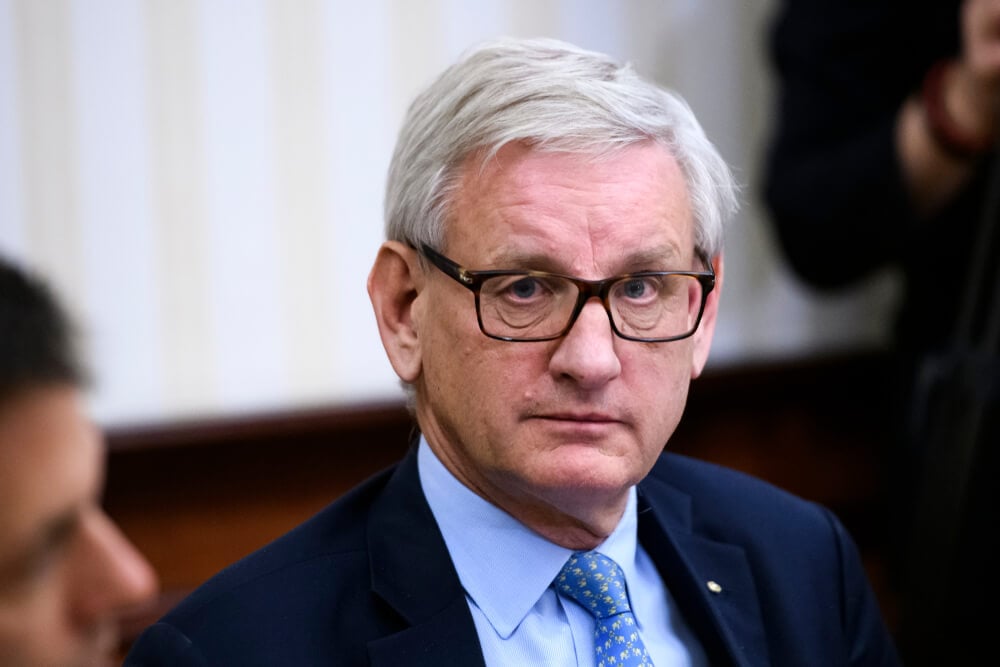 Europe is not doomed. We have the talent, the universities, and the rule of law that businesses need in order to thrive - Carl Bildt
Fortunately, at the European Council’s March meeting, European heads of state and government committed themselves to completing the single market by the end of 2027.
If they are serious about implementing the reforms that this would require, Europe’s fiscal and strategic situation could improve substantially.
Trade within the single market, as it currently exists, supports close to 60 million European jobs and has already unlocked economic benefits equal to 8–9% of EU GDP.
By completing the single market—namely, by creating a single market for digital connectivity, energy, and investment capital—the EU could add another sorely needed 1–2% to GDP over the next decade.
In fact, that is one of the lower estimates. According to the Draghi report, “remaining trade frictions in the EU mean that Europe is leaving around 10% of potential GDP on the table.”
But for this to be possible, the EU must make growth and economic dynamism a top priority. After all, success on this front is the only way to avoid failure on numerous others.
Europe is not doomed. We have the talent, the universities, and the rule of law that businesses need in order to thrive.
Our common currency is strong, and our quality of life is superior to anywhere else in the world.
But rather than allowing these strengths to lull us into complacency, we must recognize that they are all at risk. We must start meeting our single greatest challenge with the urgency it demands.
Carl Bildt is a former prime minister and foreign minister of Sweden.
