On 19 September, the US military carried out another lethal attack in the Caribbean Sea on a high-speed boat that US Southern Command claimed was involved in drug trafficking. Four people on the vessel were killed.
SOUTHCOM stated that the boat was travelling along a known smuggling route and that intelligence had confirmed its role in drug trafficking, but the identities of those killed, the type of cargo, and the information on the basis of which the decision was taken to destroy the vessel rather than intercept it were not disclosed to the public.
The Associated Press calculated the following day that over the course of about a year, the US military had carried out 69 such strikes in the region, killing at least 231 people.
Just four days earlier, the same command had deployed a very different model.
On 15 September, US forces intercepted a vessel in the eastern Pacific that SOUTHCOM said served as a floating refuelling station and was linked to the Ecuadorian criminal organisation Los Choneros.
The people on board were disembarked and handed over to the Ecuadorian authorities, and only then did US forces sink the empty ship.
In four days, US forces acted in two completely different ways towards people suspected of taking part in the same type of criminal activity: some were taken into custody and handed over to the authorities; others were killed in a military strike. The key question is, by what criteria does Washington make that distinction?
Same opponent, two force regimes
For decades, the United States has used force at sea against smuggling vessels, but its traditional aim has been to stop, board, seize cargo, and prosecute.
The Coast Guard and other US agencies have extensive experience intercepting speedboats, submarines and other vessels suspected of carrying narcotics.
In such operations, the crew is detained, and the question of guilt is resolved in court or through handover to a partner state.
That mechanism has not disappeared, as the operation of 15 September shows, but there is now also a system in which the US military destroys the vessel along with the people on board.
The change began with the political and legal reclassification of the cartels.
If the administration treats a particular organisation as a hostile armed group with which an armed conflict is ongoing, it then seeks to place the use of force within the law of armed conflict and presidential war powers
On 20 January 2025, Donald Trump ordered the initiation of a process by which certain international cartels and other transnational criminal organisations would be designated as foreign terrorist organisations.
The White House argued at the time that such groups posed a threat to national security that went beyond traditional organised crime, citing their territorial control, violence, international ties, and capacity to undermine state institutions.
During 2025, several Latin American organisations were granted terrorist status, and in October of that year the administration notified Congress that the president considered the United States to be in a ‘non-international armed conflict’ with certain cartels.
That wording is crucial because it changes the legal framework within which people on smuggling vessels are viewed.
If the operation is a police operation, the main objectives are to intercept, collect evidence and make an arrest. If the administration treats a particular organisation as a hostile armed group with which an armed conflict is ongoing, it then seeks to place the use of force within the law of armed conflict and presidential war powers.
This transition is the most controversial part of the new US policy because the terrorist designation itself does not resolve the question of when it is permissible to kill a person suspected of smuggling rather than arrest them.
The most important boundary remains outside the public domain
The cartels with which Washington deals are not ordinary criminal groups. They have money, weapons, international networks, and in some countries they are powerful enough to corrupt institutions and control parts of the territory.
It is precisely on these facts that Washington bases its claim that certain organisations should no longer be dealt with solely through traditional criminal law.
Even if it is accepted that certain cartels represent a serious security threat, it is still not clear why one of their vessels is stopped, the crew detained and handed over to the authorities, while another is destroyed in a military strike.
The issue has already arisen in Congress. At a hearing on 19 March before the Senate Armed Services Committee, Senator Tim Kaine said that the last briefing he received, in December, on the criteria for selecting targets was classified.
SOUTHCOM Commander General Francis Donovan responded that, as far as he knows, the process has not changed and that the ‘reasonable certainty’ and ‘near certainty’ standards still apply to the final decision.
It is not possible to determine whether the crucial factor was the identity of the people on board, the nature of the mission, the threat assessment, the possibility of safe interception, or unreleased intelligence
The content of the criteria is not publicly available, so it cannot be determined from announcements about individual operations what, in practical terms, distinguishes a target that will be destroyed from a vessel whose crew will be detained.
The difference between the operations on 15 and 19 September is not only tactical. It shows that Washington already applies two different regimes to people it associates with the same kind of threat.
In the first case, a US intelligence assessment linked the vessel to Los Choneros, an organisation Washington considered terrorist, but the people on board were detained and handed over to the authorities.
In the other case, SOUTHCOM announced that intelligence had confirmed the boat’s involvement in drug trafficking, and four people were killed in a military strike.
From the publicly available information, it is not possible to determine whether the crucial factor was the identity of the people on board, the nature of the mission, the threat assessment, the possibility of safe interception, or unreleased intelligence.
A public criterion, even if general enough not to reveal operational methods, is important for judging how limited, consistent and predictable the new doctrine is.
Washington is developing a regional system through its operations
US policy, meanwhile, extends far beyond individual strikes at sea. US and Ecuadorian forces launched joint operations against organisations designated as terrorist on 3 March, while SOUTHCOM established Joint Task Force Western Hemisphere on 4 August as an operational tool for a broader campaign against cartel networks.
Nineteen members of the Americas Counter Cartel Coalition then met in Panama, where they agreed that a joint campaign plan would be developed by November, with a division of responsibilities, working groups, and countries taking leading roles in specific areas.
This institutionalisation changes the character of the entire strategy. Washington is no longer merely talking about intercepting cocaine on its way to the United States, but is trying to connect military force, intelligence, financial sanctions, police investigations and the operations of partner states into a regional system of pressure on cartel networks.
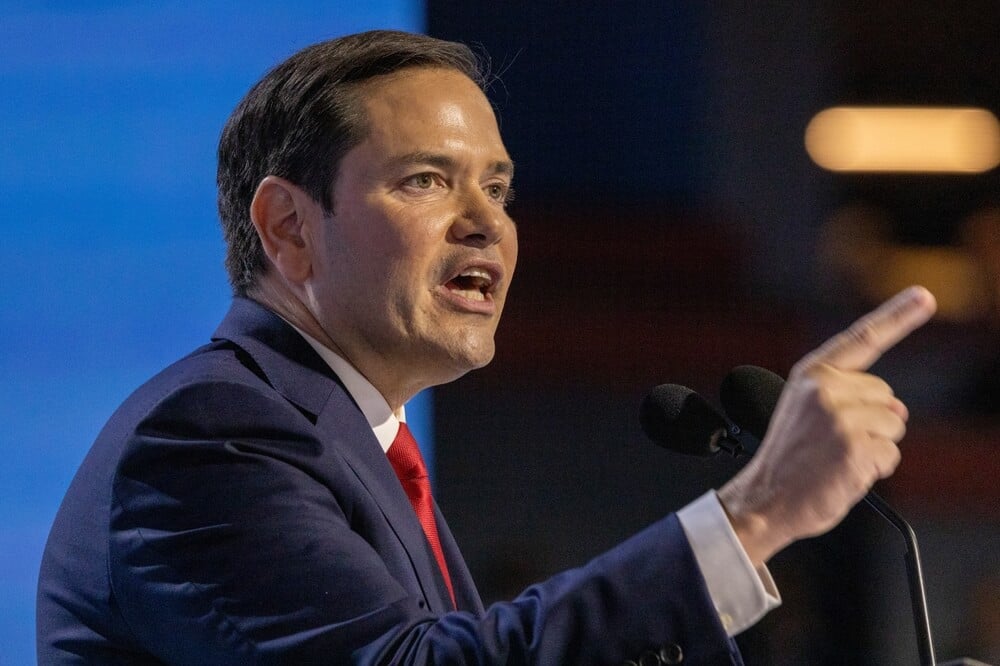 The US does not intend to carry out unilateral operations in the territory of partner states without their consent - Marco Rubio
US Secretary of State Marco Rubio emphasised in Peru on 10 September that the US does not intend to carry out unilateral operations in the territory of partner states without their consent, which shows that the political will of regional governments will remain an important limit on US action.
At the same time, joint missions with Ecuador show that Washington already has regional partners ready for deeper military cooperation against criminal organisations that they regard as an immediate threat to national security.
The expansion of operations also heightens the constitutional problem within the United States itself.
The four leading Democrats on the relevant House committees filed a war powers resolution in early September in an effort to end the strikes that had not received specific congressional approval.
By contrast, the administration argues that the president has sufficient constitutional authority and that the operations amount to self-defence in an armed conflict with designated groups.
The dispute is no longer only about the effectiveness of the war on drugs, but about whether the executive branch can conduct a sustained campaign against transnational criminal organisations under rules that have traditionally applied to armed conflict.
The hybrid model will take hold before the legal dispute is resolved
The most likely next step is neither a return to the old, exclusively police-based model nor the transformation of every smuggling vessel into a military target.
Everything Washington has built over the past year points to a hybrid system in which arrests, seizures, sanctions, criminal proceedings, intelligence operations and lethal strikes coexist.
The choice of instrument will increasingly depend on the intelligence classification of the target, the operational environment and the level of cooperation with the state on whose territory, or in whose vicinity, the operation takes place.
That model is likely to be expanded through the Americas Counter Cartel Coalition, which already has a command structure, a network of partners and operational planning that goes beyond individual actions at sea.
The US campaign acquires a significance that extends beyond Latin America
The longer the campaign lasts and the more states become involved, the harder it will be to keep the criteria for the use of lethal force almost completely inaccessible to the public and lawmakers.
Congressional pressure will mount, and the potential for legal action and political conflict with governments in the region will increase with any operation conducted outside international waters or in circumstances where capture appears a realistic alternative.
If this model becomes a permanent element of US security policy, its impact will not be confined to the fight against cartels in the Western Hemisphere.
Other countries will watch closely to see how Washington legally and politically justifies the use of military force against transnational criminal organisations and how broadly that precedent can be applied.
Thus, the US campaign acquires a significance that extends beyond Latin America: it can influence how states in future determine where the policing of organised crime ends and the use of instruments that, until now, belonged to war begins.
