A UK government proposal to make it easier for people to find trusted news sources on social media has not been well-received in the US, where the big tech companies and their political lobby are based.
The negative reaction was the latest indicator of a transatlantic split in which measures by European governments to counter the proliferation of harmful content and misinformation online are interpreted as attacks on free speech.
The tentative plan to ensure greater online prominence for news output from organisations such as the BBC was put forward in the dying days of Keir Starmer’s premiership.
The minister responsible for the initiative, Lisa Nandy, was one of a minority in Starmer’s cabinet to keep her job when Andy Burnham took over as prime minister.
A week before the handover, she received a letter from Jim Jordan, Republican chair of the US House Judiciary Committee, that expressed serious concerns that her plan was a potential major threat to online speech and the rights of American companies and their users.
He called for a formal briefing from Nandy in her role as minister for Digital, Culture, Media and Sport.
The online sector also weighed in. David Wheeldon, senior director of government affairs and public policy for YouTube in Europe, said: “The UK’s creator economy is a global success story because of one simple idea: on YouTube, viewers decide what they want to watch.”
He said prominence rules would distort that by forcing YouTube to prioritise government-picked channels over users’ choice.
What constitutes a reliable news source?
The government plan was formally outlined in June in a Green Paper, a document that invites public consultation before a decision is made on whether to go ahead with legislation.
The concerns it expressed went beyond the need to prioritise trusted news sources to examine a generally bleak picture for the so-called legacy media in the UK.
The shift to online news consumption, half of it through social media, was nothing less than “a turning point for our democracy”.
The Green Paper noted that overall trust in UK news had dropped and less than half of adults felt confident judging whether a source was truthful or not
With attention-grabbing algorithms favouring misinformation, polemic and manipulated material, the Green Paper noted that overall trust in UK news had dropped and less than half of adults felt confident judging whether a source was truthful or not.
So how far do the proposals go in fulfilling the government’s ambition to “better protect audiences and help ensure a level playing field”?
The initiative is focused predominantly on public service broadcasters, primarily the BBC, which faces its own political and financial challenges, not least a $10 billion defamation lawsuit brought by President Donald Trump.
The proposals raise one immediate question which will not be confined to the social media giants: who makes the choice of what constitutes a reliable news source? And where does it leave press freedom if the government gets to decide?
An increasingly arid media landscape
The big broadcasters are not the only news providers suffering in what is becoming an increasingly arid media landscape in the UK. One of the areas to suffer most from dwindling finances and online competition is local news.
Under a new prime minister who has put devolution and regionalisation at the heart of his domestic policy, access to reliable local news is as vital to local democracy as it ever was.
In this area too, Nandy’s department has taken some modest steps, having this year dedicated £12 million of funding for local media’s digital innovation and community radio services to irrigate regional “news deserts”.
The BBC has told staff it plans to cut about 2,000 posts, one in 10 of its workface
It has also promised campaigns in schools to encourage young people into journalism careers. But what’s in store for those who make the choice and go on to secure a job?
Journalism has always been something of a precarious trade and is more uncertain than ever amid cutbacks and redundancies in newsrooms big and small.
Press Gazette, a trade magazine that tracks job losses, recently reported almost 3,500 reported redundancies in the UK and US media in 2025 and also noted that the BBC has told staff it plans to cut about 2,000 posts, one in 10 of its workface.
Challenging the actions and motives of those in power
The challenge for the UK media suppliers and their consumers is that budgets for answering the who, what, when, where and why of both hyper-local and global events are shrinking in the face of often dubious online competition.
But how far is it up to the government to find an appropriate fix, given that a key responsibility of a free press is to challenge the actions and motives of those in power.
It is not only the social media tech bros who have their doubts. Both internet safety and free speech activists criticised the previous Starmer government’s announcement of a ban on social media access for under-16s.
Some pointed out that a similar measure in Australia had so far been ineffective in protecting the young, while others argued that online verification would require adult subscribers to reveal more about themselves to the tech companies than had previously been the case.
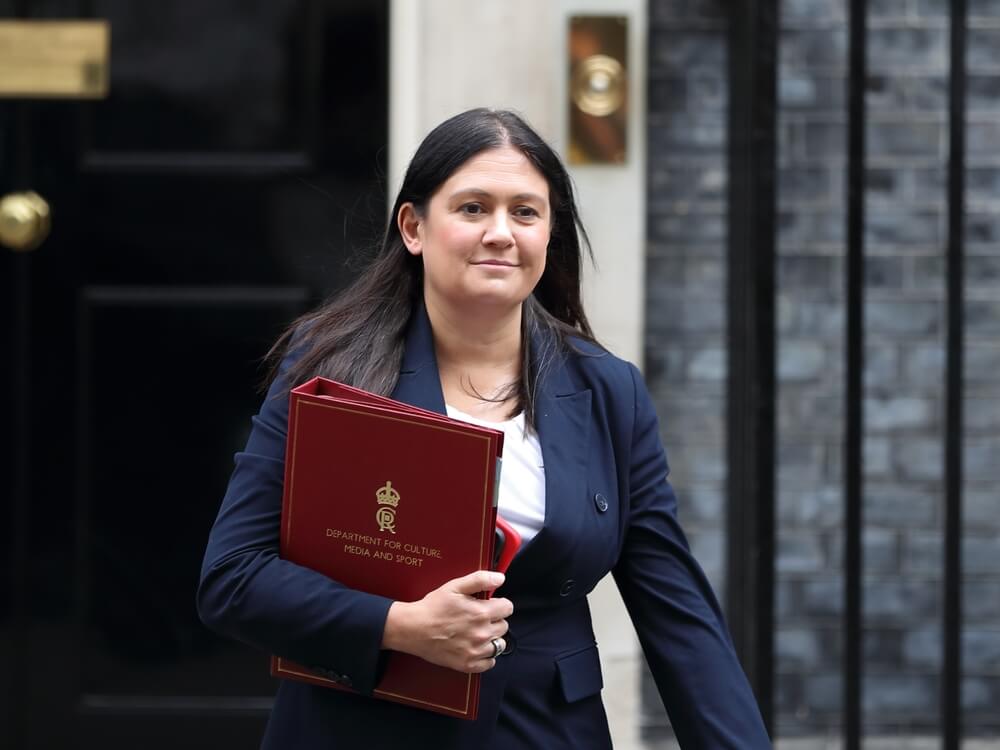 Lisa Nandy has already had her own run-in with X’s Elon Musk. She quit his platform last month - and took her department with her
The wider question as the overall debate proceeds is whether the values of traditional media in the UK and elsewhere can survive in the face of a sometimes ideological battle with the tech bosses who may determine their fate.
Some of these figures can sometimes give the impression, false no doubt, that free speech protections are a licence for self-declared news providers to make it up or distort the facts.
Nandy has already had her own run-in with X’s Elon Musk. She quit his platform last month - and took her department with her - claiming that what was originally designed for free speech and expression now favoured abuse and misinformation over meaningful debate.
Musk has also been in the UK news of late following an hour-and-a-half encounter with the British press. In an interview with The Economist editor-in- chief Zanny Minton Beddoes, he offered his extravagant predictions of a robotic, AI-dominated future, like some latter-day Renaissance magus.
Things got testy, however, when Beddoes prodded him on his time at Trump’s Doge and challenged his vision of a crime and immigrant-dominated Britain that she said was contradicted by the facts.
Musk later commented on X that his interviewer was a “traitor to the West”. Being a journalist, she took it in her stride. The whole encounter is worth a watch - it’s on YouTube, of course.
