The US-Israeli war against Iran has been marked by miscalculations, starting with the erroneous belief that decapitating the Islamic Republic’s leadership would trigger the regime’s collapse or force its “unconditional surrender.”
US President Donald Trump’s assumption that Iran is ready to put the war behind it and move on to reconstruction is equally misguided.
Iran sees its control over the Strait of Hormuz—and the attendant ability to close the waterway—as one of its few remaining deterrents, and therefore as a prerequisite for peace.
After two military campaigns, both preceded by diplomatic engagement, Iran’s leaders are unwilling to relinquish this source of leverage without credible guarantees that the United States and Israel will not attack again.
But lasting peace requires more than military deterrence. It requires a political and economic settlement whose benefits are broadly shared.
Iran-Iraq War
The aftermath of the Iran-Iraq War offers an important lesson. The 1988 ceasefire that ended the eight-year conflict left the regime facing the challenge of justifying the war’s enormous sacrifices without the consolation of victory.
The political focus thus shifted from the battlefield to the revolution’s unfinished domestic agenda.
The ideological divisions laid bare by the ceasefire gradually receded under President Ali Akbar Hashemi Rafsanjani, whose government launched one of the most ambitious development programs in modern Iranian history.
At its core was massive public investment in rural infrastructure, which brought roads, electrification, drinking water, schools, and clinics to long-neglected regions.
Rebuilding the country became the revolution’s new mission
As a result, millions of Iranians were lifted out of poverty, and the middle class expanded from roughly 30% to 60% of the population (although it has since declined).
At the same time, the regime reversed its ban on family planning, using its new rural health network to improve maternal and child health, expand access to contraception, and increase women’s educational attainment. By 2000, women had closed the education gap with men.
By making reconstruction synonymous with social justice and national development, Rafsanjani reconciled his economic agenda with the revolutionary aspirations of those who saw the ceasefire with Iraq as an ideological compromise.
Rebuilding the country became the revolution’s new mission, preserving the broad coalition that sustained the Islamic Republic during the war.
The ‘martyrs’ welfare state’
Today’s peace efforts face a tougher challenge, but their political logic is remarkably similar.
Mohammad Bagher Ghalibaf, speaker of the Iranian parliament and Iran’s chief negotiator in the recent talks with the US, reportedly remarked that those who can rebuild the country “must take over the trench from the launcher boys,” echoing Rafsanjani’s postwar rhetoric.
Yet reconstruction is no longer viewed as an extension of the revolution’s promise of economic justice.
For many Iranians, market-oriented reforms, trade, and foreign investment have become associated with rent-seeking rather than shared prosperity.
The Iraq War left millions of veterans and bereaved families who required long-term support
While public investment in roads, clinics, schools, and electrification aligned with the revolutionary ideal of social justice in 1988, no comparable development project today can unite the country’s competing political factions.
The Iraq War also left millions of veterans and bereaved families who required long-term support, creating what UCLA’s Kevan Harris has called the “martyrs’ welfare state.”
Reconstruction gave wartime institutions a peacetime mission, with many Revolutionary Guard veterans finding productive roles through Khatam al-Anbiya Construction Headquarters, the engineering organization whose expansion Rafsanjani encouraged.
Providing a safety net for ordinary households
Whether today’s leadership can devise an equally compelling political project remains an open question.
Over the past three decades, the revolutionary pursuit of social justice has gradually shifted from public investment to income support, with cash transfers ultimately becoming the principal instrument of redistribution.
In 2011, when they were first introduced to offset the removal of energy and bread subsidies, these transfers amounted to roughly 28% of median per capita household income.
Fears of fueling inflation, however, prevented the government from increasing their nominal value, and by 2025 their real purchasing power dropped to a fraction of its original level.
The severe pressure on living standards caused by tighter US sanctions and the ongoing war has prompted the government to increase these cash transfers.
Providing a safety net for ordinary households is as much a political imperative as an economic one
But while they now provide a safety net against hunger, they are a far cry from the transformative reconstruction programs of the post-Iraq War era.
Providing a safety net for ordinary households is as much a political imperative as an economic one.
In 2019, President Hassan Rouhani’s government raised gasoline prices without offsetting the burden through cash transfers, triggering nationwide protests.
After the Joint Comprehensive Plan of Action (JCPOA) entered into force, the government announced plans to purchase 200 aircraft from Boeing and Airbus.
For many lower-income Iranians, these episodes reinforced the perception that politicians pursuing diplomacy and market-oriented reforms were more interested in rewarding elites than raising living standards.
Enabling Iranian firms to re-enter global markets
Those experiences will inevitably shape how Iranians judge any peace agreement with the US.
If the deal is seen as primarily benefiting exporters, investors, and urban professionals while asking lower-income households to shoulder the costs, it is unlikely to win strong public support.
So far, sanctions relief proposals have focused on allowing Iran to export more oil and regain access to frozen foreign assets.
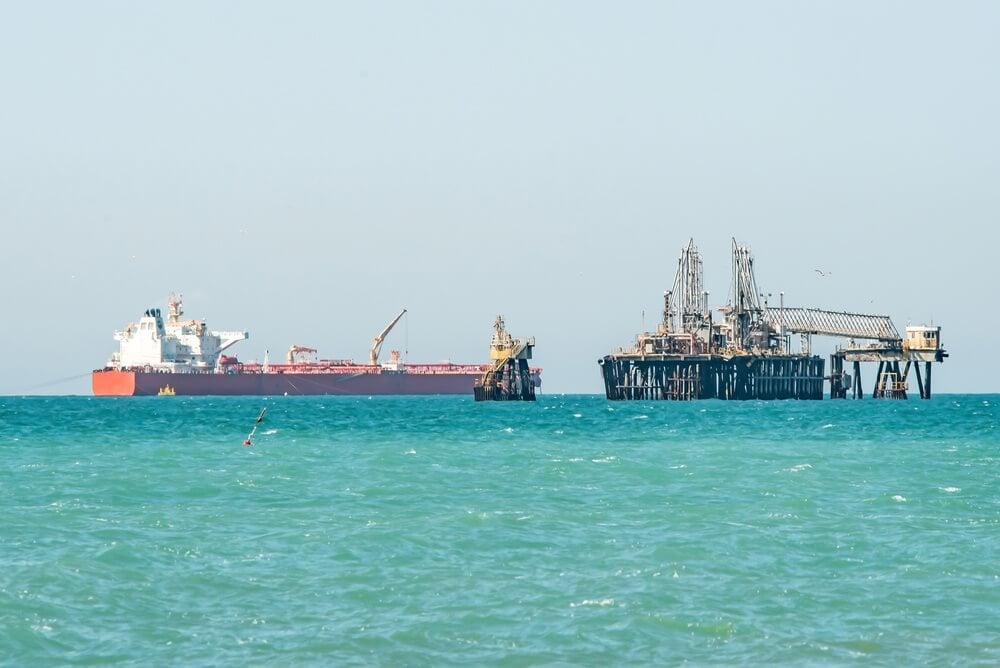 So far, sanctions relief proposals have focused on allowing Iran to export more oil and regain access to frozen foreign assets
While these measures would strengthen the government’s finances and help pay for imports, they would do little to generate broad-based employment.
Lifting financial sanctions, by contrast, would do far more to support job creation.
By cutting off small and medium-size Iranian firms from global markets, they prevent millions of educated Iranians from taking advantage of a depreciated rial to sell goods and services abroad.
With domestic demand weakened by years of sanctions and stagnation, access to foreign markets has become the primary avenue for expanding production.
Enabling Iranian firms to re-enter global markets would therefore increase demand for Iranian labor and boost household incomes through employment rather than transfers.
More importantly, it would give millions of Iranians a direct stake in preserving peace.
While Trump would find these sanctions politically difficult to lift, any agreement that does not allow Iranian firms to regain access to international finance and trade will struggle to generate the jobs needed to achieve a sustainable peace.
Ultimately, a deal that repeats the mistakes of the JCPOA may prove no more durable than its predecessor.
Djavad Salehi-Isfahani, Professor of Economics at Virginia Tech, is a research fellow at the Economic Research Forum in Cairo.
