South Korean Foreign Minister Cho Hyeon spoke with his Iranian counterpart Abbas Araghchi about the safety of navigation through the Strait of Hormuz, days after Seoul sent an inspection team to the United Arab Emirates to assess conditions for possible military engagement.
President Lee Jae Myung’s government has not yet decided whether to send forces, but is considering several forms of participation in protecting navigation, from information-sharing and logistical support to the possible deployment of the navy.
Tehran reacted before a decision was made. Iran warned that it would regard a South Korean military presence in the Gulf or the Strait of Hormuz as alignment with US operations against Iran and that such a move would have serious consequences.
A problem has emerged for Seoul that has little to do with the actual number of ships or soldiers it might eventually send. On 16 August, Donald Trump ordered a reduction in joint US–South Korean exercises, citing dissatisfaction that South Korea was not helping the United States in its conflict with Iran.
The US–South Korea alliance still rests on the defence of the Korean Peninsula, where some 28,500 US troops are deployed, but Washington is now more openly linking the strength of that relationship to Seoul’s willingness to contribute to US security priorities beyond East Asia.
Hormuz is the first case in which this request has become concrete enough to influence the joint military activities of the two countries.
The reduction in exercises does not mean that the alliance has ceased to function. The United States, South Korea and Japan are holding the Freedom Edge trilateral exercise from 7 to 11 September, designed to respond to North Korean missile and nuclear threats.
This is an important corrective to assessments of Trump’s August move. Washington is not abandoning the security framework in Northeast Asia, but is using access to exercises, costs and political attention as a means of pressuring an ally from which it expects greater contributions outside the region.
The 1953 treaty does not extend to the Persian Gulf
The Mutual Defense Treaty of 1953 was not drafted for this kind of situation. Its primary purpose is to respond to an armed attack in the Pacific region, and the Persian Gulf is not an area in which South Korea has an automatic legal obligation to accompany the United States in a military operation.
For more than seven decades, American protection of South Korea has therefore rested on a relatively clear division. Washington provides nuclear and conventional deterrence against North Korea and maintains a large military presence on the peninsula, while Seoul finances its own defence, provides bases and gradually assumes more of the military burden.
Washington is seeking operational contributions in crises that directly affect American interests
The Trump administration no longer considers that division sufficient. South Korea has already agreed to increase defence spending, purchase large quantities of US military equipment and shoulder a significant portion of the costs of the US presence.
Washington is now also seeking operational contributions in crises that directly affect American interests, even when they occur far from the territory the alliance is supposed to protect.
This approach fits into a broader US push for wealthy allies to assume more responsibility as the US military simultaneously deters China, maintains commitments in Europe and conducts operations in the Middle East.
Oil gives Washington its strongest argument
However, the South Korean government can hardly portray Hormuz as someone else’s war without consequences for its own country. South Korea imports more than 90 per cent of the energy it consumes, and the Middle East remains its main source of crude oil.
Official Korean statistics for early 2026 show that 64.8 per cent, nearly two-thirds, of imported crude oil came from the Middle East, with Saudi Arabia as the largest single supplier.
As a result, Hormuz is almost as much a part of Korea’s industrial infrastructure as the ports, refineries and warehouses on the Korean Peninsula itself.
Washington can argue that Seoul is protecting not the American campaign but its own energy supply
The war has turned that dependence into an immediate problem. On 10 September, Kpler recorded only seven transits by large commercial ships through the Strait of Hormuz, compared with approximately 125 per day before the war.
About a fifth of the world’s supply of crude oil and liquefied natural gas passed through the strait before the conflict, while Brent crude traded above $100 a barrel.
Washington can therefore argue that Seoul is protecting not the American campaign but its own energy supply and the freedom of navigation on which the Korean economy depends. That argument will not eliminate the political risk of engagement, but it makes that risk much harder to dismiss.
Seoul had already found a compromise in 2020
Seoul already has experience with a very similar dilemma. When the United States sought broader international support for the protection of Hormuz in early 2020, the South Korean government extended the Cheonghae naval unit’s area of operations from the waters off Somalia to the Gulf of Oman, the Persian Gulf and the strait itself.
The unit did not formally join the US International Maritime Security Construct, but continued to operate under South Korean command, sharing information and conducting joint activities as required.
The South Korean Ministry of National Defence later described the model as an independent mission intended to protect Korean citizens, ships and freedom of navigation.
That precedent is regaining practical value today, as it allows the Lee government to respond to Washington while limiting the link between Korean forces and US attacks on Iran.
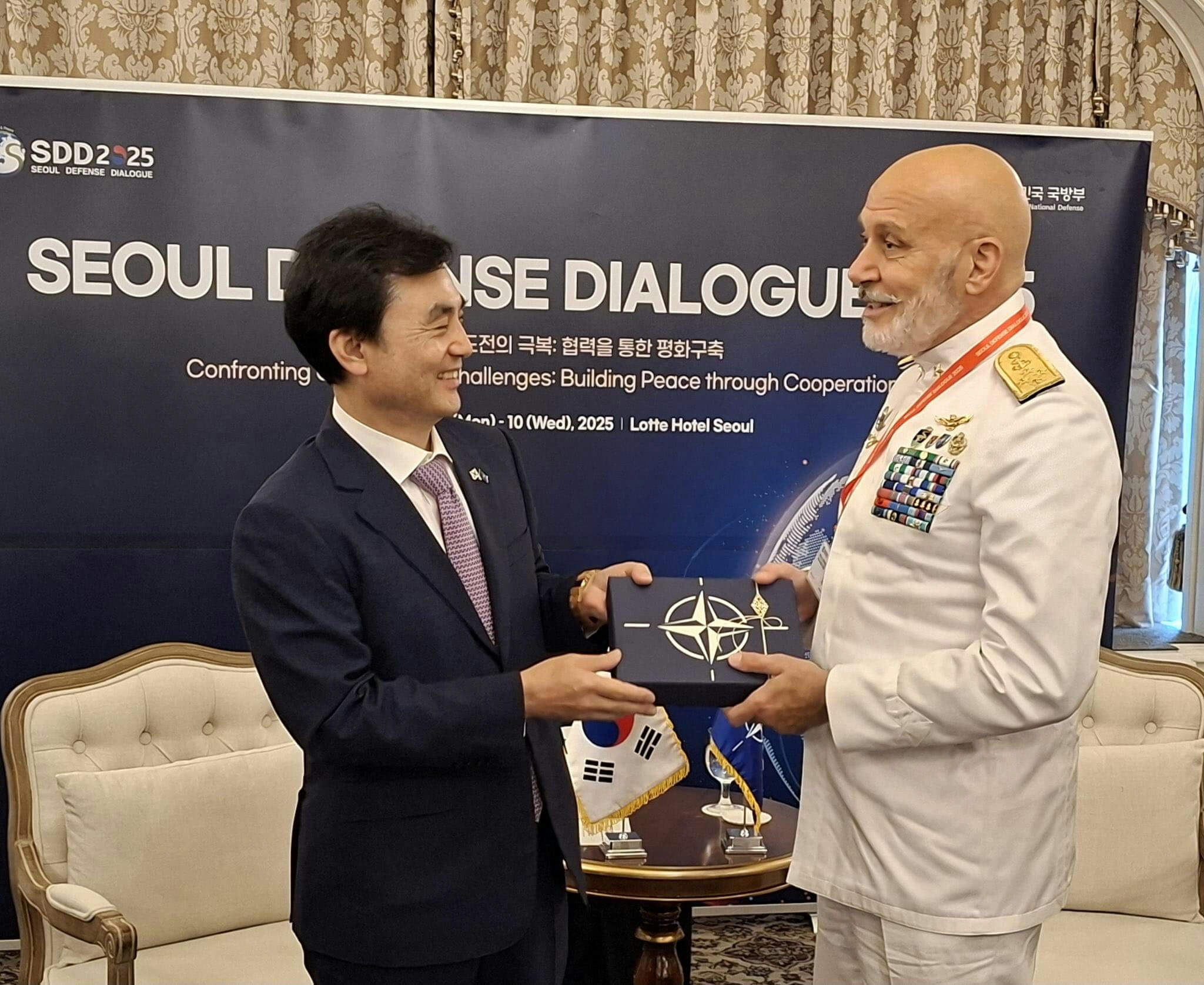 Back in May, South Korean Defence Minister Ahn Gyu-back (left) spoke in Washington about a 'phased contribution' to security in the Strait of Hormuz
Back in May, South Korean Defence Minister Ahn Gyu-back spoke in Washington about a 'phased contribution' to security in the Strait of Hormuz and mentioned political support, personnel deployment, information exchange and military assets as possible forms of support.
By that time, the government had already laid the groundwork for engagement, which could expand or remain limited depending on how the war developed. The inspection team sent to the UAE in early September reflects the same approach.
Trump expects help from allies beyond the Pacific
The difference between 2020 and now lies in American pressure. Six years ago, Washington wanted help in protecting navigation, but South Korea’s refusal to formally join the US coalition was not linked to any reduction in joint exercises on the Korean Peninsula.
Trump made the relationship public in August. There were other reasons for his decision to scale back the drills, including cost and a desire to reopen talks with Kim Jong Un, but he specifically cited the lack of Korean support in the war with Iran as part of his displeasure.
The geography of existing agreements is playing an increasingly diminishing role in determining the level of assistance expected from allies
It sets a precedent for Seoul that will endure even after the current crisis has passed. If the US president assesses the alliance according to whether the partner participates in operations outside its treaty zone, the question of military contributions may arise in any future crisis in which Washington deploys US forces to protect the interests of allies.
Japan, Australia and other US partner nations in Asia face a similar calculus, although their treaty obligations and military capabilities differ. For an administration seeking to reduce America’s share of the global security burden, the geography of existing agreements is playing an increasingly diminishing role in determining the level of assistance expected from allies.
Seoul is likely to help, but on its own terms
The most likely outcome of the current consultations is not South Korean participation in attacks on Iranian targets, but a limited naval mission whose formal task will be to protect Korean ships and uphold freedom of navigation.
The exchange of intelligence data, logistical support, escort duties and the expansion of existing naval capabilities would allow Seoul to offer Washington a visible contribution while, according to Tehran, insisting that it is not taking part in the American war campaign.
The precedent of the 2020 Cheonghae Unit and Ahn’s gradual contribution formula provide the government with a ready-made policy and operational framework.
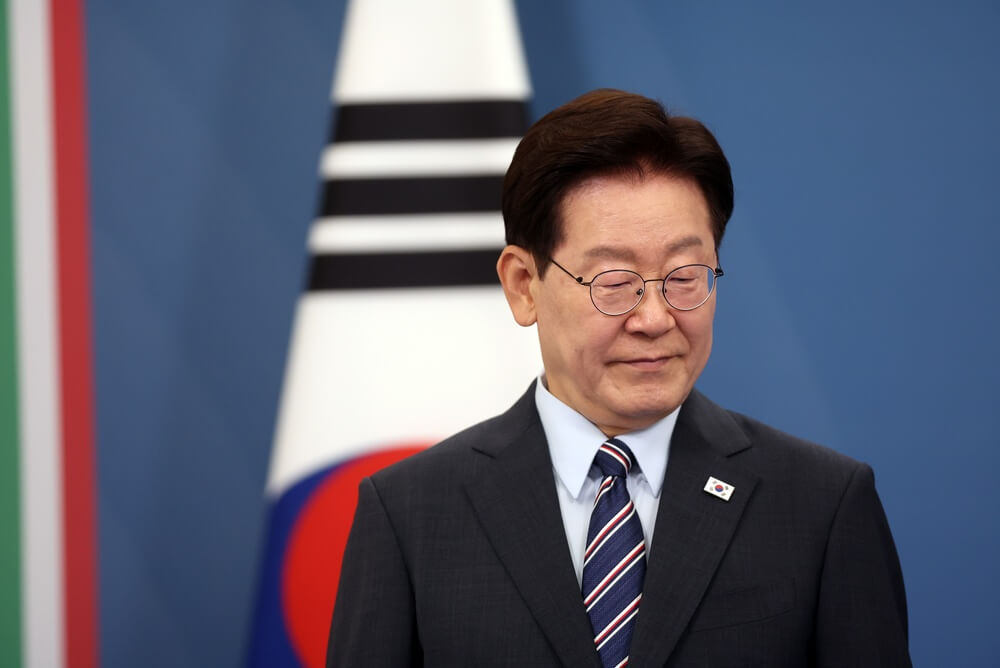 Seoul will probably find a way to respond without going to war with Iran - Lee Jae Myung
Domestic politics further limit the scope of Lee’s government. Any broader new military mission abroad would require political justification and, depending on its legal form and mandate, the involvement of the National Assembly, so Seoul has reason to rely on existing capacities and on a mission whose task can be directly linked to the protection of Korean interests.
This is precisely why, in 2020, it chose to expand the operating area of the existing Cheonghae Unit rather than formally join the American coalition. Today’s government has the same incentive to adjust its military contribution so that it is sufficient for Washington but politically palatable in Seoul.
Such a solution will not eliminate the risk. Iran may regard even a limited Korean presence as a hostile move, especially if Korean ships share data with US forces or escort tankers linked to states that support Washington.
Seoul will therefore try to keep the mission outside the chain of command of US operations against Iran and limit its mandate to navigation, protection of citizens and maritime security.
Wider engagement would become more likely only if Iran attacked a Korean ship, if disruption in the Hormuz area further threatened energy supplies, or if Washington tied other elements of bilateral defence to concrete Korean aid.
The US–South Korea alliance is likely to withstand this dispute without a dramatic rupture, as both countries have far greater shared interests on the Korean Peninsula than scope for open conflict over Hormuz. The change lies in the criteria by which Washington judges an ally.
Money for defence, the purchase of American weapons and bases are no longer the only elements of that account. The Trump administration also expects a willingness to assume part of the military burden when American and shared economic interests are threatened, even when this obligation does not directly result from a defence agreement.
Seoul will probably find a way to respond without going to war with Iran, but in doing so it will help set a precedent that Washington can apply in the next crisis far from Asia.
