The latest macro figures show that the global economy is still growing, with some signs of deceleration in a context of persistent price pressures and geopolitical uncertainty.
In this environment, PMIs and GDP projections suggest modest growth rather than recession.
Years of so-called “public sector stimulus” have delivered more debt, lower growth, weaker productivity, and higher taxes, and they are eroding the middle class.
Today’s poor economic performance is the result of years of misguided policies that have weakened the private sector, not just geopolitical shocks, and the worst possible response would be another round of public-sector spending plans.
Recent global PMIs and world GDP projections
Recent global PMIs remain above the 50-point threshold that separates expansion from contraction, indicating that manufacturing and services are still growing, although at a slower pace than last year.
S&P Global figures show that the current composite PMI is consistent with annualised world GDP growth of about 2.3 per cent.
The World Bank’s latest Global Monthly report places the composite PMI at around 53 in early 2026, with manufacturing back in expansionary territory for the first time in months, which also suggests that the risk of a global recession is low.
The IMF’s April World Economic Outlook projects global growth of 3.1 per cent in 2026 and 3.2 per cent in 2027 in its baseline scenario.
These indicators point to a mid-cycle slowdown, not a late-cycle collapse or deep recession
This is slightly slower than the average rate of 3.4 per cent in 2024–25 and not far below the pre-pandemic norm of 3.7 per cent, but it is likely to be revised down.
Even the more cautious UN forecasts, however, see world output still growing at roughly 2.7 per cent in 2026 before ticking higher in 2027, confirming that the baseline is one of weak growth rather than outright contraction.
Survey data on business expectations and hiring plans also point to a slower but still positive expansion.
Companies, on balance, still expect higher output three months ahead, and employment indices remain in positive territory, indicating that firms are still hiring.
Taken together, these indicators point to a mid-cycle slowdown, not a late-cycle collapse or deep recession.
Consumer spending and inflation outlook
Consumer spending remains solid in many countries, supported mainly by high-income households.
However, the middle class faces a squeeze in real incomes that is likely to erode purchasing power further in 2026 and 2027.
The IMF expects global headline inflation to edge up slightly to around 4.4 per cent in 2026 before falling back to 3.7 per cent in 2027.
Global citizens have endured cumulative inflation of more than 40 per cent in the past six years
UN forecasts also point to global inflation declining to around 3.1 per cent by 2026, still higher than pre-pandemic levels but a substantial improvement from recent peaks.
This may look like a relatively benign environment, but in practice it means global citizens have endured cumulative inflation of more than 40 per cent in the past six years, while wages have lagged because of weak productivity growth.
Global stagnation is not a victory
The biggest positive surprise comes from the United States, which is delivering much better growth than its G8 peers, reducing government spending, and improving real wages thanks to better-than-expected productivity gains.
The Truflation US CPI Index, which uses a wide range of real-time data to track prices daily, shows year-on-year inflation running close to 2.0 per cent in early May 2026, broadly in line with the latest official BLS consumer-price reading of around 3.3 per cent.
Wars, trade tensions, and higher interest rates matter, but they do not explain why global growth has been so sluggish over the past five years
This reflects two important factors: the negative effect of energy prices is being offset by food and shelter, and the strength of the US dollar is reducing imported inflation.
Global stagnation is not a victory, though.
The world is growing at an uncomfortably low pace because of constant government intervention, rising taxes, and weaker productive investment.
Wars, trade tensions, and higher interest rates matter, but they do not explain why global growth has been so sluggish over the past five years.
What the global economy truly needs
On a more positive note, the IMF’s baseline forecast of 3.1 per cent global growth in 2026 implies that the world will be adding output roughly equivalent to a new Germany every year over the next two years.
S&P Global’s PMI-based nowcasts support this story, showing global GDP running at an annualised pace of around 2.0–2.5 per cent in recent months, a rate that has historically been consistent with ongoing job creation and modest corporate profit gains.
Some emerging-market forecasts have been cut – IMF estimates for emerging-market growth are now around 3.9 per cent for 2026, down from 4.2 per cent at the start of the year – but large economies such as India and several Asian countries are still growing at 5–6 per cent or more, providing an anchor for global demand.
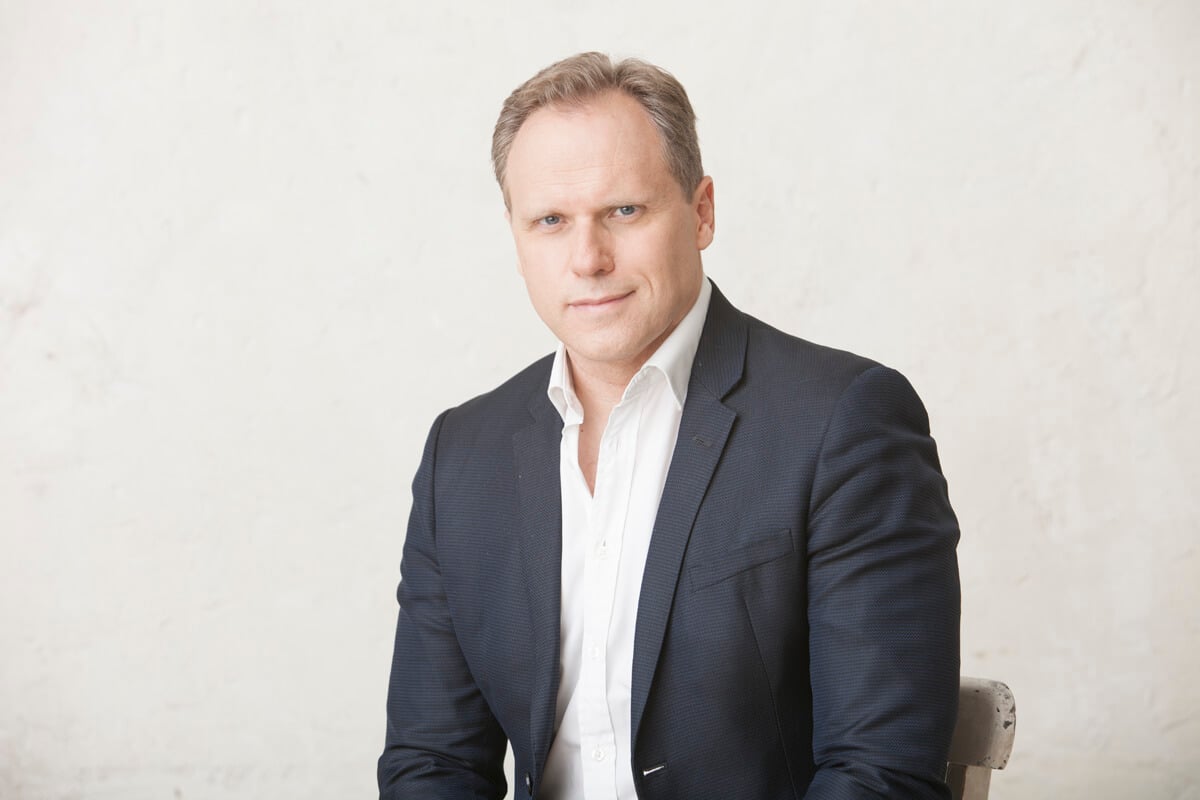 The biggest risk is a new wave of government spending aimed at “supporting” aggregate demand - Daniel Lacalle
The biggest risk, once again, is a new wave of government spending aimed at “supporting” aggregate demand.
The IMF warns that global growth could slow to 2.5 per cent in 2026 and, in a major energy shock, might fall towards 2 per cent, with inflation climbing above 6 per cent by 2027.
These shocks would normally be temporary, but they can easily become persistent if governments respond with even more spending and debt.
The message from PMIs, inflation gauges, and GDP projections is that the global economy has absorbed a series of shocks reasonably well, and that governments should be implementing supply-side reforms, not new spending programmes.
What the global economy truly needs is lower taxes, lighter regulatory and trade burdens, and a policy framework that puts the productive private sector at the centre.
The global economy is weak but still expanding.
The one factor that could turn this fragile growth into a recession is yet another round of public-spending booms, debt-financed stimulus packages, and the higher taxes needed to pay for them.
