Gold may be a “barbarous relic,” as John Maynard Keynes once observed, but it remains the relic of choice among central banks.
Emerging-market central banks have been loading up on gold reserves ever since the 2008 global financial crisis, more than doubling their holdings.
Does the anomalous behavior of gold prices since the outbreak of the war with Iran call this strategy into question, or is something else going on?
Gold’s allure derives from its reputation as a safe haven and inflation hedge. Yet in March, following the start of the war, an event that should have supported demand for gold on both grounds, its dollar price fell by 10%.
Prices then remained flat in April. Evidently gold is not quite the safe haven and inflation hedge investors thought it was.
Various explanations have been offered for this anomalous behavior. Traders incurring losses on other investments may have sold gold futures and funds to meet margin calls.
Higher interest rates, or at least diminished expectations of interest-rate cuts, may have caused investors to shift from gold to bonds.
Turkey’s central bank sold gold to obtain the foreign exchange needed to support the country’s currency, the lira. Other central banks may have followed suit.
Why central banks hold gold?
In any case, this episode is a reminder that gold prices can be volatile. So, should central bankers re-think their investment strategies?
Consider why central banks hold gold. Holding bullion has history on its side, having long been a sign of respectability for central banks.
Any global investor will want to include in its portfolio a “commodity play,” an investment correlated with commodity prices.
Gold kept at home is free of sanctions risk
Being long on gold is one way to obtain this exposure, although in a world with commodity and future ETFs there are other instruments offering better combinations of risk and return.
The most important factor, though, is that gold kept at home is free of sanctions risk.
Foreign-exchange reserves held as bank deposits and securities abroad are at risk of being immobilized, or even garnished, by a foreign government using sanctions for deterrence purposes, as Russia was reminded following its attack on Ukraine in 2022.
Exposure to US financial sanctions
Russia was not unaware of the danger: the share of its foreign reserves held in gold more than doubled from 2014, just prior to its annexation of Crimea, to its full-scale invasion of Ukraine in 2022. It repatriated all of it, vaulting it in St. Petersburg and Moscow.
The People’s Bank of China has been less forthcoming about its gold operations but is thought to have been the single most important central-bank purchaser in recent years.
The PBOC is thought to store the vast majority of that gold in Beijing and Shanghai, presumably because it is cognizant of sanctions risk.
My own research with co-authors suggests that the pattern is general: exposure to US financial sanctions significantly increases the share of reserves that emerging and developing economies hold in the form of gold.
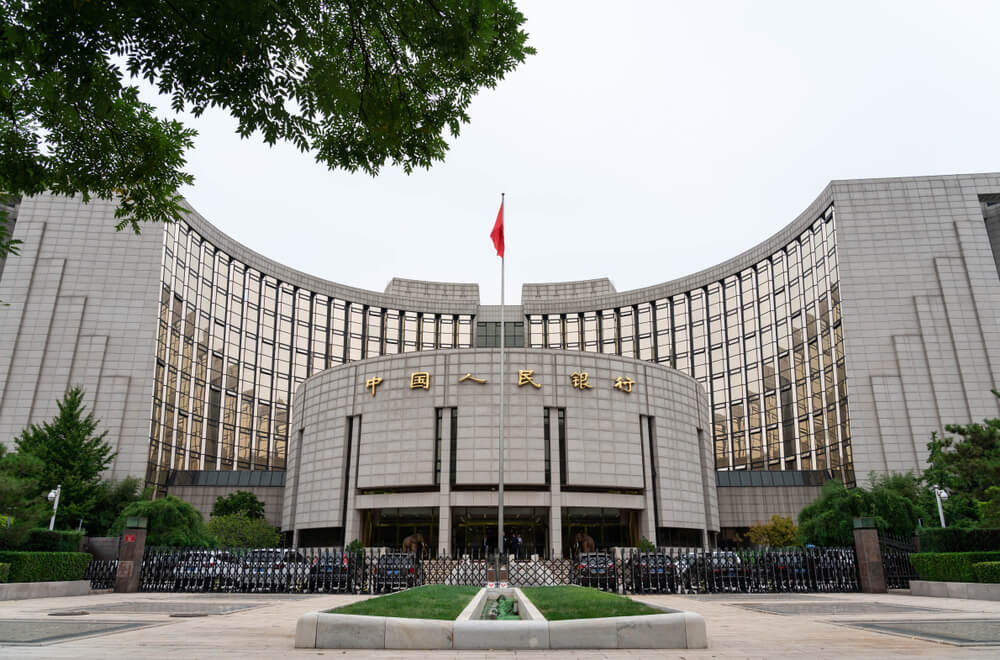 The PBOC is thought to store the vast majority of that gold in Beijing and Shanghai, presumably because it is cognizant of sanctions risk
More generally, the largest central-bank gold purchases in recent years have been by countries that are significantly exposed to geopolitical risk, not just Russia and China but also Poland, India, and—before last March—Turkey.
A further indication of what central banks are thinking is that the share of official gold reserves held in custody at the Federal Reserve Bank of New York has fallen from 30% of the global total in 2005 to barely 20% today.
Policymakers in other countries are questioning whether the US is a reliable ally and whether the New York Fed is a reliable custodian.
Recent reports link popular pressure for gold repatriation in Germany and Italy to political tensions with the United States and threats to the Fed’s independence. Who would have thought?
Symptom of deglobalization
But gold vaulted at home can’t be lent, swapped, or posted as collateral, unlike gold vaulted in London and New York. It is clunky when used for payments.
In 2019, Venezuela’s government, subject to US sanctions, chartered a Boeing 777 from a Russian company to ferry 7.4 tons of gold to Uganda, where it was refined and resold.
Venezuela received $300 million worth of euros to pay for merchandise that would have been unavailable to the country otherwise.
Venezuela did it again in 2020, paying for oil-field equipment and services from Iran, also sanctioned, by hiring a fleet of 747s to transport gold bars.
Central-bank purchases and repatriation of gold are a symptom of deglobalization
These operations, complex and unwieldy, were exceptions that proved the rule.
In this sense, central-bank purchases and repatriation of gold are a symptom of deglobalization.
They signal the advent of a more geopolitically fragmented world in which cross-border transactions of all kinds are poised to become more difficult and costly.
Barry Eichengreen, Professor of Economics and Political Science at the University of California, Berkeley, is a former senior policy adviser at the International Monetary Fund.
