In the nearly two years since he returned to the White House, US President Donald Trump has picked up where he left off in his first term, shredding the open multilateral trading system that has served the world so well since the end of World War II.
He has imposed sweeping tariffs on dozens of countries, repeatedly raising and lowering them and changing rates on individual goods and countries, seemingly on a whim.
As a result, US tariff rates are now higher than at any time since the Great Depression’s Smoot-Hawley tariffs.
Trump’s tariffs have provided domestic industries with some protection, but at the expense of others that depend on them.
His 50% tariff on steel imports, for example, has contributed to a 52% rise in the average US price of hot-rolled coil steel over the past year.
This has boosted steel producers’ production and profits while harming manufacturers of automobiles, farm equipment, and household appliances.
Trump’s objectives, at least as he initially presented them, were to increase employment (especially in manufacturing industries), reduce America’s current-account and trade deficits, and strengthen the US industrial base. None of these objectives has been achieved, and inflation has accelerated.
Without tariffs US prices would have fallen
Federal Reserve Bank of New York researchers have found that without Trump’s tariffs, US prices would actually have fallen slightly in 2026.
Instead, prices have skyrocketed, with gasoline prices rising 34%, fuel oil up 74%, and significant increases for computer software (28%) and airfares (22%).
Soaring prices have walloped Trump’s popularity, while the chaotic and erratic way in which his tariffs have been imposed and amended has created enormous uncertainty worldwide.
A Brookings Institution study found that his tariff regime “is more administratively complex and less predictable than the system that preceded it,” with little clarity about the tariffs’ duration and scope.
A framework intended to promote domestic manufacturing capacity and bargaining leverage may thus “introduce costs and instability that undermine those objectives.”
Despite the higher costs, the US merchandise trade deficit has not declined, rising to $114.7 billion by August
And despite the higher costs, the US merchandise trade deficit has not declined, rising to $114.7 billion by August.
Although the goods deficit with China shrank by 32%, the trade deficit increased to $1.2 trillion in 2025 as imports from other countries offset that decrease.
Nor has there been much job creation. Manufacturing employment fell by 1.2% in 2025, following a 0.7% decline in 2024.
Other sectors of the US economy, most notably agriculture, have been hit hard as countries responded to Trump’s tariffs by turning to alternative suppliers.
America’s trading partners
In addition to damaging the US economy, Trump’s tariff shenanigans have hurt most of America’s trading partners.
The damage has extended well beyond China to countries previously regarded as strong allies and supporters of the multilateral trading system.
Canada and Mexico’s experience under the North American Free Trade Agreement, which Trump renegotiated during his first term and is now renegotiating again, is illustrative.
Trump raised tariffs on Australia and the UK because they were allegedly not doing enough to crack down on forced labor
Bizarrely, Trump also raised tariffs on Australia and the United Kingdom because they were allegedly not doing enough to crack down on forced labor.
When Trump resumed his war on the multilateral trading system, critics were virtually unanimous in predicting that his tariffs would do nothing to reduce America’s trade and current-account deficits while undermining the system itself.
They forecast that trade volumes would fall as countries retaliated with tariff hikes of their own.
They were certainly right about the deficit. A country that spends more than it earns must, by definition, run a current-account deficit, with the trade deficit the largest component.
Global trade has held up better than expected
Tariffs did not address that imbalance, which has remained relatively constant.
Still, there is cause for hope.
Most countries have resisted the urge to retaliate against Trump’s tariff hikes, limiting the harm that might otherwise have been done, both to themselves and to the US.
As a result, global trade and economic growth have held up better than expected.
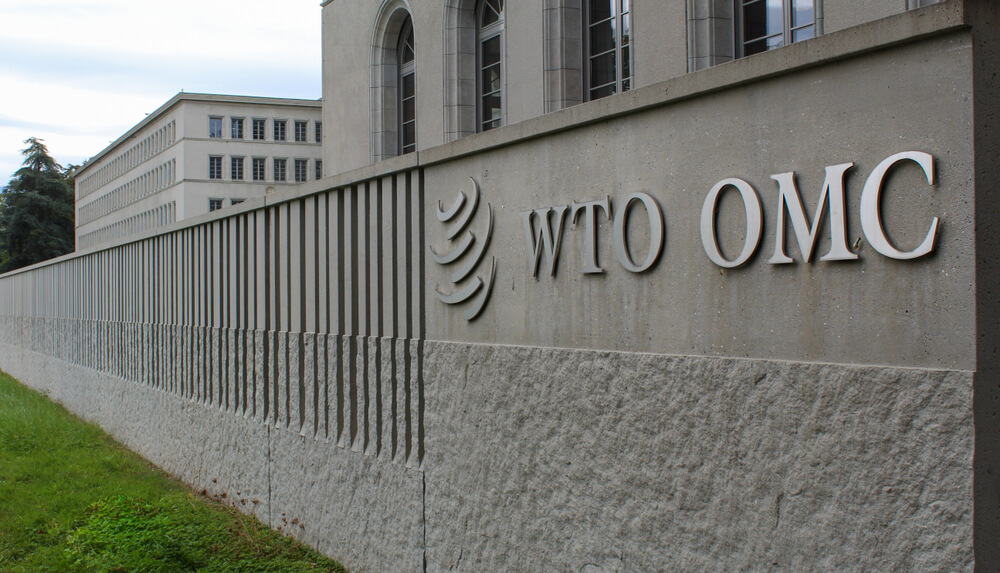 The World Trade Organization more than doubled its growth forecast for global trade in 2026, from 1.9% to 3.9%
In April, the International Monetary Fund forecast that global growth would slow from 3.5% in 2025 to 3% this year.
It later revised its forecast to 3.1%, despite the war in Iran and the surge in fuel prices.
The World Trade Organization, for its part, more than doubled its growth forecast for global trade in 2026, from 1.9% to 3.9%.
These developments offer hope that trade relations will improve after Trump leaves the White House, especially given how unpopular his tariffs are with American voters.
If the polls are accurate and Republicans take a beating in the upcoming midterm elections, US politicians will be reluctant to endorse further tariff hikes.
The resilience of international trade, combined with public pressure, may even lead to tariff reductions.
If that happens, it could mark the beginning of a virtuous circle in which lower tariffs help reduce inflation and economic uncertainty.
Undoing Trump’s errors might be just the stimulus the US and world economy need.
Anne O. Krueger, a former World Bank chief economist and former first deputy managing director of the International Monetary Fund, is Senior Research Professor of International Economics at the Johns Hopkins University School of Advanced International Studies and Senior Fellow at the Center for International Development at Stanford University.
