Turnout in Israel’s election on 27 October reached 77.7%, the highest since 1999, yet no camp emerged with a mandate to govern alone.
Benjamin Netanyahu’s Likud remains the largest party, with 27 seats to the 21 won by Gadi Eisenkot’s Yashar. Netanyahu’s bloc won 53 seats, the opposition 48 and the Arab lists 19, leaving every side short of the 61 needed for a majority in the 120-seat Knesset.
That arithmetic makes the Arab parties decisive, and the negotiations have exposed how uneasily that sits with Israeli politics.
Ahmad Tibi of the Joint List has said his party will not join a government but could support one from outside in return for commitments on tackling crime and recognising Bedouin villages.
The opposition remains deeply divided over whether to share power with Arab parties at all.
For the wider region, the outcome poses a question more pressing than that of who will lead Israel.
Iran: negotiating in the shadow of war
The deadlock comes as the war with Iran remains unresolved, binding Israel’s politics to the US–Iran talks.
Analysts had warned that Netanyahu might return to war with Iran after the vote, using it to force Eisenkot into a unity government and to buy himself further years in power.
Events may yet take another turn. Qatari mediation has yielded a reported (though unconfirmed) breakthrough between Tehran and Washington, with diplomatic sources telling Axios of “positive progress”, a development that could transform Netanyahu’s calculations entirely.
But even such a settlement would be difficult, given the wide gulf between the two sides over the blockade, sanctions, the nuclear programme and shipping through Hormuz.
The Qatari talks matter all the more because Netanyahu is running out of ways to hold on to power. Likud has claimed that the Arab-led parties “stole” the election, a charge the head of the Central Elections Committee has rejected, and he has tried to persuade opposition lawmakers to defect, so far without success. With both avenues blocked, Iran has become his strongest card.
A government of nationalist and religious parties might treat escalation with Iran as a way of putting security first
Netanyahu is urging Trump to resume strikes after the US midterms, in the hope that a renewed war will pressure Eisenkot into sharing power.
That card, however, is Trump’s to play, and for now he prefers to give diplomacy a chance.
A government of nationalist and religious parties might treat escalation with Iran as a way of putting security first.
A broad unity government would more likely seek to control the tempo of the conflict and keep in step with Washington.
Yet the two camps do not appear divided over Israel’s central aim, which is to stop Iran acquiring a nuclear weapon while keeping the military option open. Their quarrel is over how to manage the war and its risks.
Gaza: different on means, silent on the day after
The election offers no sign that Israel is ready for a comprehensive political settlement in Gaza.
Eisenkot, like Netanyahu, insists on dismantling Hamas as a military and governing force, and the main Jewish parties have taken a broadly hard line on the territory’s future.
A new government might differ in the scale of military operations, the handling of aid or the approach to withdrawal, but none of the contenders has set out an agreed vision for governing Gaza once the war ends.
Pressure alone cannot fill the vacuum left by the absence of a Palestinian authority with both the legitimacy and the capacity to run the territory
Nor has the ceasefire brought real stability. In its report of 15 October, the UN Office for the Coordination of Humanitarian Affairs (OCHA) recorded ongoing strikes, shelling, gunfire and casualties, a steady decline in basic services and supplies, and some 950,000 displaced people living in sites at medium or high risk of flooding as the rainy season approached.
The next government may therefore face mounting international pressure to halt violations and consolidate the truce. Pressure alone, however, cannot fill the vacuum left by the absence of a Palestinian authority with both the legitimacy and the capacity to run the territory.
The Palestinian state and settlements: little room for change
Whatever divides Netanyahu and Eisenkot, opposition to a Palestinian state is not among it.
A government less reliant on the far right would be no more likely to revive a path to statehood.
Eisenkot has called anyone still contemplating a two-state solution after 7 October “delusional”. Any change, then, would come in method rather than in the ultimate goal.
The practical differences emerge in the West Bank. Netanyahu has presided over sweeping settlement expansion.
Eisenkot might restrain some of the abuses and curb settler violence, but that is a long way from accepting Palestinian sovereignty
Eisenkot backs settlement in principle, so long as it stays within Israeli law. He has, however, set himself against unauthorised outposts, condemned settler violence and opposed building in E1, the tract east of Jerusalem whose development would all but split the West Bank in two and cut it off from East Jerusalem.
In office, Eisenkot might restrain some of the abuses and curb settler violence, but that is a long way from accepting Palestinian sovereignty.
The real test is whether a new government halts the measures that make a state ever harder to establish on the ground, or simply changes its rhetoric and methods.
Normalisation: security alone will not suffice
The war with Iran has given Israel and several Arab states good reason to cooperate in protecting shipping, sharing intelligence and containing escalation.
Turning that limited cooperation into wider normalisation, particularly with Saudi Arabia, still depends on a credible path towards a Palestinian state.
On that score, neither Israeli camp has shown much appetite for the concessions that might open a fresh road to statehood, or bring tangible change in Gaza and the West Bank.
Arab capitals will be watching whether Israel’s next government can rein in its far-right members or whether it will need their votes to survive
Without such concessions, Israel and Arab states are likely to keep cooperating only where their interests in security and energy overlap. Full normalisation is a different proposition.
Its political cost for Arab governments will be steep as long as Gaza has no political horizon and settlement and creeping annexation continue.
Arab capitals will be watching whether Israel’s next government can rein in its far-right members or whether it will need their votes to survive.
The answer could determine whether the election opens the way to new diplomacy or locks in the old impasse.
Arab citizens and the question of Israel’s identity
The 19 seats won by the Arab lists amount to more than a kingmaker’s role in the Knesset.
The heavy turnout among Palestinian citizens of Israel reflects a determination to translate electoral weight into genuine influence over the everyday and political questions that govern their lives.
The opposition campaigned on keeping Arab parties out of government, with only Yair Golan’s left-wing Democrats dissenting.
Since the count, however, Eisenkot has shifted ground. On Saturday he pledged to act “immediately” on the opposition’s parliamentary majority, in effect acknowledging a majority that exists only with the Arab-led parties.
He added that any lawmaker who accepts his four principles could join the effort to form a coalition.
Among them are recognising Israel as a Jewish and democratic state and Hamas as a terrorist organisation.
The door is only ajar. One Joint List figure has rejected those principles outright, even as another of its leaders has offered to back Eisenkot’s bloc without seeking cabinet seats.
Arab citizens have chosen to make themselves heard through the ballot box, rather than through civil disobedience, strikes or protest
Avigdor Liberman, who has ruled out any government dependent on Arab parties “either directly or indirectly”, is seen by Ra’am officials as the main obstacle.
The controversy goes to the heart of Israel’s identity and the place of an Arab minority that makes up more than a fifth of the population.
Arab citizens have chosen to make themselves heard through the ballot box, rather than through civil disobedience, strikes or protest.
The consequences of Israel’s response to that choice will outlast any coalition. The debate may yet decide the character of the state and the fate of its democracy, for it exposes the tension between Israel as a Jewish state and Israel as a democracy that promises political equality to all its citizens, Arabs included.
If Arab lawmakers remain wanted for their votes but rejected as partners in government, the election will have enlarged their numerical weight without settling their political standing.
Exclusion could convince many Arab citizens that voting changes nothing and turn them away from future elections. It could also deepen hostility between Arab and Jewish citizens and erode the substance of Israeli democracy.
A change of government, or of policy?
The election has stripped Netanyahu of his majority without handing Israel a clear strategic alternative.
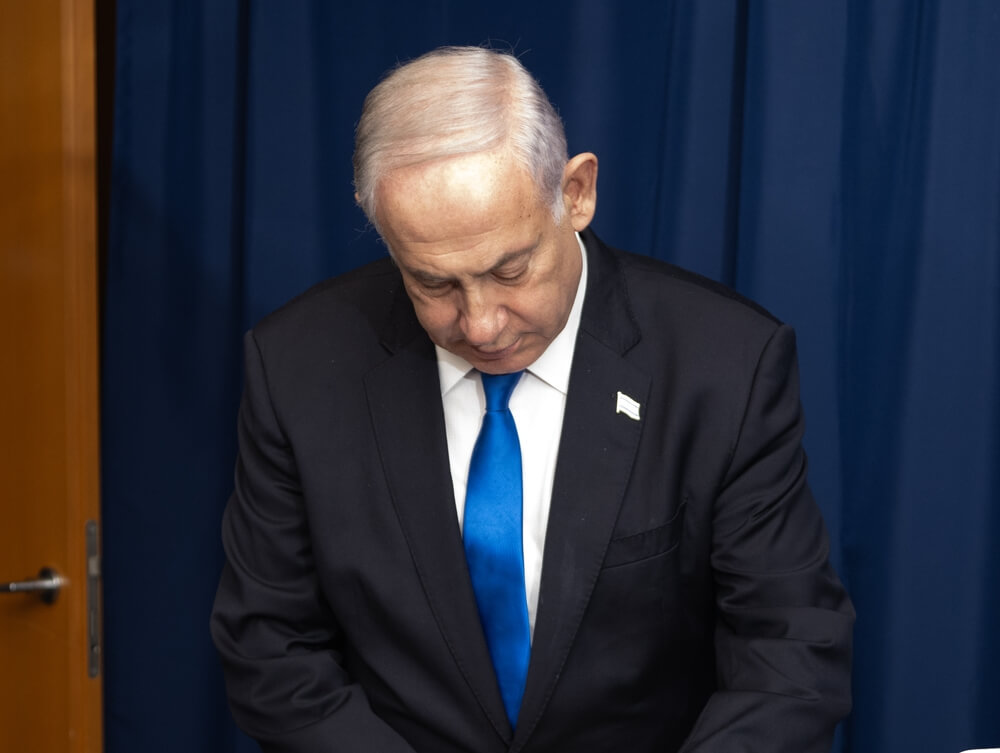 The election has stripped Netanyahu of his majority without handing Israel a clear strategic alternative
The negotiations may produce a new government, a faltering unity arrangement, or deadlock and yet another election.
Whatever the outcome, the consequences for the Middle East will hinge less on who becomes prime minister than on whether the next coalition can break with Israel’s hard-line security consensus.
Until it does, Iran, Gaza, the settlements, the stalled hopes of statehood and normalisation, and the question of Israel’s identity will remain the true measure of the gap between a change of government and a change of policy.
Siba Madwar is a Syrian political commentator and PhD researcher at King’s College London, specialising in conflict resolution in divided societies and post-conflict statebuilding.
