The Free Trade Agreement between the EU and India is within reach and could be signed as early as the end of January or the beginning of February.
According to expectations of German Chancellor Friedrich Merz, who was visiting India, EU leaders will travel to India to seal the deal, provided the remaining arrangements proceed as planned.
All aspects of this agreement go far beyond the interests of the two signatories, and its consequences are globally significant, not only in economics but also in politics and security.
The Europe-India deal serves as a strong counterattack to the increasing fragmentation of global trade caused by the influence of American protectionist measures.
Furthermore, the agreement between these two economic and political powers provides significant momentum to India's security and diplomatic alliances in the Indo-Pacific region.
Particularly important is the aspect related to their joint opposition to the growing Chinese economic influence, especially in the rivalry over supply chains, access to critical minerals, and the development of high technologies.
Opposing the division into spheres of interest
The Europe-India FTA will be concluded at a time when the world is watching with enormous concern the rapid move towards a new global division into the spheres of interest of the great powers, undermining the previous order based on cooperation rather than conflict.
The American intervention in Venezuela at the beginning of January unequivocally confirmed these fears, as did Trump’s National Security Strategy before it, with its emphasis on sovereignty and withdrawal from previous integrative processes.
The rapprochement between the EU and India with the upcoming FTA has strategic significance. Both sides had strong motivation to accelerate negotiations in the context of new global relations and to reach an agreement as soon as possible, from which they will gain clear economic and political benefits.
Both Europe and India are making it clear that they have realised they cannot fully rely on partnership with Trump’s America
Both Europe and India are making it clear that they have realised they cannot fully rely on partnership with Trump’s America.
In the first months of his term, the American president introduced additional tariffs on exports to the US, tightened the visa regime for India’s professionals working in the US, and dismissed Europe as the most important long-term ally in the National Security Strategy.
Therefore, the Europe-India FTA will be the culmination of aligning their long-term economic, technological and even geopolitical interests, adapted to the new circumstances dictated by others, above all Washington and Beijing.
Benefits for both economies
The European Union is India's largest trading partner, with bilateral trade in 2025 reaching nearly USD 140 billion.
The FTA negotiations began in 2007, suspended in 2013, and resumed in 2022. Interest in this deal, which is now close to conclusion, has therefore existed for a very long time, although occasional difficulties have sometimes made the goal seem distant.
The motives for India's growing economy to pursue such an agreement are clear. Faced with harsh US tariffs of 50%, India’s companies find more than adequate compensation in Europe for exporting their products and services.
They gain a large, stable, and predictable partner – the single largest market in the world – with whom long-term plans are achievable.
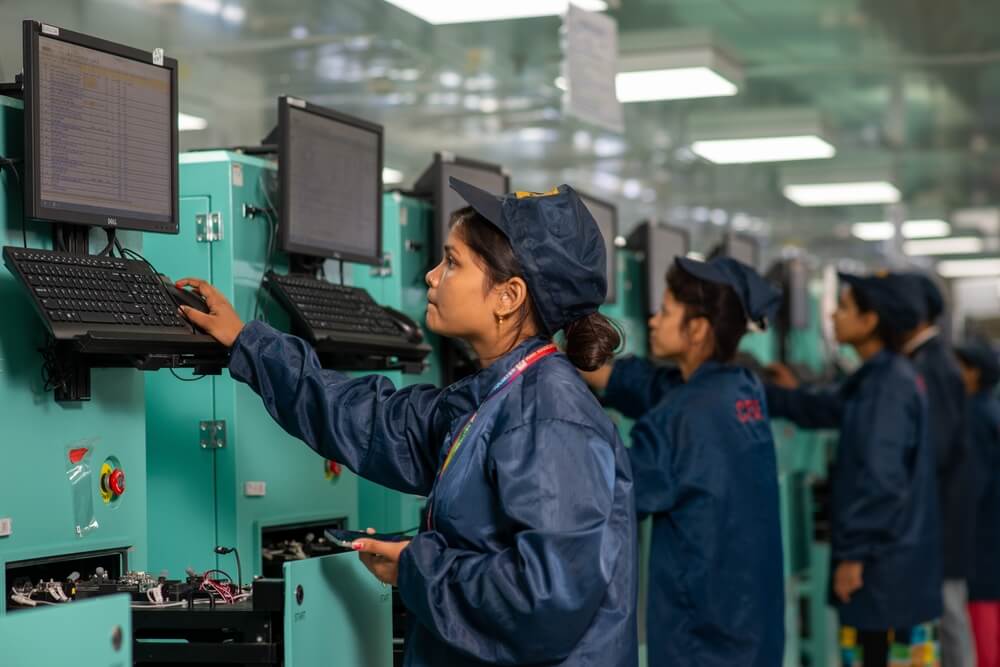 Faced with harsh US tariffs of 50%, India’s companies find more than adequate compensation in Europe for exporting their products and services
Additionally, India’s economy gains a strong ally in Europe in reducing its dependence on China.
Key export sectors such as technology, pharmaceuticals, automotive, and textiles benefit from the FTA by gaining access to the vast European market either duty-free or with minimal tariffs.
On the other hand, the agreement allows European manufacturers to enhance their competitiveness in India's vast market, particularly in the car export sector, where India had previously imposed significant restrictions.
The EU is restoring its image of a first-class global actor
The EU has concluded a free trade agreement with India immediately after finalising another long-prepared and contentious agreement with Latin American countries (Mercosur), creating a free trade area of about 700 million people.
With these two mega-agreements, the EU returns to the global stage with a strengthened image, which had been significantly undermined by its displacement by the US and by internal confusion over global priorities.
Next month, the EU will be a much more respected global actor than it was at the end of last year
Next month, the EU will be a much more respected global actor than it was at the end of last year. With free trade agreements with two major regions (India and Latin America), the EU enters 2026 as a force that will strongly counter prevailing isolationism.
Through the alliances it forges by expanding free trade areas, Europe will strengthen its position, particularly in relation to the US, whose leader has largely turned away from it.
It will also reinforce its stance towards China, whose aggressive global presence is a shared concern among other major partners.
