On 28 May in Berlin, the finance ministers of the six largest economies of the European Union – Germany, France, Italy, Spain, the Netherlands and Poland – agreed on a common position to strengthen the centralised supervision of EU capital markets.
This is the first serious political agreement among the largest member states on an issue that has long been caught between national interests and European ambitions.
The E6 agreement is not a legislative decision, but for the first time it creates a political majority capable of driving changes through the European decision-making system.
The debate is therefore no longer about whether the European Securities and Markets Authority (ESMA) will receive new powers, but about how extensive those powers will be.
Berlin served as a platform to support the European Commission’s proposals, which envisage greater centralisation of supervision over the most important parts of the European financial infrastructure.
The focus is on the largest stock exchanges, clearing houses, central depositories and cross-border financial products.
The shift in Germany’s position is particularly significant. For years, Berlin has been wary of any substantial transfer of regulatory powers to the European level.
Now, for the first time, it is showing a willingness to support model in which some control over financial markets moves from national capitals to a common European framework.
European capital exists, but it does not reach where it is needed
The reason for this is clear: the European Union has vast private capital and high levels of savings, but this capital does not flow efficiently into investments that would drive growth, technological development and competitiveness.
Unlike in the United States, the European financial system remains heavily reliant on banks. Capital markets are still fragmented, less liquid and less able to finance large development projects or fast-growing companies.
Capital Markets Union is no longer regarded as a technical financial reform
Meanwhile, demands on European economies have grown significantly.
The consequences of the war in Ukraine, increased defence spending, energy transition, development of artificial intelligence, digital infrastructure, and technological competition with the US and China require amounts of capital that the current model can scarcely provide.
This is why the Capital Markets Union is no longer regarded as a technical financial reform.
It has become part of a broader discussion about Europe’s ability to finance its own priorities without excessive reliance on external sources of capital.
Brussels seeks a single regulator for the largest actors
Until now, ESMA has primarily acted as a body that harmonises rules and coordinates the work of national regulators. Direct supervision of the largest market institutions has largely remained with national authorities.
This led to a system in which similar actors often operated under different regulatory regimes, depending on the member state where they were registered.
The agreement in Berlin paves the way for a much more centralised model of supervision.
National regulators' role would focus more on local and smaller market participants
ESMA would have direct jurisdiction over the most important market infrastructures and a significantly greater role in overseeing cross-border financial activities.
National regulators would remain an important part of the system, but their role would focus more on local and smaller market participants.
For investors, this provides greater predictability. For large financial institutions, it means that key regulatory decisions will increasingly come from Paris, where ESMA is headquartered, rather than from national capitals.
For the first time, there is a majority in favour of centralisation
The political significance of E6 arises from the structure of European decision-making. Most regulations related to capital markets are adopted by qualified majority rather than by unanimity.
The six countries gathered in Berlin represent approximately 70 per cent of the population of the European Union. This combination gives them decisive weight in future negotiations.
The possibility of halting the entire process is much lower today than it was a few months ago
That does not mean resistance will disappear. On the contrary, it is likely to shift to discussions on the details: the scope of ESMA's new powers, the length of transition periods, and the role of national regulators.
However, the possibility of halting the entire process is much lower today than it was a few months ago.
This is no longer merely a financial reform
It is incorrect to consider the E6 agreement in isolation from the broader European debate on strategic autonomy.
In recent years, the European Union has repeatedly faced the consequences of dependence on external power centres, from energy and technology to industrial supply chains. Now, a similar question arises in finance.
The centralisation of supervision acquires a political significance that goes beyond regulatory reform
If Europe wants to finance its industrial, technological, and defence priorities on its own terms, it must have a deeper and more efficient capital market.
This is why the centralisation of supervision acquires a political significance that goes beyond regulatory reform.
It forms part of a broader effort by the European Union to increase its capacity for economic and strategic decision-making.
A return to the previous state is unlikely
Resistance will persist. Smaller members with strong financial sectors will continue to defend some of their existing competences. National political debates will further slow the process.
ESMA will need to demonstrate that it can effectively carry out its expanded functions without creating additional bureaucracy. However, the political direction is now much clearer than before.
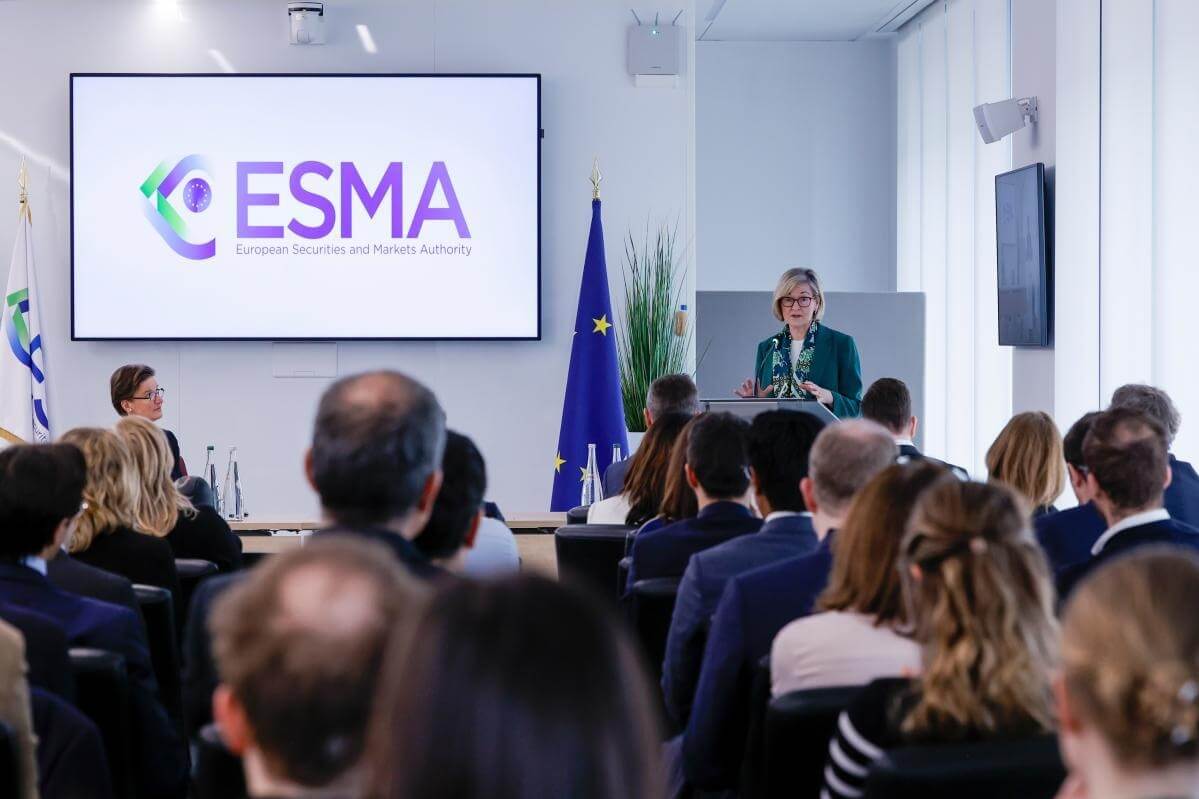 The European Union has tried to integrate capital markets for years, but every serious step has eventually collided with national interests
The Berlin deal alone will not create a single European capital market. However, it shows that, for the first time, the largest economies of the European Union are prepared to transfer part of their financial sovereignty to a common level to achieve a larger and more functional market.
Behind the debate about ESMA's powers lies a more important issue than financial regulation.
The European Union has tried to integrate capital markets for years, but every serious step has eventually collided with national interests.
The Berlin agreement shows that the largest economies have decided not to avoid the problem any longer.
That is why the coming months will determine less about the future of ESMA, and much more about whether the European Union is truly ready for deeper economic integration.
