At a meeting of defence ministers from all 32 NATO allies in Brussels on 18 June, US Defense Secretary Pete Hegseth announced a six-month review of the presence of US forces in Europe.
He called for a redesign of the alliance into what he termed "NATO 3.0" and openly criticised allies who did not allow US forces to use European bases and airspace during the war with Iran, describing this as "shameful".
Secretary General Mark Rutte noted that last year European members increased their defence spending by 90 billion dollars, a 20 per cent rise.
Even this information did not alter the substance of what was announced that day. For three weeks, the Pentagon has been reducing some of the forces assigned to NATO.
The overview presented by Hegseth is not an analysis of the current situation but a political message. For the first time, Washington is openly indicating that it no longer regards all allies in the same way.
US withdrawal of key capabilities
The changes began on 3 June, when US European Command formally notified allies of the so-called "rationalisation" of contributions to the NATO operational plan.
Behind the bureaucratic language lies a significant change in the distribution of forces.
The number of F-16 and F-15E fighter jets assigned to NATO missions is being reduced from approximately 150 to 100. The fleet of P-8 Poseidon maritime reconnaissance aircraft is decreasing from 26 to 15.
All four squadrons of aerial refuelling aircraft are leaving Europe. An aircraft carrier with its escort group, a cruise-missile submarine, and one of the two strategic bomber groups assigned to the European theatre are also being redeployed elsewhere.
Each of these decisions could be seen as a technical adjustment. Taken together, they affect several key capabilities on which NATO's current functioning depends.
Aerial refuelling aircraft determine how far European combat aircraft can operate without returning to their home bases. Without them, the area in which European air forces can operate effectively is significantly reduced.
"There is an unhealthy co-dependence of NATO on US forces" – General Alexus Grynkewich
This particularly affects scenarios involving the Baltic Sea, the Black Sea, and the Mediterranean Sea simultaneously.
The P-8 Poseidon is the main method for tracking Russian submarines in the North Atlantic and the Baltic Sea. Reducing their numbers directly impacts the monitoring of sea routes between North America and Europe.
The aircraft carrier remains the only platform capable of projecting air power in areas where allied bases do not exist or are unavailable. No European navy currently has the capacity to fulfil that role.
The commander of US forces in Europe, General Alexus Grynkewich, who also serves as NATO's Supreme Allied Commander Europe, summed up the logic of the decision very directly:
"There is an unhealthy co-dependence of NATO on US forces."
In other words, Washington believes that Europe must develop its own capabilities. In previous decades, there was no serious political need for this; today, it clearly exists.
A political account of the Iran war
Hegseth made no secret of what led to these decisions. During the US-Israeli war against Iran, which began in February, Washington sought access to bases and airspace from allies to conduct operations.
Italy, Spain and several other countries refused or hesitated, estimating that such a move could threaten their energy interests and diplomatic positions.
Hegseth called such behaviour shameful and stated that the Allies thereby endangered the lives of American soldiers.
The essence of the dispute is political rather than legal. Washington requested concrete support from European allies for operations against Iran but did not receive it.
At the Pentagon, this was seen as an indication that some European member states want the benefits of American military power without accepting the associated risks. Hegseth's revision is the first practical response to this view.
European states must assume a greater share of responsibility for their own defence
The Pentagon's conclusion is straightforward: an ally unwilling to assist US operations cannot automatically expect US capabilities to remain deployed for its protection.
Elbridge Colby, Under Secretary of War for Policy at the US Department of War and one of the authors of the 2026 National Defense Strategy, outlined this logic at the beginning of the year.
He told the House Armed Services Committee that the United States must plan for simultaneous crises in Europe and Asia but can no longer maintain the same level of military capacity on both fronts.
He stated that China is the most important long-term challenge to American security and economic strength.
If that is the starting point, the redistribution of resources towards the Pacific is a logical consequence. In that case, the European states must assume a greater share of responsibility for their own defence.
Difference between obligation and ability
In theory, Europe is able to compensate what the US is withdrawing. In practice, it will be neither quick nor easy.
Building a fleet of aerial refuelling aircraft requires billions of euros and years of training, integration, and infrastructure development. Replacing eleven P-8 Poseidon aircraft would require either purchasing new American equipment or developing a European system that does not currently exist.
The European Drone Defence Initiative, launched this year, does not address any of these issues.
An even greater challenge is that the European members of NATO still use a wide variety of weapons and military systems
The question is no longer whether Europe can find the money for defence, but how quickly that money can be converted into planes, ships, production capacity, and trained crews.
An even greater challenge is that the European members of NATO still use a wide variety of weapons and military systems. No new fund or budget package can quickly eliminate this weakness.
Addressing it would require joint procurement, joint planning, and the willingness of states to subordinate some of their national priorities to collective solutions. So far, there are few indications that European governments are prepared to take such a step.
Test in Ankara
The NATO summit in Ankara on 7 and 8 July represents the first serious political test of this new logic.
Donald Trump is coming to Türkiye, a country considered one of the most difficult partners within the Alliance for years and is now hosting a meeting that may determine the future of the US military presence in Europe.
The official agenda includes Ukraine, defence spending, and burden sharing within the Alliance. However, a more specific question lies behind this: will the states that refused to cooperate during the Iran conflict present offers that could change Washington's attitude?
If Italy, Spain, and Belgium arrive in Ankara without new investments or clear plans to strengthen their own capabilities, the Pentagon will have an additional argument for a new round of reductions in the US presence after the review ends in December.
That phase could also include ground forces, including some of the brigades deployed in Europe.
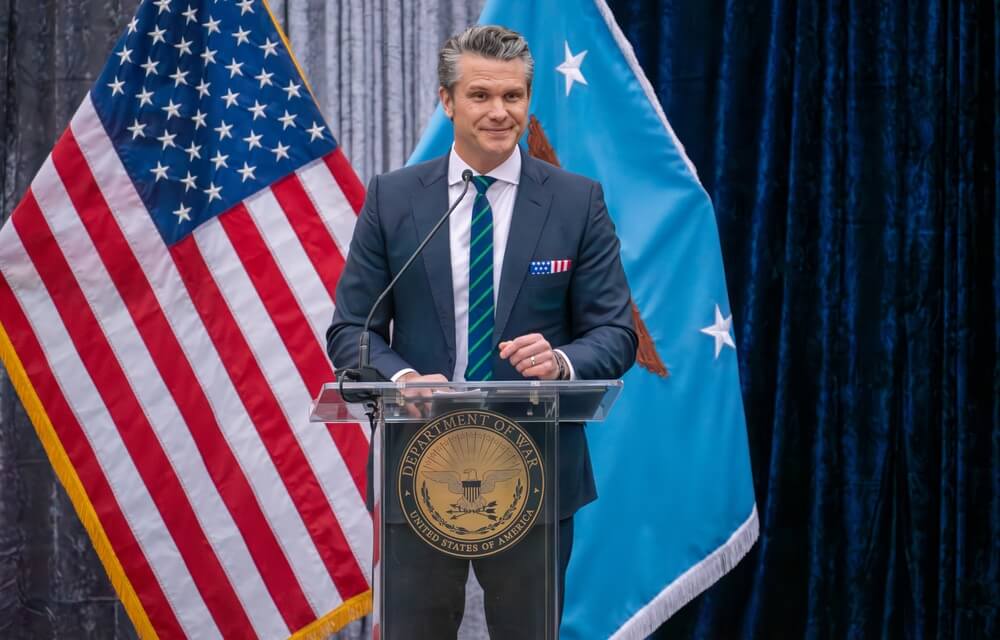 No one in Washington is discussing leaving NATO. The debate concerns how many American planes, ships, and soldiers will remain available to Europe - Pete Hegseth
No one in Washington is discussing leaving NATO. That is not really open for debate. The debate concerns something much more specific: how many American planes, ships, and soldiers will remain available to Europe.
Over the past thirty years, European members have been able to take American military power for granted. Today, that is no longer the case.
The Pentagon is currently moving planes, ships, and personnel, but the ongoing debate is not primarily military.
In the background, a new criterion is emerging by which Washington will evaluate its allies – not according to what is written in the contracts, but according to what they are prepared to do when the US administration considers it necessary.
In the decades following the Cold War, European states could afford to regard security as a permanent fact. That period is ending. The era of cheap security is over for Europe.
In a world where great powers allocate financial, military, and political resources more carefully, protecting allies is becoming an investment for which a concrete return is increasingly expected.
For many European capitals, this could represent a much greater change than merely reducing the US military presence.
Europe’s most likely response will not be a dramatic increase in troop numbers or the creation of a new European army.
The real test will be much less politically attractive. European governments will have to decide which national projects they are willing to shut down to co-finance the capabilities that are currently provided almost exclusively by the United States.
This decision will determine whether European defence in ten years will be a serious military force or merely a collection of expensive but mutually unrelated national systems.
