Last October, French President Emmanuel Macron stood in Copenhagen alongside European Commission President Ursula von der Leyen, Polish Prime Minister Donald Tusk, Danish Prime Minister Mette Frederiksen, and executives from 28 of Europe’s largest companies.
They were there for the Copenhagen Competitiveness Summit, whose purpose was straightforward: to discuss how Europe can remain competitive in an increasingly cutthroat global economy.
In summarizing the challenge, Macron put it well: “We know exactly what we have to do. It’s well established in the Letta report, Draghi report and so on. Now the question is how to deliver … It’s a days-and-weeks issue. I want to insist on that because for me the end of this year is absurdly critical to deliver this agenda.”
Macron was right, and his observation remains true today. Europe does know what to do.
A year prior to the summit, former European Central Bank President Mario Draghi had also delivered a stark warning about Europe’s competitiveness.
Among many significant findings in his report on the matter was his conclusion that Europe faces an annual investment gap of around €800 billion ($928 billion).
Europe continues to burden itself
Since then, the pressure on Europe has only intensified. American protectionism is rising. Chinese competition is intensifying. Security threats are moving ever closer to daily European life.
At the same time, Europe continues to burden itself with slow approval processes, fragmented regulation, and barriers within its own single market.
Europe cannot afford to keep dragging its feet. The good news is that European businesses are ready to commit to being part of the solution.
The 28 companies behind the declaration committed to increasing their investments in Europe by an average of 50% by 2030
That was the idea behind the Copenhagen Pledge presented at the Copenhagen Competitiveness Summit.
The 28 companies behind the declaration committed to increasing their investments in Europe by an average of 50% by 2030, provided that European policymakers deliver the reforms necessary to strengthen competitiveness and security.
Global companies such as Airbus, Siemens, SAP, Thales, Saab, and Novo Nordisk are prepared to invest more in Europe’s future.
Europe risks wasting a historic opportunity
But investment can bear fruit only if it takes root in fertile ground. Capital will not automatically strengthen Europe simply because it exists.
Without the right conditions, Europe risks wasting a historic opportunity. European businesses need simpler rules, faster permitting, affordable energy, stronger infrastructure, and a fully functioning single market.
That is why the Copenhagen Pledge contains not only investment commitments but also a concrete outline of recommended political reforms to unlock European competitiveness.
Many of these proposals echoed the Draghi report, which urged European leaders to simplify regulation, reduce reporting burdens, boost innovation, and strengthen Europe’s ability to scale businesses across borders.
Europe’s progress since the Copenhagen summit has been disappointing
But Europe’s progress since the Copenhagen summit has been disappointing. A new competitiveness tracker shows that only four of 35 key initiatives have been formally adopted.
Meanwhile, 21 initiatives remain stuck in the early stages of development, where they cannot yet reduce regulatory burdens, lower compliance costs, or attract new investment.
The gap between political ambition and policy reform remains far too wide. Even where progress has been made, challenges remain.
Three out of the four adopted initiatives focus on simplification, but new and inconsistent requirements continue to offset many of the gains for businesses.
Businesses are ready to contribute
Europe does not suffer from a shortage of reports or strategies. It suffers from weak execution.
The most important task is clear: Europe must finally complete and strengthen its single market.
It is absurd that European companies still face national barriers, fragmented implementation, and different administrative requirements within the world’s largest trading bloc.
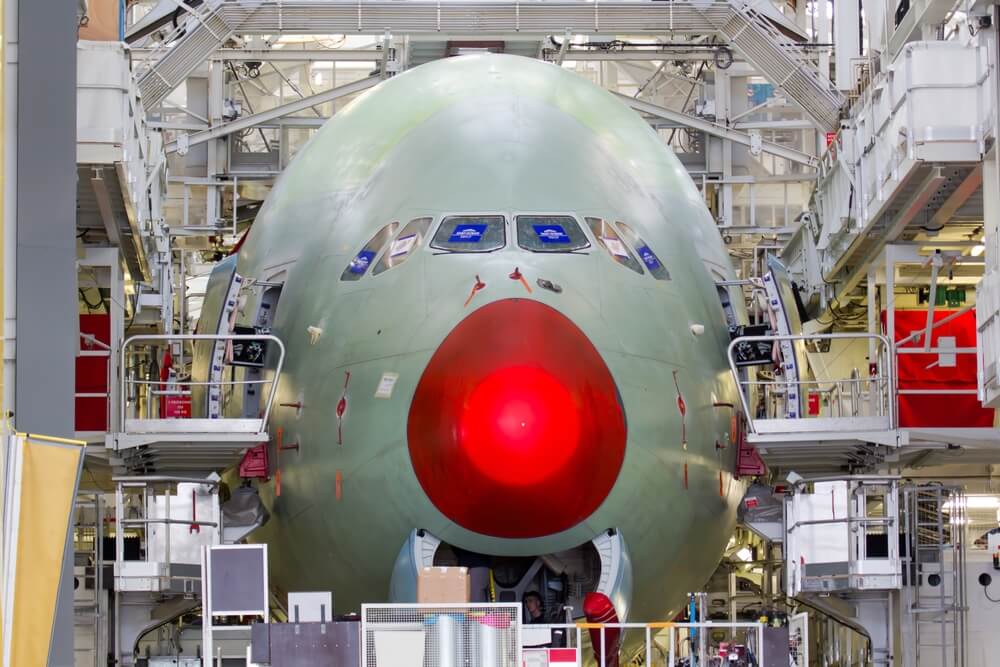 Companies are signaling a stronger willingness to increase their economic engagement in Europe - Airbus
At a time when external pressure is mounting from every direction, Europe should stop allowing internal fragmentation and national special interests to tie its hands.
There is much in today’s world that Europe cannot control—from wars and geopolitical instability to global trade tensions.
But Europe can decide whether it wants companies to spend time navigating 27 different systems when they could be pursuing innovation and scaling up investment across the continent.
Businesses are still ready to contribute. Recent data from Danish Industry’s business panel shows a clear shift in outlook, with Danish companies increasingly seeing Europe as a safe harbor in an unstable world.
Danish investments in the United States have grown by 170% since 2019, while investments in EU countries have largely stagnated.
But now, companies are signaling a stronger willingness to increase their economic engagement in Europe.
That shift matters. It shows that companies want to invest closer to home when conditions are stable and predictable, and it confirms that Europe has a unique opportunity to attract investment that might otherwise go elsewhere. Europe should stand ready with open arms.
Businesses are prepared to help build a stronger Europe that can withstand external pressure and secure future prosperity. But European leaders must meet that commitment with political courage and speed. We already know what needs to be done.
Lars Sandahl Sørensen is CEO of Dansk Industri.
