Questioning of US military support for Israel but also for Egypt featured during last week’s US midterm elections in which Abdul El-Sayed became the first Muslim senator in US history.
The new senator-elect for Michigan and his Democratic colleagues are likely to continue their criticism of Cairo, which has launched what human rights groups call an “unprecedented” crackdown on press freedom.
Egypt’s foreign policy agenda encompasses not just the potential for more complicated relations with Washington but actual and brewing conflicts across the Sahel, the Horn of Africa, the Mediterranean and the Red Sea.
All this makes it more surprising that President Abdel-Fattah El-Sisi decided to declare last month that he would step down at the end of his third term in 2030, a move that would make him the first Egyptian president to leave office without being killed, imprisoned or forced out.
Perhaps addressing scepticism in advance, Sisi said his stepping down “was a matter that has been completely settled and will not be discussed”.
He also announced a plan for the Egyptian Military Academy to train presidential candidates for 30 months to “be able to carry the responsibility of leading the Egyptian state”, which would cement the centrality of the military.
A former military officer himself, Sisi has done much to consolidate the armed forces in political and economic affairs since becoming president in 2014.
He led a coup in 2013 to oust his Islamist predecessor Mohamed Morsi, who took power after the 2011 uprising that toppled Hosni Mubarak. A referendum in 2019 extended presidential terms from four to six years, allowing Sisi a third term.
“Abandoning” the Egyptian people
Sisi’s rule has been marked by widespread abuses documented by Egyptian and foreign human rights groups, including torture and forced disappearances.
The recent crackdown on independent journalism came after the Trump administration waived human rights conditions on US military funding, said Democrat Chris Murphy, who sits on the US Senate Foreign Relations Committee and won re-election last week.
He accused the US government of “abandoning” the Egyptian people after it lifted restrictions relating to more than $300m of defence assistance. “The minute that money was released, the crackdown began in an absolutely devastating way,” he said.
El-Sayed, who was born in the US to Egyptian parents, has also repeatedly opposed financial support for Egypt’s armed forces as well as for the Israeli military. “I don't think we should be sending money to either. Egypt is the second-biggest recipient of foreign military aid. If you'd like to start there, we can start there,” he told the Detroit Free Press before the elections.
The UN this week spoke of a widening “assault” on press freedoms
Not coincidentally, Egyptian state media was muted in airing congratulations for El-Sayed while many other Egyptians hailed his electoral achievement.
The UN this week spoke of a widening “assault” on press freedoms, saying six journalists from the fact-checking website Matsadash remained in detention while Lina Attalah, chief editor of the independent online news outlet Mada Masr, also faced continuing judicial harassment.
“We are witnessing widening assaults on press freedom by Egyptian authorities, including the targeting, persecution and harassment of independent journalists,” said UN human rights spokesperson Thameen Al-Kheetan.
Assessing all its options
But the Egyptian government appears preoccupied with other matters, including preparing for an external shock by establishing a strategic reserve of essential supplies and completing a centralised information system for emergency coordination.
Last week, Egypt held joint naval exercises with Turkey, making it the second year in a row the two countries held the drills after a 13-year break. This has led to speculation that Ankara is slowly succeeding in loosening Egypt’s commitment to an informal bloc with Israel, Greece and Cyprus.
It is more likely that Cairo is assessing all its options as the wider region looks ever more unstable, including Iran, Yemen, Libya, Sudan, Ethiopia and Eritrea.
The Egyptian parliament did authorise defensive military support to Saudi Arabia following Houthi attacks on the kingdom
In August, Egypt declined to join the Mecca Defence Alliance alongside Turkey, Pakistan and Saudi Arabia. But late last month, the Egyptian parliament did authorise defensive military support to Saudi Arabia following Houthi attacks on the kingdom.
Then it emerged this week that even before parliamentary approval of Sisi’s pledge of support for Riyadh, Egypt had already deployed forces and military aircraft to Saudi Arabia. “Our presence there began a few months ago after the attacks and aggressions on Saudi Arabia during the escalation with Iran,” Badr Abdelatty, Egypt’s foreign minister, told France 24.
An emerging “anti-Ethiopia bloc”
So far Egyptian ground troops appear unlikely to participate in the war against the Houthis. They are already busy with a crackdown on illegal gold mining on Egypt’s southern border with Sudan that left two army officers dead this week.
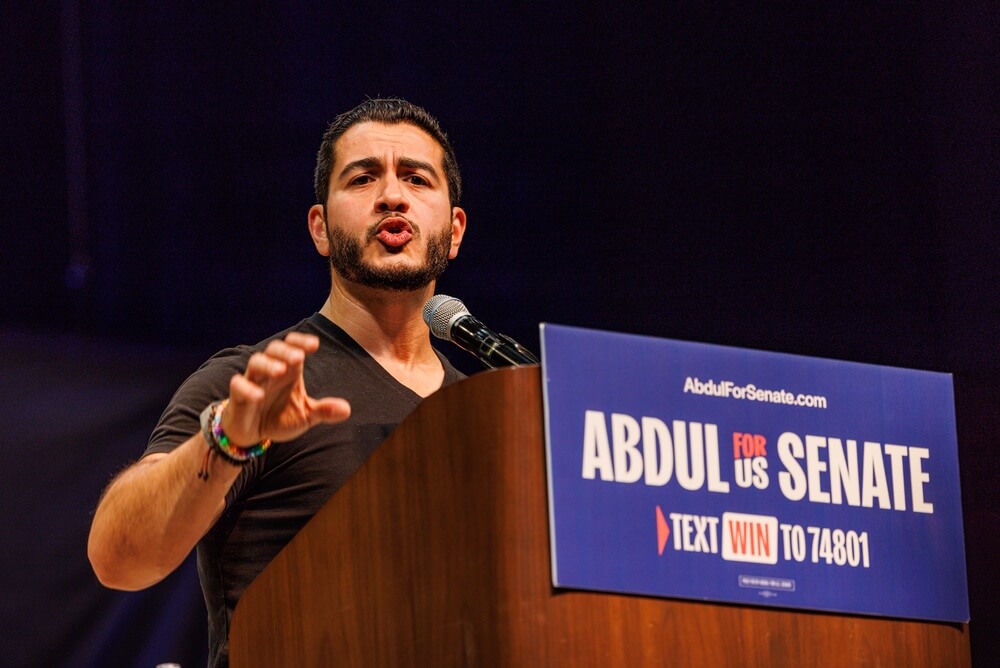 Abdul El-Sayed and his Democrat colleagues will have a lot to catch up on when they take office in Congress next January
Some 151 Egyptians and 540 foreigners have been detained during the campaign. The human rights group Emergency Lawyers says the Egyptian Air Force was responsible for a strike that killed at least 72 artisanal miners in northern Sudan late last month.
Egypt is also a key player in what has been called an emerging “anti-Ethiopia bloc” alongside Eritrea, Somalia and the Sudanese government, which has been fighting the Rapid Support Forces since 2023.
In early October, the four countries issued the Alamein Joint Declaration, which asserted exclusive sovereignty over Red Sea governance and rejected any unilateral measures affecting the Nile River.
The Trump administration’s engagement with the myriad of issues affecting the region, including the Sudan war, has been haphazard and transactional, while Iran and Gaza have consumed much of its bandwidth.
El-Sayed and his Democrat colleagues will have a lot to catch up on when they take office in Congress next January.
