After decapitating the Iranian regime and bombing Islamic Revolutionary Guard Corps positions for 40 days, the Trump administration has failed to secure a surrender and left Iran in control of the Strait of Hormuz.
With Iran striking critical infrastructure across the Gulf Cooperation Council states and threatening shipping, the United States reverted to TACO (Trump always chickens out) mode by agreeing to a ceasefire.
And now rising inflation and slowing economic activity imply a bout of stagflation—just in time to anger voters ahead of the US midterm elections.
So, what happens next? There are four possible scenarios.
First, the current ceasefire could lead to successful negotiations to end military hostilities and reopen the Strait of Hormuz.
The US does have some leverage here because its blockade of all naval traffic to and from Iranian ports is adding to the financial pressure on the regime.
Trump is probably hoping that a more moderate faction—perhaps led by the speaker of parliament, Mohammad-Bagher Ghalibaf—can convince the hardliners that a compromise on the nuclear issue will bring both sanctions relief and renewed shipping revenue through the strait.
But this scenario is not very likely, because the regime can withstand economic pain far longer than Trump can (given the looming midterms).
Moreover, the two sides remain far apart on many issues, not just Iran’s nuclear ambitions.
The US objects to Iran’s ballistic missile and drone programs, its support for radical Islamist groups across the Middle East, the tolls that it wants to impose on Hormuz traffic, and other matters.
Settling even one of these would require long, complicated talks by serious, seasoned negotiators.
The strait remains blocked
The second scenario reflects this. The ceasefire continues, but the negotiations stretch on for a few more months while the strait remains blocked.
This is basically where things stand today, and it is far from ideal. The status quo is inflicting significant economic and financial damage on the world economy, with oil and energy prices trending higher, even exceeding their peak during the 40 days of kinetic war.
The military skirmishes in the Gulf this week demonstrate the fragility of any ceasefire without a deal
Under such conditions, global growth will fall, and inflation will rise. But since this second scenario is inherently unstable, it cannot continue for more than two or three months.
It must give way either to the first scenario (one side blinks and proves willing to compromise enough to reopen the strait and secure a more permanent ceasefire) or to escalation of the conflict.
Indeed, the military skirmishes in the Gulf this week demonstrate the fragility of any ceasefire without a deal.
An escalation
In the third scenario, the US and Israel would escalate by unleashing all the military, economic, and other means at their disposal to force a surrender or regime collapse.
In the case of a surrender, the regime would have to accept a full stop to nuclear enrichment and reopen the strait unconditionally.
This would be the best outcome for the US, Europe, Asia (including China), and the rest of the world.
The risk, of course, is that the Iranian regime survives such escalation.
An escalation could pressure both sides to find a negotiated solution
In the fourth scenario, it would use its remaining ballistic missiles, drones, and naval forces to inflict significant permanent damage on even more Gulf energy facilities, while maintaining its grip on the strait.
Were that to happen, oil prices would spike closer to, or even above, $200 per barrel, and we would be looking at 1970s-style stagflation, a global recession, and a bear market for equities.
To be sure, an escalation could pressure both sides to find a negotiated solution, with scenario two (the status quo) having to pass through scenario three or four before ending up at scenario one.
But this is less likely, since we would be back to negotiating a ceasefire—and we would have already just seen how little that did; thus, escalation may get out of control rather than lead to a return to a negotiated ceasefire.
Trump’s wishful thinking
While Trump is hoping for scenario one, this is probably wishful thinking. It is the radicals and hardliners in Tehran who have the upper hand.
They have already demonstrated their willingness and ability to withstand the economic pain of the blockade, and they will not be facing voters this fall.
When it comes to the long-term economic and market implications, the third scenario is ideal, because it would mean a permanent reopening of the strait.
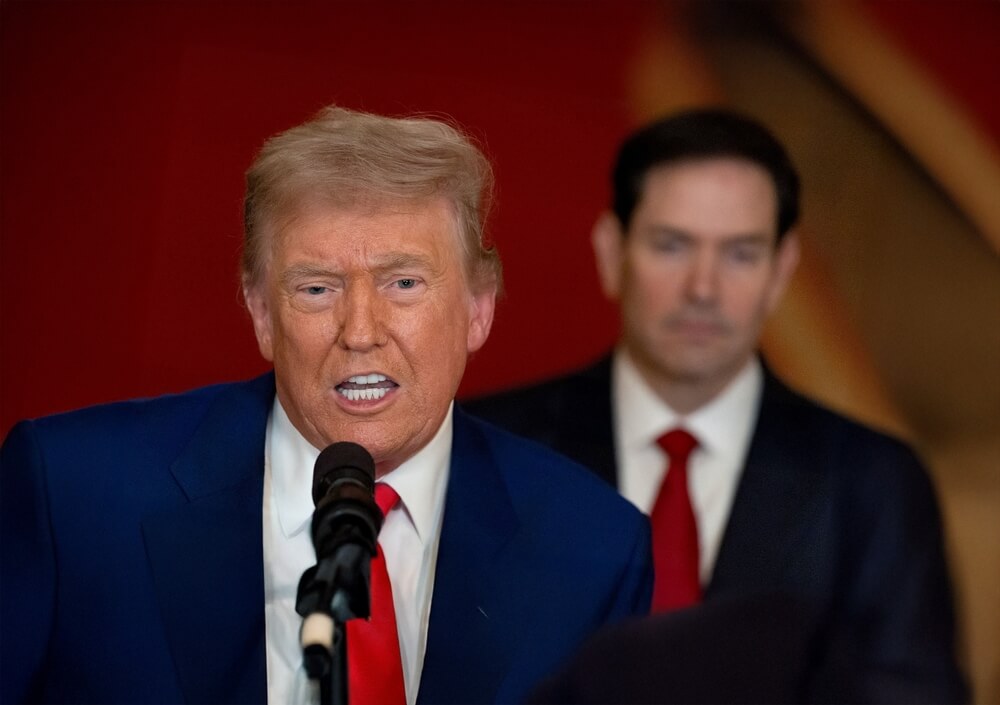 While Trump is hoping for scenario one, this is probably wishful thinking. It is the radicals and hardliners in Tehran who have the upper hand
The second-best scenario would be the first one; but it would mean that Iran could close the strait any time the US or Israel threatened it.
That possibility would put a permanent 15–20% premium on oil relative to the pre-war level.
Still, the current situation (scenario two) is worse, because every month that the ceasefire fails to produce a deal will push global growth lower and inflation higher. The only worse outcome is the fourth scenario.
Given such profound risks, some might wonder why global markets—starting with US and Asian equities—have recently reached new highs. I see two reasons.
First, investors expect that the ceasefire will somehow be made permanent soon, implying much lower oil prices.
Second, there seems to be an assumption that the tailwinds from the AI and data-center boom will remain much stronger than the headwinds from the war.
But if you believe that, you could be in for a rude awakening. Not only are markets pricing in a higher probability of a permanent ceasefire (over 75%) than is likely, but if we do end up with escalation, that would lead to even more economic and market volatility and downside risks even in the best-case scenario.
While an escalation that leads to regime surrender would be more likely than one that leads to 1970s-style stagflation, markets still will have underestimated the risk of pain in the meantime.
For anyone on the wrong side of the trade, it would hurt no less if the pain lasted months, rather than years or decades.
Nouriel Roubini is a senior adviser at Hudson Bay Capital Management LP and Professor Emeritus of Economics at New York University’s Stern School of Business.
