This week marks the 25th anniversary of the September 11, 2001, terrorist attacks on the United States.
For many Americans, 9/11 is a distant memory, or not a memory at all—approximately 40% of the US population was either born after the attacks or is too young to remember them.
On that day, 19 terrorists took control of four civilian aircraft, flew two into the towers of New York’s World Trade Center, struck the Pentagon with a third, and crashed the fourth in a Pennsylvania field after passengers physically prevented the terrorists from reaching their target, often thought to be the White House or another government building in Washington.
All 19 hijackers were from the Middle East, 15 from Saudi Arabia. All were trained in Afghanistan, and four at US flight schools, as part of an operation planned, organized, and carried out by al-Qaeda (“the base”), the terrorist group founded by Osama bin Laden.
By the day’s end, close to 3,000 men, women, and children had been killed, and more than 6,000 injured. Most were American, though citizens of more than a hundred countries lost their lives as well.
To invoke President Franklin D. Roosevelt’s description of the Japanese attack on Pearl Harbor in December 1941, September 11, too, was “a date which will live in infamy.”
But with the fading of personal recollections, it seems right and necessary to ask the question: Did 9/11 mark a turning point? Or was it a day that, as tragic as it was, did not alter the course of history?
Regime change
The truth is closer to the latter. Fortunately, 9/11 did not usher in an age defined by terrorism.
A wave of attacks on a similar scale did not follow, in no small part because the US and other governments adopted measures that made it more difficult for would-be terrorists to emerge and succeed.
Another reason 9/11 did not alter history is that terrorists tend to be better at destroying than building, at killing rather than creating. As a result, they leave no lasting legacy.
By no means is this meant to imply that 9/11 did not matter. It led directly to military intervention in Afghanistan, where US-led forces, in coordination with Afghan tribesmen, ousted the ruling Taliban, which had provided sanctuary to bin Laden and the terrorists who carried out the attacks.
Call it what it was: regime change
Call it what it was: regime change. But what followed, something that was closer to nation-building, provided an early lesson: removing a regime from power is one thing; replacing it with a better system that endures and governs effectively is quite another—and far more difficult.
Twenty-five years later, after more than 800,000 US soldiers had been deployed, more than $2 trillion spent, and over 2,400 Americans killed in combat (along with another 1,100 soldiers from NATO countries and others), Afghanistan is again ruled by the Taliban.
The costly war
In March 2003, just a year and a half after 9/11, the US initiated a war of choice against Iraq.
It is possible, but unlikely, that this war would have happened absent 9/11. In the wake of the attacks, President George W. Bush and many of his closest advisers became determined to demonstrate that the US was much more than a victim. (I served in the Bush administration during this time but opposed the war in Iraq and resigned soon after.)
Some in the Bush administration believed Saddam Hussein, Iraq’s strongman leader, was developing or even possessed a nuclear weapon and feared that terrorists would get ahold of one.
Others were taken with the idea of spreading democracy to Iraq and the region, an outcome that would have made the region less likely to produce terrorists and support terrorism. Almost all of this turned out to be wrong.
The costly war turned many Americans against overseas involvement
But the costly war (more than 4,000 US soldiers lost their lives, and trillions more dollars were spent) turned many Americans against overseas involvement and eventually positioned Iran, which had nothing to do with 9/11 even if it was a strategic beneficiary of the war, as a major power in the Middle East.
Iran played a larger role in terrorism in the October 7, 2023, attacks by Hamas on Israel, resulting in the deaths of more than 800 civilians.
But again, as awful as that was, little of what has happened since, be it in Gaza, Lebanon, or Iran, was preordained or can be attributed to terrorism.
Rather, subsequent developments largely reflect policy decisions taken in the first instance by Israel and the US.
Terrorism remains a limited problem
Looking back at the past quarter-century, it becomes apparent that 9/11 was not a transformative event.
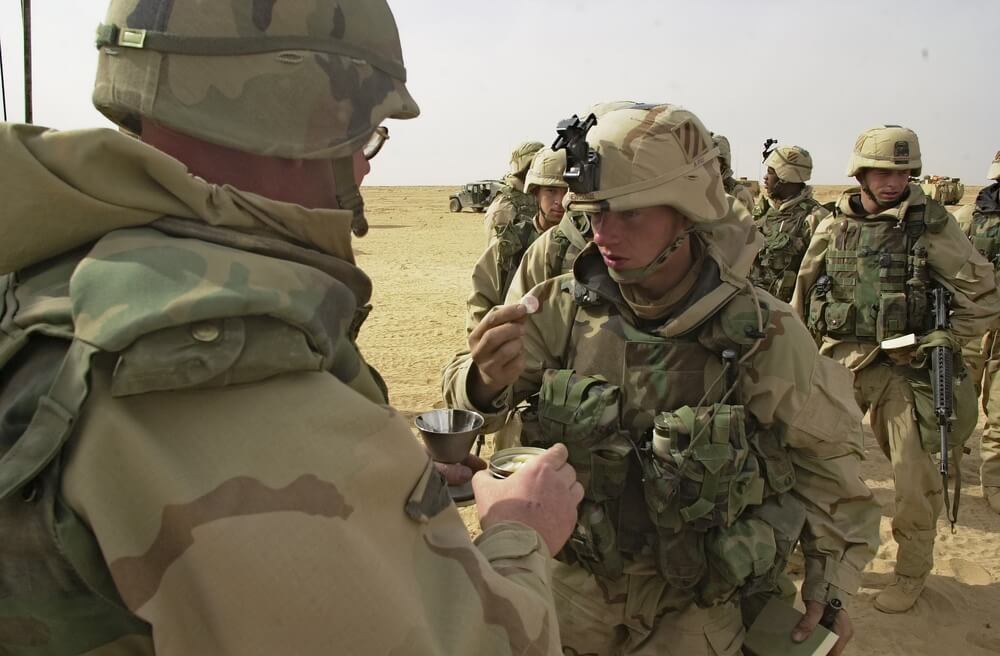 Looking back at the past quarter-century, it becomes apparent that 9/11 was not a transformative event
Far more important were China’s rise, Russia’s aggression against Ukraine, the COVID-19 pandemic, the collective failure to take meaningful action against climate change, the emergence of AI, and, perhaps more than anything else, America’s rejection of the postwar order that it had a large hand in building.
These truths do not, however, diminish the lesson that should be drawn. Although 9/11 did not usher in an age of terrorism, we are not safe from it.
On the contrary, we have entered an era in which AI, along with accurate, inexpensive, and destructive drones and advances in bioengineering, have given terrorists more opportunity than ever to impose large-scale harm at minimal cost.
The goal must be to ensure that they do not succeed, and that terrorism remains at most a limited problem.
Richard Haass, President Emeritus of the Council on Foreign Relations, senior counselor at Centerview Partners, and Distinguished University Scholar at New York University, previously served as Director of Policy Planning for the US State Department (2001-03), and was President George W. Bush's special envoy to Northern Ireland and Coordinator for the Future of Afghanistan.
