It was a heady time. On the strength of public opposition to the war in the Middle East, Democrats retook control of Congress in large numbers.
Two years later, they expanded their grip on legislative power after bolstering their majorities in both the U.S. House of Representatives and the Senate, eventually achieving a degree of control they hadn’t enjoyed since the 1970s.
The wins helped fuel predictions of an enduring Democratic hegemony powered by an increasingly diverse American electorate and growing support among younger and college-educated voters.
The year was 2009. In a matter of months, those dreams would lie in ashes.
That’s how quickly political fortunes can change in the United States, particularly when voters are in a sour, throw-the-bums-out mood. Republicans gained more than 60 House seats in the 2010 midterms, taking back the chamber and blockading President Barack Obama’s agenda. In 2014, the Senate would also fall to the GOP.
Power can be intoxicating. And that in turn can also lead to a hell of a hangover. It’s a temptation Democrats face now that they have again seized control of Congress in large numbers.
The big blue shockwave
The big blue shockwave produced by this year’s midterms yielded unexpected inroads across the country, but nowhere more than in the American South, where voters elected or re-elected Democrats in North Carolina, South Carolina, Georgia, Mississippi, and Texas.
The victory by Scott Colom in the U.S. Senate race in Mississippi was the biggest surprise. The state hadn’t elected a Democratic senator since the 1980s and a Black senator since the days of Reconstruction in the 19th century.
Democrats have secured a substantial majority in the 435-member House
That latter fact signified what an uphill battle it was for candidates such as Colom in a place better known for institutional racism and Bible Belt politics. Many of the Democrats who represented the South before and during the Civil Rights era sought to preserve segregation, not end it.
Colom joins Texas’ James Talarico, North Carolina’s Roy Cooper and South Carolina’s Annie Andrews as new Democratic senators. Jon Ossoff of Georgia was elected to a second term, giving the state two Democrats in the Senate.
All in all, Democrats and the independents who caucus with them have secured 55 – and perhaps 56 seats, depending on the Alaska results – in the 100-seat Senate, while Democrats have secured a substantial majority in the 435-member House. They take office in January.
Generational change
The strength of those majorities has already sparked a rancorous debate over what Democrats should do with all those prospective votes and, in the case of the Senate, which senator might best make those decisions.
Chuck Schumer, the Senate minority leader, stands to continue leading Democrats in the next Senate, but faces a wall of opposition from progressives who fear he won’t pursue an aggressive policy agenda or seek to hold the Trump administration accountable through oversight hearings.
Last week, Maryland Senator Chris Van Hollen, a progressive, announced he would challenge Schumer for the role. He spent the weekend making his case on network news programs.
Several of the new Democrats, including Abdul El-Sayed of Michigan and Peggy Flanagan of Minnesota, both progressives, have said they won’t back Schumer
Van Hollen told CNN that the Democratic wave was more of a response to President Donald Trump’s policies than an endorsement of his party’s platform.
“They’ve given us a chance, and I think we need to earn their trust. And I think that begins by not going back to business as usual,” Van Hollen said.
Several of the new Democrats, including Abdul El-Sayed of Michigan and Peggy Flanagan of Minnesota, both progressives, have said they won’t back Schumer.
The new southerners, however, have largely stayed quiet, although Andrews has opposed Schumer and called for “generational change.”
A win-win?
Where progressives in their party are eager to confront the administration, defund the Iran war, defang ICE, pressure Israel, and restore healthcare benefits for millions of Americans, they have stressed possibly working with the White House on economic and immigration issues.
In a closely watched speech last week, Talarico said his party needed to quickly produce results – even without a Democrat in the Oval Office.
“The American people cannot wait two years for change, so we must work with President Trump,” Talarico said.
Andrews went on the conservative-skewing Fox News to say that her state’s residents elected people like her to “go up to D.C., put party politics aside, roll up their sleeves, and do the hard work of governing.”
She also said she had no interest in going on a “retribution tour.”
“Fighting the administration is not going to lower gas prices and grocery prices,” Andrews said.
Moderates worry that an overly left-leaning agenda will confirm for some voters what Republicans have insisted: that the party has been overrun by socialists and radicals
Trump, of course, will have the power to veto any Democratic initiative, making his buy-in necessary for most significant legislation. But he too, at least at the outset, has signaled a willingness to sit down and hammer out deals – which, next to overseeing the construction of his White House ballroom, might be his favorite thing.
At the same time, Trump has vowed to vigorously fight congressional inquiries into the actions of his administration, probes that likely would seek to unearth the intelligence behind the decision to go to war with Iran and self-dealing by Trump and his family, among other areas.
And most legislation will need 60 votes to overcome a filibuster, requiring some Republican support unless Democrats change the rules.
The tension between what is ideal and what is possible promises to be the fault line that runs through the Democratic caucuses in both houses.
Progressives have argued that the party needs to use its leverage to pass sweeping economic and immigration reforms and dare Trump to veto them.
The idea is either to press Trump to go along or to have ready-made talking points for the 2028 election about how Republicans stood in the way of change.
A win-win? Not necessarily. Moderates worry that an overly left-leaning agenda will confirm for some voters what Republicans have insisted: that the party has been overrun by socialists and radicals.
Go big or risk being sent home
These same dilemmas bedeviled the Democratic majority back in 2009, when Obama took office and the party held almost absolute power in Washington. Faced with a decision whether to go big or risk being sent home, Obama and congressional leaders went the first route.
They marshaled almost all their available political capital to get a national healthcare plan, the Affordable Care Act (later derisively known as “Obamacare”), through both houses.
A sweeping energy program labeled “cap-and-trade,” which sought to significantly limit greenhouse gas emissions, died in the Senate after passing the House.
The ACA – and the wild-eyed rhetoric that surrounded it – dominated domestic politics for years. The proposal led to public town halls across America in 2009 and 2010 at which residents screamed about socialism taking away their choices. (Remember Sarah Palin and her “death panels”? For that matter, do you remember Sarah Palin?)
At the same time, the cap-and-trade proposal generated much more harm than results, considering it never was enacted. Democrats in coal-producing states were placed in almost untenable positions and eventually helped sink the bill.
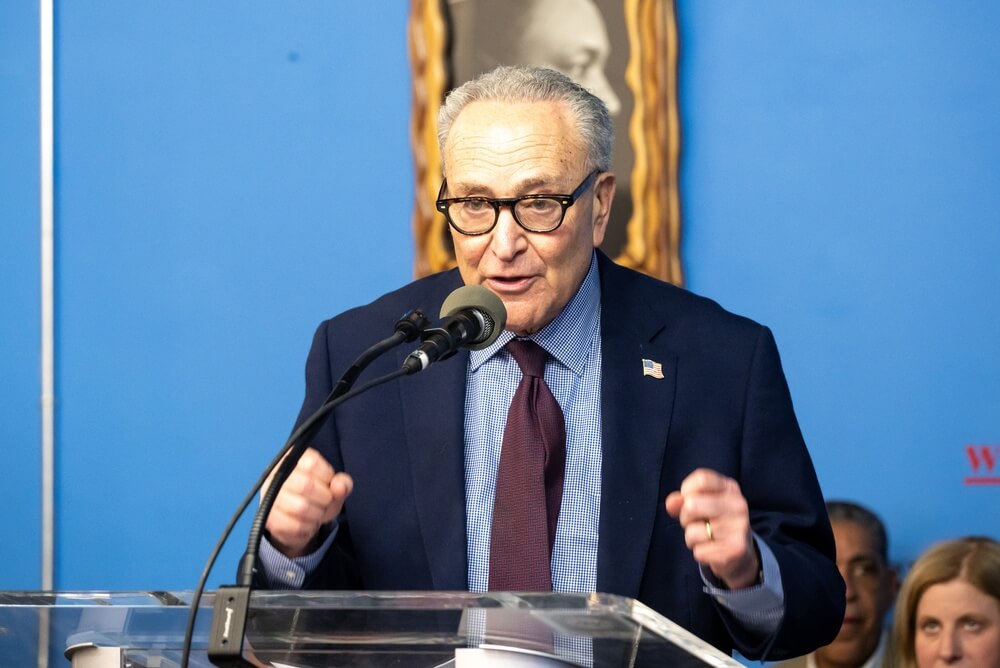 Chuck Schumer said after Democrats lost their Senate majority in 2014 that his party had failed to heed the electorate that sent them there six years earlier
The choices to put those bills forward came in the wake of the 2008 financial meltdown that decimated the U.S. economy and the corresponding corporate bailouts that did more to antagonize the electorate than assuage it.
The backlash was immediate and bloody. Nearly 20 southern Democrats in the House lost their seats in the 2010 midterms, along with Senator Blanche Lincoln of Arkansas.
Four years later, while Obama was still in office, another senator from Arkansas, Mark Pryor, along with North Carolina’s Kay Hagan and Louisiana’s Mary Landrieu were bounced, completing an almost complete wipeout of white southern Democrats.
Some Democrats, including former Speaker of the House Nancy Pelosi, have said that enacting the ACA was worth sacrificing their majorities, although plenty of Democrats disagreed.
One of them was Schumer, who said after Democrats lost their Senate majority in 2014 that his party had failed to heed the electorate that sent them there six years earlier.
“We took their mandate and put all of our focus on the wrong problem – health care reform,” he said.
That may be a sign that Schumer is more interested in putting some meat on the bone before that bone is thrown to voters than in racking up pundit-friendly political points.
But first, he has to get his old job back – and given the way progressives are feeling themselves these days, that may not be so easy.
