Cuba is not an example of a country suffocated by some alleged external “blockade.” It is the example of a dictatorship that has survived for decades thanks to repeated bailouts and subsidies while destroying its own productive fabric and impoverishing its population.
Cuba speaks the language of revolutionary self-sufficiency while constantly whining for the United States and the rest of the world to finance its communist experiment.
The dictatorship claims to be independent from capitalism and “the empire,” yet, it blames its failures on the empire's refusal to pay for its socialist disaster.
The reality of Cuba is very different. It is a system of structural dependence on subsidies, debt forgiveness, free oil, and political subordination, first to the Soviet Union and then to Venezuela, Russia, China, and the European Union.
Cuba is living proof that socialism always fails, even when it receives billions from foreign nations and free energy supplies.
The report The Price of Sustaining Castroism, published by Instituto Juan de Mariana, documents how the Cuba of the Castros and Díaz-Canel has operated as a parasitic, extractive, and repressive regime, artificially sustained by external allies and Western institutions that finance the continuity of a machinery of oppression.
The Cuban dictatorship model is parasitic, extractive, and confiscatory. It is unable to generate prosperity but extremely efficient at capturing external resources while using the population as hostages and the island as a prison to feed its permanent victimhood narrative.
One of the greatest propaganda frauds of the Cuban dictatorship is the claim that the revolution was a response to a Cuba sunk in misery. The historical data shows the opposite.
Before 1959, the island displayed income levels comparable to Italy, literacy rates of 79% versus 58% for the region, life expectancy of 64 years versus 50 in Latin America, and far higher levels of doctors, cars, and televisions per capita than the continental average.
Cuba was neither a paradise nor a democracy, but it was one of the most advanced economies in the region. The revolution did not rescue Cuba from backwardness. It dragged Cuba into the conflict, replacing one dictatorship with an even more oppressive regime.
Extreme poverty, scarcity, and the official narrative
The destruction created by the Cuban dictatorship has been deep and measurable. The report states that, had the revolution not taken place, Cuba could today enjoy income levels similar to Costa Rica or Chile, whereas communism has cost the island more than 50% of its potential per capita income.
It is also worth remembering that Cuba is one of the most subsidised economies in the world and maintains numerous trade relationships with major global economies, which makes the so-called “blockade” little more than an excuse to justify the plunder of foreign aid and international commerce.
In reality, Cuba is an imposed slave economy in which the real average salary amounts to barely 2 dollars per month at the real exchange rate, a figure that sums up the material failure of the model more clearly than any slogan.
Around 89% of Cubans live in extreme poverty, 86% of families do not adequately cover their basic needs, and 61% do not even earn enough to buy the essentials for survival.
The official narrative blames the Cuban disaster on the US embargo, which the regime misleadingly labels a “blockade”
Scarcity is no longer a temporary anomaly. It is the normal condition of life imposed by the regime. Seven out of ten Cubans are forced to skip at least one daily meal. The average citizen can barely buy around 7 kilograms of chicken per month, 4.7 litres of oil, or less than 3 kilograms of powdered milk.
The collapse of the sugar sector, once a flagship of the Cuban economy and later ruined by communist state management, illustrates the productive implosion of the island.
Output has fallen from more than 8 million tonnes annually to less than 100,000, and of more than 150 sugar mills, only around 30 remain in operation.
The official narrative blames the Cuban disaster on the US embargo, which the regime misleadingly labels a “blockade.” Yet academic evidence places the economic cost of the embargo at less than 1% of annual GDP, a figure incapable of explaining by itself the productive, social, and institutional demolition accumulated over more than six decades.
If the dictatorship truly were self-sufficient and independent from capitalism, then the embargo would be irrelevant to its alleged success. Instead, it has become a propaganda alibi.
The Cuban collapse is the obvious result of central planning, the destruction of incentives, the persecution of private enterprise, and the state appropriation of every source of wealth.
Structures built to extract wealth and nourish the elite
Even the regime itself has implicitly admitted the failure of its model. The Cuban leadership acknowledged in June 2026 that price controls, administrative impositions, and limits on property and private initiative have been useless to control inflation and undermined growth, productivity, prosperity, and living standards.
The only real blockade Cuba suffers is the one imposed by the dictatorship on its own citizens.
Cuba trades with all the major economies, receives foreign financing, has repeatedly been bailed out by allied governments, and has benefited for decades from subsidised energy supplies.
What prevents progress is not an external wall, but an internal system that confiscates savings, captures foreign currency, expels talent, and transforms national and international income into nourishment for the political and military elite.
While the population suffers blackouts, shortages, and poverty, the regime resells oil, blocks access to foreign currency, and diverts resources to the state apparatus
The Cuban dictatorship is a parasitic, extractive, and confiscatory model. It is parasitic because it depends on other nations’ resources to survive. It is extractive because it concentrates in the military and political leaders the rents generated by tourism, remittances, exports, and medical missions.
It is confiscatory because it prevents citizens and companies from freely disposing of their labour, property, or foreign currency, while the state acts as the compulsory intermediary in almost all economic activity.
While the population suffers blackouts, shortages, and poverty, the regime resells oil, blocks access to foreign currency, and diverts resources to the state apparatus and its opaque networks of control.
This is the normal functioning of a structure built to extract wealth from society and channel it toward power.
The human cost of the Cuban dictatorship and state repression
The economic failure cannot be separated from the human cost of the Cuban dictatorship. The dictatorship is linked to as many as 141,000 deaths attributable to state repression, more than 20,000 political prisoners since 1959, and more than 1,000 current political detainees held in roughly 300 prisons and detention centres.
Repression is not a marginal excess of the system. It is the indispensable complement to its economic ruin.
Because the model cannot offer prosperity, it must suppress dissent, punish protest, and enslave the population politically and economically.
Between 2021 and 2024, more than one million people escaped the island, roughly one quarter of the population, in one of the largest peacetime demographic collapses in the Western Hemisphere.
After decades of aid, subsidies, and bailouts, Cuba remains a one-party dictatorship with political prisoners, extreme poverty, record emigration, and a ruined economy
One of the most relevant problems is that the survival of the dictatorship does not depend only on authoritarian powers.
Europe has also helped prolong the life of the dictatorship through financing, cooperation programmes, and financial relief, despite the fact that the regime has delivered no improvement in human rights, political openness, or economic prosperity.
Since 1988, the European Union has financed more than 200 projects in Cuba worth around 300 million euros, still maintains around 80 active projects and increased the planned allocation for 2021-2027 to 125 million euros, more than double the previous cycle.
The result of all this cooperation is devastating. After decades of aid, subsidies, and bailouts, Cuba remains a one-party dictatorship with political prisoners, extreme poverty, record emigration, and a ruined economy.
The evidence does not show that outside assistance has encouraged transition or reform. It shows that it has served to preserve the dictatorship.
A system sustained by an international web of subsidies
Cuba is, in that sense, the most heavily subsidised dictatorship in the world. Russia alone has forgiven 32 billion dollars of debt, granted more than 2.3 billion in state export loans, postponed repayments until 2040, and supplied hundreds of millions of dollars in oil since the invasion of Ukraine.
China approved aid packages exceeding 80 million dollars and food assistance worth more than 30 million in early 2026.
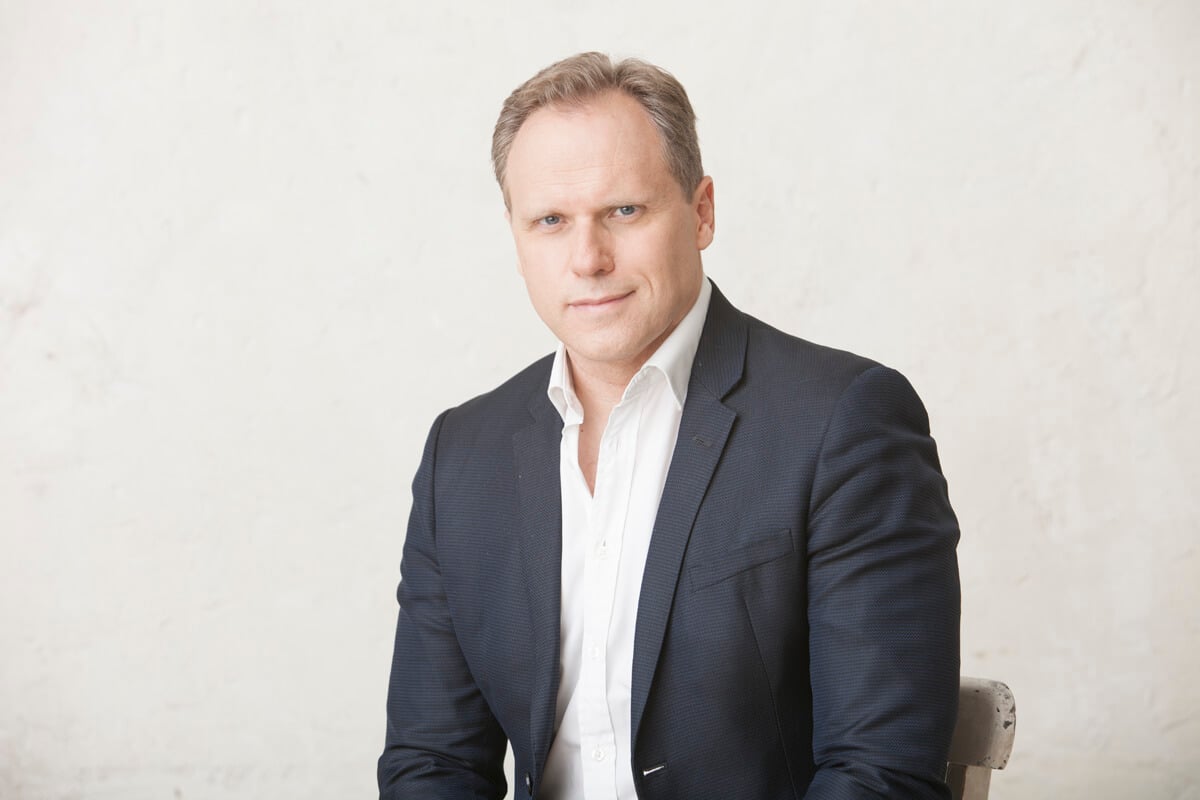 Cuba’s misery is the result of a system designed to confiscate, extract, and repress, sustained by an international web of subsidies - Daniel Lacalle
More than 150 Spanish companies remain unpaid, with outstanding arrears of 255 million euros, rising to about 318 million when retained funds and blocked dividends are included.
Few contemporary tyrannies have combined for so long such systematic repression, such deep economic destruction, and such indulgent international treatment.
The Cuban dictatorship survives not because its model works, but because too many external actors prefer to finance its continuity rather than demand liberty and political change.
Cuba’s tragedy cannot be explained by the embargo, by bad luck, or by isolated management mistakes. Cuba’s misery is the result of a system designed to confiscate, extract, and repress, sustained by an international web of subsidies that has delayed the final reckoning for decades.
Until that web of complicity and transfers is broken, the dictatorship will keep finding abroad the resources it destroys at home.
