In the long sweep of history, China’s economic performance over the past 50 years will obviously stand out for the sheer scale and pace of quality-of-life improvements within that country. But China’s impact on the rest of the world has still been underappreciated.
True, if the retrospective gaze were confined to global shocks in the post-World War II period, a few defining ones would be the 1970s oil embargos, which led to a large and permanent productivity slowdown in advanced economies; and the 2008 financial crisis, which brought globalization to a screeching halt and called into question the American model of finance-addled capitalism.
The US Federal Reserve’s policies have also had clear global effects. For example, Paul Volcker’s tightening in the early 1980s precipitated a developing-country debt crisis, and the quantitative easing that began under Ben Bernanke ultimately fueled capital flows to emerging markets, thus sustaining high growth in the 2000s.
But Chinese mercantilism has arguably been even more consequential than any of these episodes.
If it has not been recognized as such, that is because it has not been a one-off event, but rather a more persistent force that is often conflated with China’s growth performance more broadly.
The latent bias that leads analysts to place the United States at the center of the global economy has caused many to overlook just how game-changing Chinese mercantilism has been—in terms of both global public goods and global public bads.
Low-priced manufactured goods
On the asset side of the ledger, three entries stand out. The first is Chinese mercantilism’s contribution to the Great Moderation.
After the high inflation of the 1970s, global inflation declined and remained low until the COVID-19 pandemic.
While sound monetary policymaking and central-bank independence were important factors, it was China’s aggressive mercantilism that consistently supplied the world with low-priced manufactured goods.
Without China’s contribution, central bankers’ job in advanced economies would have been far more difficult
Low inflation resulted from a combination of substantially rising prices of non-tradable services such as health and education (where productivity growth is more elusive), and falling or stagnant prices of traded goods, courtesy of China.
Without China’s contribution, central bankers’ job in advanced economies would have been far more difficult.
While serving as governor of the Bank of England, Mark Carney often spoke about the beneficial impact of “globalization” on the Great Moderation. But “globalization” abstracts from the real source.
Climate-change mitigation
The second global public good deriving from Chinese mercantilism concerns climate-change mitigation.
The renewables revolution is mostly a solar one, and it has been made possible by the supply of low-cost Chinese solar panels and, increasingly, batteries (which provide power when the sun isn’t shining).
Before the solar revolution, climate policy was stuck in the calculus of trade-offs—sacrificing current consumption via carbon taxes for future gains in reduced emissions.
Since the politics of selling that to a present-oriented public proved impossible, serious progress on climate change stalled in rich countries.
Chinese mercantilism has rendered emissions reductions compatible with growth and dynamism, making the renewables revolution available to all countries
But now, Chinese mercantilism has rendered emissions reductions compatible with growth and dynamism, making the renewables revolution available to all countries.
Future generations may well thank China for staving off, or at least delaying, dire planetary outcomes.
A third benefit followed. In large parts of the developing world where centralized domestic power systems are dysfunctional, cheap Chinese solar panels have broadened access to energy.
Though not a permanent solution, Chinese-made solar panels and batteries are a substantial improvement on the status quo for the world’s poor.
In Pakistan, for example, solar accounts for up to one-fifth of grid-supplied electricity.
The real toll of the China squeeze
But now we come to the liability side of the balance sheet. As David Autor, David Dorn, and Gordon Hanson showed a decade ago, the first China Shock accelerated de-industrialization (without being the sole cause) in politically consequential parts of the US.
And now, a second China shock is devastating the German auto sector, upon which the country’s broader industrial ecosystem of small and midsize firms—the Mittelstand—depends.
Moreover, a third China shock—or what might be described more accurately as a squeeze—has arguably had even greater consequences in thwarting industrialization and development possibilities for a wide range of low- and middle-income countries, as my recent work with Shoumitro Chatterjee shows.
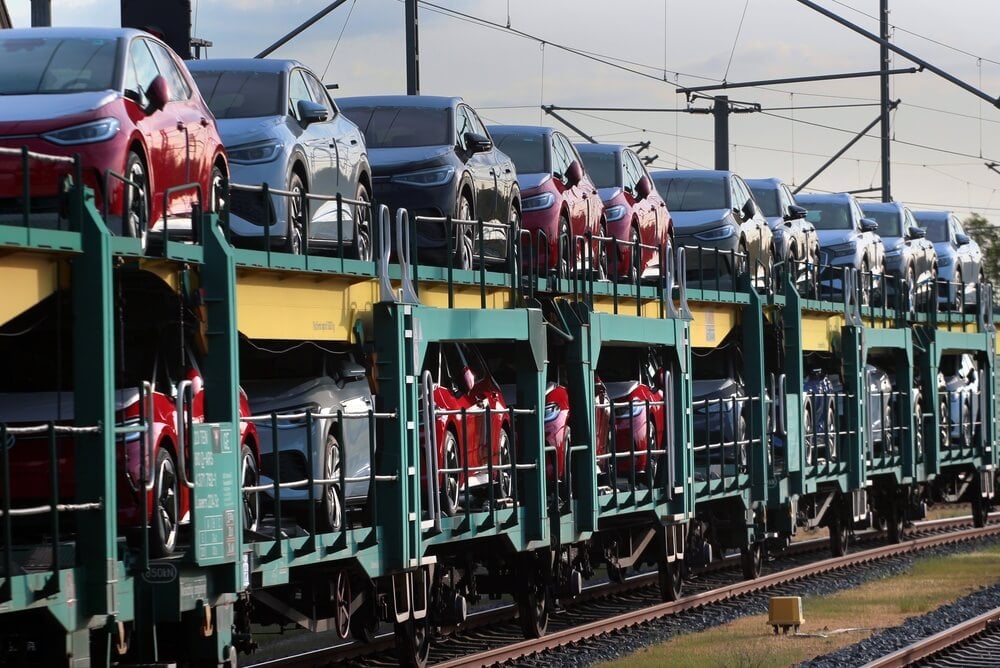 A second China shock is devastating the German auto sector, upon which the country’s broader industrial ecosystem of small and midsize firms depends
Unlike the first two shocks, this one has been less visible. The impact shows up not in job cuts or factory closures, but rather in terms of factories never built, export markets never entered, capabilities never accumulated, and development paths never opened. That is the real toll of the China squeeze.
By quantifying the determinants of hard power, my 2011 book, Eclipse: Living in the Shadow of China’s Economic Dominance, predicted that China’s rise would occur sooner than the world expected.
But even that analysis did not account for the extent to which China’s relentless mercantilism would influence the world, for better and worse.
Single-handedly consigning the global hegemon (America) to self-doubt and reduced potency, while also devastating Europe’s largest power (Germany) economically, is an “accomplishment” with few parallels in history.
Chinese mercantilism has done more than US economic developments or Fed policies to change the world in this millennium.
Though the unfolding Donald Trump shock may yet prove more consequential in the decades ahead, it will have none of the redeeming benefits of China’s economic model—only liabilities as far as the eye can see.
Arvind Subramanian is a senior fellow at the Peterson Institute for International Economics.
