In the 1960s, the CIA tried to kill Fidel Castro with poisoned cigars, exploding seashells, and contaminated diving suits, as if knocking off the man at the top would somehow fix everything in Cuba.
Today, US President Donald Trump is trying something similar, albeit with less extravagant methods. It did not work then, and it will not work now.
A stone-faced Miguel Díaz-Canel, Cuba’s current president, recently admitted that the regime is negotiating with the reviled gringos.
What he did not say is what everyone knows: the goal of the talks with the United States, led by Secretary of State Marco Rubio, is his own removal.
The regime can stay, but Díaz-Canel must go. Call it the “Nicolás Maduro extraction theory” of political change in Latin America.
But Cuba is not Venezuela. What “worked” in Caracas in January, when US forces swooped in and abducted the president, will not work in Havana.
In Caracas, Trump agreed to keep the thuggish Chavista regime in place, selling out the democratic opposition and dashing hopes of a democratic restoration, because there was something he wanted: oil.
Cuba has no oil. It has beaches, and maybe Trump wants to build Trump Resorts on them, taking Cuba back to its pre-revolutionary days when New Jersey mobsters ran casinos on the island.
But, unlike oil, making money from tourism takes time and hard work. To survive, the Caracas regime first sold out Maduro and then agreed to do Trump’s bidding, with money from Venezuelan oil shipments deposited in administration-controlled Qatari bank accounts, no questions asked.
Cuban Delcy Rodríguez
That is unlikely to be repeated in Cuba. Here a political insight from elsewhere in Latin America comes in handy.
Brazilians distinguish “ideological” from “physiological” politicians. For all their bluster about “21st-century socialism,” the Chavista cadres were always physiological – interested above all in using power to line their own pockets.
In Havana, there is plenty of unfairness and corruption: all new luxury hotels, for example, are run by an outfit call GAESA, which the Cuban military controls.
But the Cuban Revolution was always about a lot more than cupidity.
Revolutionary fervor helps explain why the Castro regime has lasted 67 years, even though those decades of centralized control, bureaucratic rigidity, and hostility to private enterprise have bankrupted the island.
Maybe there is a Cuban Delcy Rodríguez. But that person is yet to surface
Maybe there is a Cuban Delcy Rodríguez, Maduro’s vice president who happily betrayed him, willing to forget the revolutionary fervor and strike a deal with Trump.
But that person is yet to surface; in the meantime, loyalists remain very much in control.
The man reportedly carrying out negotiations with the US is none other than Raúl Guillermo Rodríguez Castro – “Raulito,” as he is known around the island – a grandson of Raúl Castro.
That brings us to the main reason why getting rid of Díaz-Canel will not change much: the man never had any real power.
Caribbean betrayal of ideals
Díaz-Canel has been president of Cuba since 2018, when Raúl, Fidel’s younger brother, ostensibly retired. But according to most reports, Raúl, now 94, and his descendants continue to call the shots.
Revolutionary upheavals often overthrow one oligarchy only to end up creating a new one.
But this Caribbean betrayal of ideals must surely top all the charts: after almost seven decades of a revolution that was meant to disperse political power, Cuba is de facto still run by a single family, whose only recent achievement is to carry the surname Castro.
How many progressive young people can admire a regime that restricts access to the internet?
This consolidation of dynastic control is one reason why few people around Latin America are shedding tears over Cuba’s current plight.
The New York Times asks whether Latin America is “ready to abandon Cuba,” but that question gets the story all wrong.
A few aging revolutionaries still fondly recall Fidel in green fatigues chomping on a cigar, but the younger generation long ago abandoned Cuba as a lodestar for change.
How many progressive young people can admire a regime that restricts access to the internet?
Rubio will push democracy while Trump is not looking
Obviously right-wing governments in Argentina, Chile, Ecuador, or El Salvador want nothing to do with Cuba.
But Latin America’s three most populous countries – Brazil, Mexico, and Colombia – are run by leftists, and aside from repeating platitudes about self-determination, they are not lifting a finger to help the Cuban regime’s survival.
Fear of Trump’s retribution is not the only reason. In private, Latin American leftists concede that a regime that manages both to oppress and impoverish its own people cannot last forever.
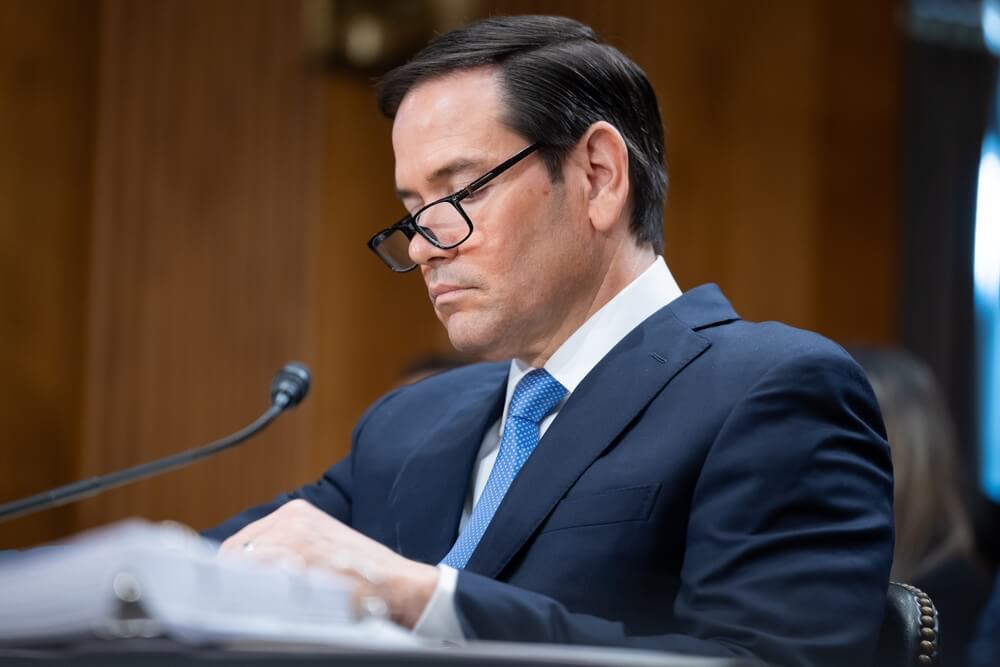 The best-case scenario for Cuba is that Marco Rubio will push democracy while Trump is not looking
Trump may not understand that point, but Rubio, the son of Cuban émigrés, does.
As Quico Toro of the Anthropocene Institute puts it, Rubio “gets Caribbean Communism, and he hates it.”
The best-case scenario for Cuba is that Rubio will push democracy while Trump is not looking. That scenario is not entirely implausible, and I wish I could believe in it.
But if covert democratization is also Rubio’s plan for Venezuela, it does not seem to be working.
Last week, Rodríguez replaced Defense Minister Vladimir Padrino, a longtime Maduro ally, with General Gustavo González, who used to run SEBIN, Venezuela’s infamous intelligence agency. His expertise involves repression and torture, not political liberalization.
In Graham Greene’s novel Our Man in Havana, expatriate vacuum cleaner salesman Jim Wormold becomes a British spy, but, lacking access to actual intelligence, he passes off drawings of vacuum cleaner parts as plans for secret weapons.
When the scheme falls apart, British intelligence chiefs, fearing embarrassment, bestow honors on Wormold and pack him off to a comfortable retirement.
Maybe someday Rubio will also receive honors for his efforts. But Cubans are likely to get only fake plans, not the freedom they want and deserve.
Andrés Velasco, a former finance minister of Chile, is Dean of the School of Public Policy at the London School of Economics.
