With wildfire season coming up, the European Union shares its most ambitious wildfire preparedness effort to date. The announcement follows the worst wildfire season in EU history, when more than one million hectares burned across the continent in 2025.
22 firefighting aircraft, 5 helicopters, increased emergency coordination capabilities, satellite monitoring, AI-assisted risk modelling, improved early warning systems, and 777 firefighters stationed throughout high-risk areas are all part of the course of action.
The scale of the response tells us something important: wildfires represent a global challenge for technology, climate, and public safety. As I delve into how governments, technology companies, researchers, and emergency services respond to this growing threat, there is one fact I wish we didn't have to talk about, and that is that humans still start most wildfires.
Technology can detect them earlier, technology can predict them more accurately, and technology can help contain them faster. What it cannot do is stop careless human behaviour.
With millions preparing for summer vacations across Europe and beyond, this year's wildfire season should serve as both a warning and a reminder that innovation is important, but responsibility matters more.
The wildfire threat has changed faster than expected
Many people used to associate large-scale fires with parts of California, Australia, Southern Europe, and specific areas of South America. That is changing, and today wildfire risks continue to expand into regions that have historically experienced fewer catastrophic fire events.
Larger burn areas, longer wildfire seasons, climate change, and more violent fire behaviour are all challenges we encounter today. Just like with the oceans, we need to respect fire and the damage it can create.
During Europe's record-breaking 2025 wildfire season, it became obvious how rapidly conditions might overwhelm current response procedures. Take a moment to reflect on this.
Technology gives us tools that previous generations could not have imagined
In response, the European Commission introduced a new integrated wildfire risk management plan focused on prevention, preparedness, response, and recovery. Predictive capabilities, data, and technology are given high priority in the plan.
In the past, many nations prioritised their ability to combat fires. They made big investments in emergency response resources, aircraft, and equipment.
We now face a new era in wildfire control, where forecasts increasingly rely on proactive rather than reactive methods, even though such investments remain vital.
Do you want to know the most effective wildfire? It is the one that never starts. Technology gives us tools that previous generations could not have imagined. The challenge is to use them effectively.
AI, satellites, and predictive analytics are transforming wildfire management
When people think of wildfire technology, they often picture firefighting aircraft dropping water over active flames. That is what the news and Hollywood blockbusters show us.
The most important innovations happen long before a fire starts. Artificial intelligence emerges as one of the most powerful tools available to wildfire agencies.
Today, advanced machine learning models analyse weather patterns, vegetation conditions, soil moisture levels, historical fire data, wind behaviour, and topographical information to identify areas of elevated risk.
The European Union has already committed to expanding AI-assisted wildfire modelling as part of its new prevention strategy.
Satellite technology has also transformed wildfire monitoring. Programmes such as Copernicus and the European Forest Fire Information System continuously monitor environmental conditions across Europe.
These systems provide near real-time risk assessments, fire detection capabilities, and emergency mapping services to support decision-making on the ground.
Technology is an active participant in disaster prevention instead of a tool deployed after a disaster strikes
Drones give us access to a new level of intelligence. Emergency responders can now use drones equipped with thermal imaging cameras to identify hotspots, monitor fire spread, assess inaccessible terrain, and support evacuation plans.
Cloud computing creates a new layer. Large volumes of environmental data are being processed in real time by emergency operations centres. Fire departments can now deploy resources accurately and model multiple scenarios simultaneously.
Remember the conversations I had at Mobile World Congress Barcelona 2023 and 2024 (available on YouTube) with Mr Hong-Eng Koh, Global Chief Public Services Industry Scientist at Huawei, about emergency management solutions? I don't talk about this subject often, but because it affects people's lives, I do extensive research and closely follow how technology evolves and how it helps emergency services.
A growing number of geospatial analytics firms and more tech companies, such as Microsoft, Google, IBM, and Palantir, support these projects. They support governments and emergency services with AI platforms, satellite analysis, predictive modelling, and data integration technologies.
In this new era, technology is an active participant in disaster prevention instead of a tool deployed after a disaster strikes. This evolution could save thousands of lives over the coming decade.
Technology can help fight fires, but people still decide whether they start
Human actions cause many wildfires. We've all heard too many stories about discarded cigarettes, unattended campfires, barbecues, fireworks, sparks from vehicles, agricultural burning, and negligence, to name a few. The list is frustratingly long and all too familiar.
Every summer, authorities issue warnings, emergency services repeat the same messages, and every summer, people still ignore or underestimate the consequences of small decisions.
Technology cannot and will not replace personal accountability. Period. Can a satellite stop someone from ignoring fire restrictions? No. Can an AI model prevent careless behaviour on a hiking trail? No. Can a drone extinguish a fire before it exists? No.
As millions of families head to their summer vacations, I hope people remember their role in wildfire prevention.
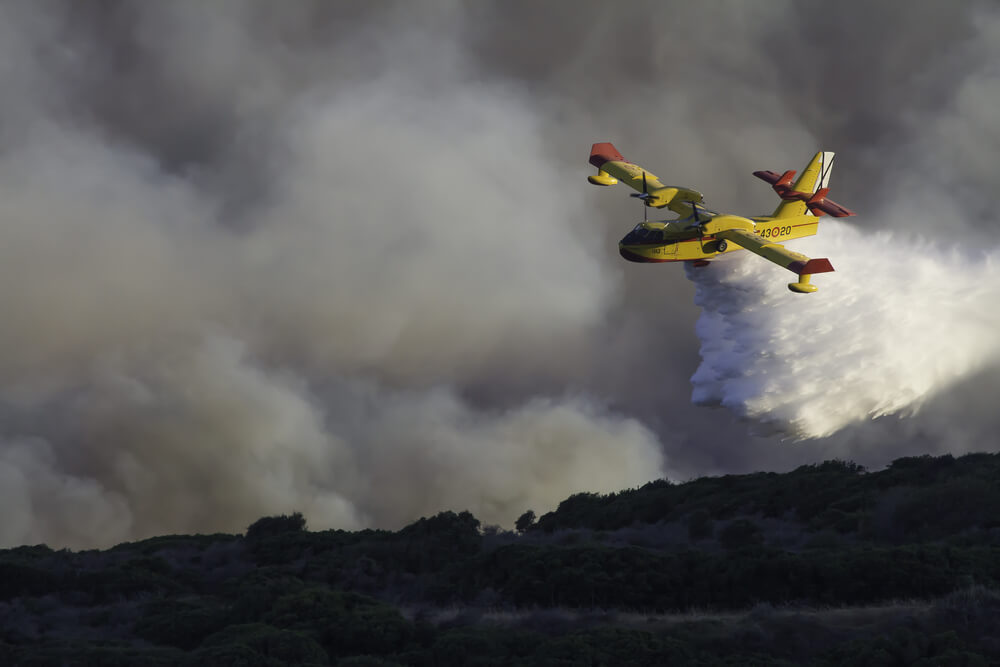 The most advanced wildfire strategy in Europe cannot succeed without public participation
The majority of travellers never cause harm. It is a small number of careless decisions that create devastating consequences for communities, ecosystems, wildlife, and emergency responders.
The most advanced wildfire strategy in Europe cannot succeed without public participation.
This reality should encourage all to think differently. We often celebrate innovation as the solution to major challenges, and innovation deserves recognition. The engineers, scientists, emergency planners, firefighters, and technology experts developing these systems perform extraordinary work.
However, the simplest prevention tool remains human awareness.
The European Union's latest initiative shows serious commitment. Governments are finally recognising the value of predictive technologies. AI capabilities continue to improve, satellite coverage continues to expand, and emergency coordination continues to advance.
We now possess better tools than any previous generation.
I hope this summer proves that preparation works.
I hope technology helps emergency services stay ahead of emerging threats.
Most importantly, I hope people remember that wildfire prevention begins long before the first spark appears.
The partnership between human responsibility and technological innovation is key. One without the other will never be enough.
As we enter another summer season, let's be mindful and vigilant. We only have one planet; together, we can protect it.
