U.S. President Donald Trump stated he was “a little disappointed” that Ukrainian President Volodymyr Zelensky “hasn’t yet read the proposal that his representatives and Russia like.”
Trump made this remark in response to a journalist’s question about the next steps in the peace negotiations between Ukraine and Russia.
“We’ve spoken with President Putin and we’ve spoken with Ukrainian leaders, including President Zelensky. And I have to say I’m a little disappointed that President Zelensky hasn’t read the proposal yet. Russia, I think, agrees with it. But I’m not sure Zelensky agrees. His representatives like it. But he hasn’t read it,” Trump said.
These comments require important clarification. Trump’s peace proposal, supported by the Russian Federation, appears to involve Ukraine’s recognition of the territories temporarily occupied by Russian forces as “Russian.”
Any insistence by the Trump team on recognising Russia’s annexation of Ukrainian territories—belonging to a founding member of the United Nations—is highly problematic.
Pressuring a sovereign state, which received security and territorial integrity assurances from the United States under the 1994 Budapest Memorandum in exchange for relinquishing one of the world’s largest nuclear arsenals, to cede its territory to an aggressor would constitute a serious violation of international law.
While advisers such as Jared Kushner and Steve Witkoff may overlook these legal implications, senior political figures like Secretary Marco Rubio undoubtedly understand them.
Those advocating for Ukraine to surrender territory in exchange for a peace agreement could eventually face legal scrutiny, and any such agreement may be declared invalid.
These risks—not accolades such as the Nobel Peace Prize—are what the authors of this proposal may realistically confront.
Confidential arrangements
It is plausible that Trump and Putin have reached a preliminary understanding.
Should Ukraine reject a peace plan coordinated between Washington and Moscow, the United States might end assistance to Kyiv, including intelligence support and even the sale of weapons funded by European partners.
Putin’s repeated references to the “quality” of agreements achieved in Alaska raise further questions.
While Trump publicly stated in Anchorage that he and Putin had not reached accords on peace, it now appears that confidential arrangements may indeed exist.
Putin, for his part, would welcome Ukraine’s refusal to accept an unfavourable agreement
Their scope remains unknown, yet they are likely comprehensive, positioning Ukraine as a bargaining element within broader U.S.–Russia negotiations.
Putin, for his part, would welcome Ukraine’s refusal to accept an unfavourable agreement.
He would use it to accuse Kyiv of “seeking to fight to the last Ukrainian,” while any reduction in U.S. support would inevitably worsen the situation of Ukrainian forces on the front lines.
Financing Ukraine’s defence
Against this backdrop, President Zelensky visited London for meetings with British Prime Minister Starmer, French President Macron, and German Chancellor Scholz.
European leaders aim to support Ukraine in the negotiation process, although both Moscow and Washington have effectively excluded them from direct participation.
Kyiv hopes that if Washington shifts its stance in favour of Moscow, Europe will remain united and committed.
The central issues for Europe are financing Ukraine’s defence and the provision of additional military assistance.
However, much of the required weaponry is produced in the United States, raising the question of whether Washington can be persuaded to continue arms sales—or whether alternative suppliers can be found. Both tasks are extremely challenging.
While Ukraine can expect European support, it is unclear whether this support alone will be sufficient
Securing sufficient European financial support for Ukraine in the coming year is equally difficult, though potentially achievable.
Zelensky continues further talks with EU leaders in Brussels to address these issues.
The next step for Kyiv is to signal clearly to Washington that Ukraine’s refusal to accept territorial concessions is not a personal stance of President Zelensky but reflects the will of the Ukrainian people, who rely on international law.
For this reason, a visit to Rome is strategically important. Prime Minister Giorgia Meloni has personal influence with President Trump, and the presence of the Pope—who has direct moral and diplomatic reach, including with U.S. Vice President Vance—offers additional opportunities to secure support for a fair settlement.
At present, the Kremlin is outperforming Europe in shaping U.S. attitudes.
While Ukraine can expect European support, it is unclear whether this support alone will be sufficient.
Reorientation of U.S. policy towards Moscow
Kyiv must therefore act in a way that prevents a complete reorientation of U.S. policy toward Moscow.
A closer political alignment between Putin and Trump would pose a serious threat to Ukraine and to Europe as a whole.
There remains, however, hope that Congress and senior officials within the U.S. administration will maintain a balanced approach.
The inclusion in the U.S. National Security Strategy of a prioritisation of relations with the Russian Federation places European institutions in a difficult position.
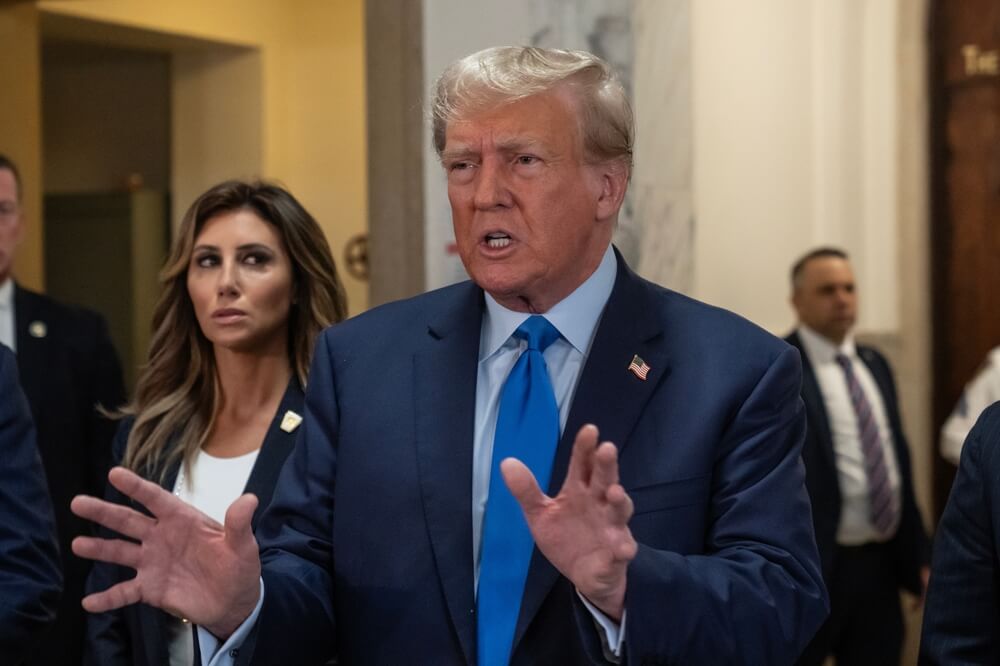 Attempts by Washington to divide spheres of influence with Russia would represent a major strategic setback, a blow to democratic values, and a challenge to the post-1945 international order
Analysts advising Trump to concentrate exclusively on the Western Hemisphere and the Indo-Pacific effectively relegate NATO to secondary importance.
If such a strategy had guided U.S. policy in the 20th century, the United States might not have intervened in Europe during the First or Second World War.
The outcome of those conflicts would have been radically different, and the United States would likely not have become a global power. In such a scenario, “Make America Great Again” would have little meaning.
The predecessors of the 47th U.S. president pursued a different course—one that secured America’s global leadership.
Choosing to withdraw from engagement in key regions would transform the United States from a global actor into a regional one, undermining any claim to renewed greatness.
Attempts by Washington to divide spheres of influence with Russia would represent a major strategic setback, a blow to democratic values, and a challenge to the post-1945 international order.
European leaders—including the prime ministers of Italy and the United Kingdom, the German chancellor, the French president, and the Pope—should deliver a clear warning regarding the dangers of such a shift.
The Vatican consistently emphasises the need for peace, but on just and lawful terms. Ukraine and the international community require precisely this kind of peace.
If Putin and Trump believe that Europe is merely an obstacle, they misjudge the geopolitical reality. The Ukrainian people maintain their faith in justice and reject political manipulation.
Leaders who present themselves as committed Christians—Trump, Vance, and Rubio among them—should recognise this fundamental point.
Oleksandr Levchenko, a former Ukrainian diplomat, is a professor at the State University (Kyiv) and a member of the Academy of Geopolitics and Geostrategy (Kyiv).
