In Hungary’s general election in April, Prime Minister Viktor Orbán’s right-wing populist government was toppled not by some leftist opposition, but rather by a center-right party committed to fighting corruption and restoring democracy.
As Israel heads to the polls on October 27, a similar shift is by far the best outcome one can reasonably hope for, with Prime Minister Benjamin Netanyahu’s extremist government replaced by a decent, law-abiding administration. A radically new foreign policy will remain out of reach.
In a “normal” democracy, a leader like Netanyahu would have been forced to resign or toppled by popular protests long ago.
After all, it was under his watch that Israel endured the horrific terrorist attack of October 7, 2023, and under his orders that Israel has undertaken multiple prolonged wars—marked by war crimes—which exhausted its capacities and alienated the international community.
But Israel is not a normal democracy, and its voters have never been particularly concerned about accountability.
While Netanyahu does not command broad-based support—polls largely rule out the possibility that his bloc will retain a majority—his defeat is far from guaranteed.
This has little to do with policy: while liberals sometimes present programs and proposals, Israeli elections have always been less about policy platforms than about culture and tribal identity.
Netanyahu has played on people’s fears
Netanyahu bears no small share of responsibility for this. For decades, he has won support by pitting two competing concepts of identity—Israeli-ness and Jewishness—against each other.
He has played on people’s fears, recalling episodes of Arab hostility and Palestinian intifadas, while promoting the idea that there is no peaceful route to Israeli security.
Even the West, he says, is fundamentally antisemitic: it will always end up putting the Jews in the dock.
Netanyahu’s focus is never on a secure future; it is on the catastrophe that supposedly lies just around the corner
Netanyahu embodies the collective paranoia of a nation living in denial of its own transgressions, one that views past horrors, from the Holocaust to Hamas terror, as justification for any action that would keep Israelis “safe.”
It is no coincidence that religious nationalism has surged in recent years, including in the upper echelons of the Israel Defense Forces.
But Netanyahu’s focus is never on a secure future; it is on the catastrophe that supposedly lies just around the corner.
The October 7 massacre, and the world’s “hypocritical” opprobrium over Israel’s subsequent war of “self-defense,” seemed, to many, to vindicate Netanyahu’s narrative.
Anti-democratic judicial reforms
Nonetheless, years of war, political corruption, and democratic erosion under Netanyahu’s leadership have alienated some elements of Israel’s electorate.
But such voters have not been absorbed by a cohesive opposition. Instead, they have found an amalgam of right-wing parties, center-right and center-left formations, and only one clearly left-wing party, Yair Golan’s Democrats.
The opposition parties are united by a few objectives. They want to hold Netanyahu accountable for the security failures that made the October 7 attack possible and for the conduct of the war in Gaza.
Polls now point to a tie between the two major blocs
They want to halt his anti-democratic judicial reforms. And they want to force the large ultra-Orthodox community—a key partner in Netanyahu’s governments—to share the burden of military service (from which they are exempt) and to participate in the labor market (instead of living on government subsidies).
This platform is unlikely to attract a clear majority. Instead, polls now point to a tie between the two major blocs.
And whereas Netanyahu is an unscrupulous campaigner, who would stop at nothing to build a coalition that keeps him in power, the opposition parties have pledged not to coalesce with “non-Zionist” forces.
Deal with the Arab parties
This puts the opposition in a quandary, as their only real chance of forming a government would involve a deal with the Arab parties.
One alternative could be to form a minority government with the Arab parties’ tacit support, undo some of Netanyahu’s anti-democratic legislation, and then call a snap election to gain more legitimacy.
President Herzog will use every maneuver possible to get party leaders to form a national unity government. He would fail
There is also a scenario where the two competing blocs employ an odd Israeli political invention, forming a grand coalition with two prime ministers rotating at the head of the government.
As bizarre as this might seem, the fact that Israel is locked in a tie between two social and cultural blocs has conditioned both sides to expect razor-thin electoral margins.
President Yitzhak Herzog, who has always been willing to make any compromise in the name of a hollow notion of “unity,” will use every maneuver possible to get party leaders to form a national unity government. He would fail.
New government would not transform Israel’s foreign policy
Whatever happens next, Israeli politicians will not resuscitate the two-state solution.
In the best-case scenario—possible, but still not likely—a government led by the current opposition could advance interim arrangements in occupied Palestine, and accept a role for a reformed Palestinian Authority in post-Hamas Gaza, a key component of US President Donald Trump’s peace plan.
But this government would not allow a Turkish-Qatari monopoly over Gaza’s reconstruction, as Trump’s peace plan also envisions, or withdraw from the enclave without proof of Hamas’s disarmament.
More broadly, such a government might combine power with diplomacy, especially regarding Palestine, Syria, and Turkey.
This includes abandoning the Netanyahu government’s “forward defense” doctrine, which entails asserting Israeli control over territories beyond its internationally recognized borders where threats may lie.
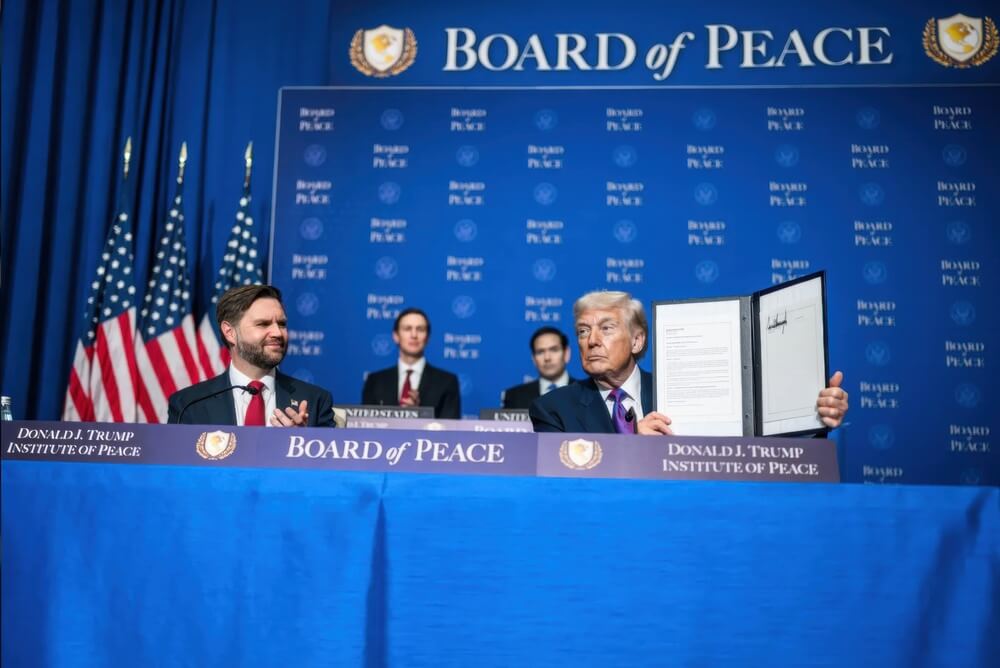 A government led by the current opposition could accept a role for a reformed Palestinian Authority in post-Hamas Gaza, a key component of Donald Trump’s peace plan
Israel would pursue calculated withdrawals, opening the way for a return to a security doctrine based on deterrence, buffers, and official agreements.
A decent Israeli government should also try to salvage the country’s collapsing global standing by combating settler violence in the occupied West Bank and halting lavish funding for illegal settlements.
Outreach toward the United States is particularly important, especially rebuilding ties with the Democratic Party.
Engagement with influential right-wing pundits who have lately embraced antisemitic conspiracy theories, such as Tucker Carlson and Nick Fuentes, might also be appropriate.
An Israeli government that would incorporate the parasitic Orthodox community into the labor market, thereby expanding the productive base underpinning defense policy, should be capable of waiving American military aid, while preserving Israel’s access to advanced American systems, but with Israeli money.
This is not only the right thing to do; it would also support efforts to restore Israel’s standing in American public opinion.
Netanyahu has led Israel into a trap in which ever-increasing strategic commitments are outstripping the productive base that finances them, and the goodwill on which its alliances depend is being destroyed.
While a new government would not transform Israel’s foreign policy, it could begin the arduous process of dragging Israel out of its current morass. That alone would be worthy of celebration.
Shlomo Ben-Ami is a former Israeli foreign minister.
