Mahmoud Abbas, President of the Palestinian Authority, postponed parliamentary elections scheduled for 28 November this year to 11 September 2027, when both the president and parliament are to be elected simultaneously.
The presidential vote had previously been announced for the first half of 2027, so the new decision postpones both elections.
Palestinians last elected a president in 2005 and a parliament in 2006. Today, the administration conducts some affairs of state in the West Bank, under Israeli occupation, and its return to Gaza has yet to be implemented.
Abbas turns 91 on 15 November. The strongest candidate to succeed him, according to polls, is Marwan Barghouti, an official in Abbas’s Fatah movement, who has been in an Israeli prison since 2002.
The delay gives the current leadership almost a year to negotiate over Gaza and over who will succeed Abbas, and elected representatives could take office only after the key terms of their future government have already been agreed.
The delay protects the leadership from a Fatah split
The Palestinian Center for Policy and Survey Research surveyed 1,270 people in the West Bank and Gaza in August.
In a hypothetical presidential race between Barghouti, Abbas and Khalil al-Hayya, the Hamas leader, Barghouti received the support of 54 per cent of likely voters, al-Hayya 26 per cent and Abbas 14 per cent. In total, 79 per cent of respondents called for Abbas’s resignation.
For Abbas, the way parliamentary lists are arranged is even more dangerous. In a scenario in which Barghouti’s supporters run on a separate list, according to a September analysis by the same centre, that list would obtain 33 per cent and the official Fatah list 14 per cent.
The greatest challenge to Abbas’s leadership comes from his own movement, from people who want different leadership for Fatah
The greatest challenge to Abbas’s leadership thus comes from his own movement, from people who want different leadership for Fatah.
Hamas, the Palestinian Islamist movement with armed formations, also supported the delay.
An official, Basem Naim, argued that the elections were premature. Support for Hamas in the August poll was 24 per cent, compared with 35 per cent ten months earlier, and it fell most sharply in the West Bank, from 32 to 18 per cent.
The extra time allows Hamas to try to win back supporters, and allows the Abbas leadership to negotiate with opponents within Fatah and mitigate the threat of a split.
The rules on candidacy also shape the scope for such agreements. An August amendment to the electoral law retained the requirement that candidates accept the Palestine Liberation Organization (PLO) as the sole legitimate representative of the Palestinian people, its programme and the relevant international resolutions.
How the election commission applies that condition will show how far opponents of the current leadership can go in demanding changes to its policy while remaining in the electoral race.
Abbas’s successor may arrive before the election
According to the Palestinian Basic Law, if the presidency becomes vacant, the Speaker of the Palestinian Legislative Council takes over until an election is held. However, there has been no parliament since 2018, when Abbas dissolved it.
Therefore, on 26 October 2025 Abbas stated, in a constitutional declaration, that in such a case he would be replaced by the Vice-President of the PLO Executive Committee, currently Hussein al-Sheikh. Al-Sheikh would serve as interim president for a maximum of 90 days, during which presidential elections would have to be held.
If force majeure prevents this, the deadline can be extended once by the Palestinian Central Council, one of the PLO’s bodies.
The longer the election is delayed, the more likely it becomes that Abbas, who turns 91 in November, will leave office before Palestinians elect a new president.
The man who would then replace him has already been chosen, without a single vote being cast.
As interim president, al-Sheikh would lead negotiations on Gaza and talks with foreign partners before any Palestinian had the chance to vote for or against him.
The fact that the most popular candidate is sitting in an Israeli prison complicates the Palestinian elections
The fact that the most popular candidate is sitting in an Israeli prison complicates the Palestinian elections.
A Tel Aviv court sentenced Marwan Barghouti to five life terms in 2004 for killing five civilians in three attacks.
Barghouti denied taking part in the violence and refused to recognise the jurisdiction of the Israeli court. It is up to Israel whether he would be able to campaign and even hold office if he wins.
For the Israeli government, and probably for some Western partners, he could hardly be an acceptable interlocutor.
Palestinians would thus be able to elect a man with whom foreign governments do not want to talk, while those foreign governments are already talking to people whom Palestinians did not elect.
Gaza is still waiting for the announced administration
The head of the Palestinian Central Elections Commission in Gaza, Jamil al-Khalidi, said that Israel does not allow ballot boxes or the indelible ink used to mark a voter’s finger to prevent double voting, so the commission is trying to find substitute materials.
The PLO leadership cited Israel’s refusal to allow election officials and observers to enter Gaza, the presence of the Israeli army and the fact that international forces and Palestinian police, who were supposed to take over security, have not yet arrived as reasons for postponing the elections.
The Israeli Foreign Minister, Gideon Sa'ar, rejected the accusations, calling Abbas a “corrupt dictator” and saying he had once again deceived the international community.
However, on 27 September, the Central Elections Commission extended the deadline for registering electoral lists until 13 October and confirmed that voting would take place on 28 November, even though the same obstacles cited two weeks later as the reason for the delay already existed.
Abbas also postponed elections in April 2021, three weeks before the vote, explaining that Israel did not allow Palestinians in East Jerusalem to vote.
He did not set a new date, so there were no elections for the next five years. In an August poll, 54 per cent of Palestinians said the election should be held even if Israel prevented voting in East Jerusalem.
The local elections held on 25 April this year showed how different conditions are in the West Bank and Gaza
The local elections held on 25 April this year showed how different conditions are in the West Bank and Gaza.
In the West Bank, 56 per cent of voters turned out, while in Deir al-Balah, a city in central Gaza, only 23 per cent did.
This indicates that elections can be held in devastated Gaza, but turnout is far lower.
On 6 July, Hamas announced that it was dissolving its government in Gaza and was ready to hand over administration to a Palestinian committee of experts led by Ali Shatt, a former deputy minister in the Palestinian Authority.
The committee, however, is still waiting in Cairo because Israel will not allow it to enter Gaza.
Civil servants have remained in post, Hamas still rules the parts of Gaza not held by the Israeli army, and international forces have not yet arrived. For months, Hamas has been announcing a surrender of power that no one can assume.
European pressure depends on the survival of institutions
On 8 October, France called for parliamentary elections to be held in November and for the presidential election to take place in the first half of 2027.
On the same day, Hussein al-Sheikh wrote to the French Foreign Minister, Jean-Noël Barrot, announcing that the elections were being postponed because the political, security and economic conditions for holding them had not been met.
Paris was therefore insisting on deadlines that the Palestinians were already prepared to abandon.
Kaja Kallas, the EU’s foreign policy chief, said on 24 September that elections must be held, and France welcomed the announcement that the EU would send observers.
On 8 October, the French foreign ministry confirmed that observers had not yet arrived on the ground, so no one can independently verify how real the obstacles cited by the Palestinian leadership are, or whether they could be removed.
If Europe were to withhold money to force Abbas to hold elections, the first to suffer would be the officials and services on which ordinary Palestinians depend
Europe is also constrained by money in its relations with Abbas. Under agreements from the 1990s, Israel collects customs duties and taxes on goods entering the Palestinian territories and transfers this money to the Palestinian Authority but, according to a report by the UN Committee on the Exercise of the Inalienable Rights of the Palestinian People, it has retained all of it since May 2025.
The administration therefore pays salaries and funds schools and hospitals largely thanks to foreign donors, of whom Europe is the largest.
If Europe were to withhold money to force Abbas to hold elections, the first to suffer would be the officials and services on which ordinary Palestinians depend, and with them the institutions that are supposed to organise the elections.
Israel is electing a new parliament on 27 October, and it is up to the Israeli government whether Palestinians in East Jerusalem will be able to vote, whether election materials will reach Gaza and whether observers will be able to work.
Had the Palestinian elections been held in November, they would have fallen in the weeks when a new government was still being formed in Israel.
The postponement therefore leaves time for an agreement with that government, but also creates the possibility that the Palestinian leadership will again use its opposition as a reason to postpone the elections.
Gaza negotiations overtake Palestinian elections
On 17 November 2025, the UN Security Council adopted Resolution 2803, which temporarily entrusted the management of Gaza to the Board of Peace, an international body chaired by Donald Trump, while day-to-day affairs are handled by a Palestinian committee of experts.
The Palestinian Authority can return to Gaza only once it has implemented the required reforms and demonstrated that it can govern safely and effectively.
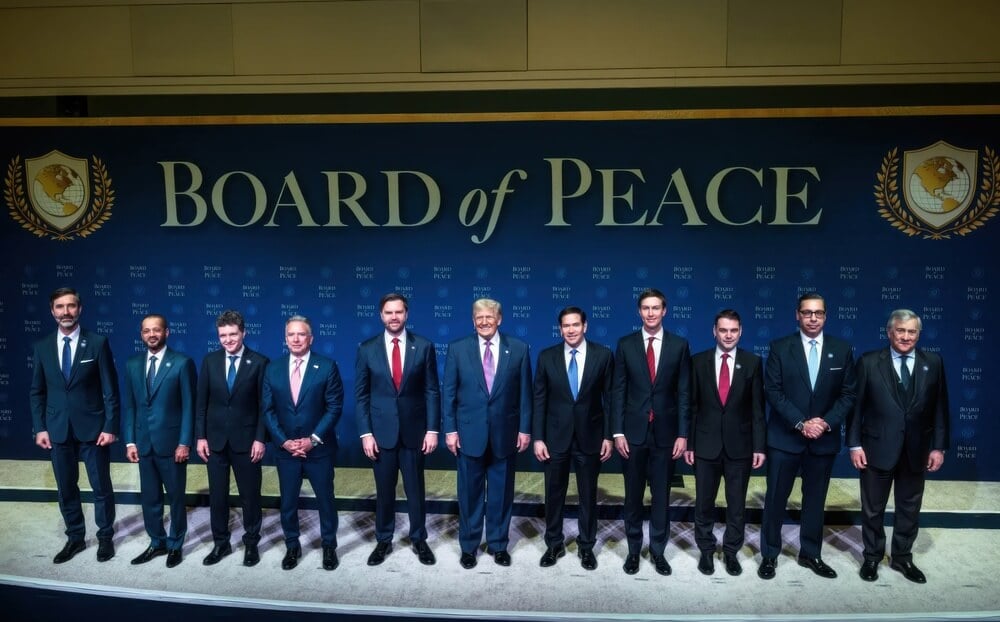 Elections would give Abbas’s leadership or his successors a new mandate, but not the right to take over Gaza, because that will be decided by others
Elections would give Abbas’s leadership or his successors a new mandate, but not the right to take over Gaza, because that will be decided by others.
The resolution authorises the Board of Peace and international forces to operate until 31 December 2027, less than four months after the new election date.
The Security Council can extend that deadline, and when it expires, Gaza will not automatically be handed over to the Palestinians.
The leadership elected in September would therefore have only a few months to take office and try to influence decisions about who will govern Gaza after 2027 and under what conditions.
It is easier for foreign patrons to negotiate with Abbas and those around him, whom they know and who have already accepted their terms.
The new majority in the Palestinian parliament could, however, demand different powers for the Palestinian police, a different distribution of reconstruction funds and a different relationship with the international community.
If all this is agreed before the elections, voters will have nothing to decide, and the reconstruction of Gaza will have less support from the Palestinians who are supposed to live there.
This time, Abbas has tied the elections to conditions that the Palestinian leadership cannot fulfil on its own, namely the arrival of international forces, the deployment of Palestinian police in Gaza and Israeli consent for voters and election officials to work unhindered.
It is therefore more likely that the elections will be postponed again than that the whole of Gaza will vote in September 2027.
Until then, the administration, finances and security of Gaza will be decided by Abbas, the people he has appointed as his successors and foreign patrons, so when the elections are held, voters will choose only those who will implement decisions that have already been made.
