On the geopolitical map of Eurasia, Kazakhstan occupies a special place. Its population is 20.5 million people, while its territory covers 2,725,000 square kilometres, which makes it the 9th largest country in the world.
Kazakhstan is extremely rich in mineral resources, which makes its territory attractive not only for foreign investment but also for potential territorial claims.
Of course, this refers to Russia’s desire to subjugate this country. Moscow believes it could relatively easily seize this state, given the relatively small population spread over a vast territory, as well as the compact presence of the Russian population in the northern and eastern regions of the country.
Meanwhile, Astana has effectively accused Moscow of money laundering. President Kassym-Jomart Tokayev accused about $14 billion of being laundered through one of Kazakhstan’s banks, calling such actions outrageous.
The statement was made during a meeting dedicated to combating financial crimes.
At it, the head of Kazakhstan pointedly hinted at a “neighbouring country” and emphasised that many such schemes still exist.
Astana’s accusations against Moscow came amid Kazakhstan tightening control over Russian citizens, who were massively opening new payment cards after their own cards were hit by Western sanctions.
In 2024, Kazakhstan identified 6,200 cases of money laundering, totalling $47 million, through cards belonging to non-residents.
Since 2024, Kazakhstan has banned remote issuance of identification numbers. Mandatory biometrics, monthly identification, limits, and special monitoring of transfers over $1,000 have been introduced.
Illegal crypto exchanges
President Tokayev also noted that Kazakhstan is among the leaders in illegal capital outflows using cryptocurrencies.
Therefore, Astana is fighting such crimes. More than 130 illegal crypto exchanges with a total turnover of over $124 million have already been shut down in the country.
Kazakhstan is showing a cautious trend towards reducing its political and financial-economic dependence on Russia
Earlier, Kazakhstan’s Financial Monitoring Agency reported the shutdown of the largest crypto service in the Commonwealth of Independent States (CIS), RAKS exchange.
The platform, with a turnover of $224 million, cooperated with 20 major darknet marketplaces whose combined audience exceeded 5 million users.
Overall, Kazakhstan is showing a cautious trend towards reducing its political and financial-economic dependence on Russia while maintaining formal alliance commitments.
Capital investments have dropped sharply
At the same time, the inflow of capital from Russia to Kazakhstan has declined. In the first 9 months of 2025, it sharply decreased to just $180 million, compared to $1.2 billion a year earlier, signalling the end of the 2023–2024 investment boom.
Previously, in 2013–2022, the average inflow was about $167 million per year. But in 2023 it exceeded $1 billion, and in 2024 it reached $1.7 billion.
Now capital investments and reinvested profits have dropped sharply, with only debt instruments increasing.
The decline in Russian investments in Kazakhstan is linked to the adaptation of logistics to sanctions.
Kazakhstan’s leadership is trying to comply with the sanctions regime imposed by Western states against Russia
Russian businesses no longer urgently need to build infrastructure for parallel imports through Kazakhstan.
Some flows have been redirected to other countries with softer tax regimes. Additionally, falling oil prices reduce the revenues of extractive companies.
A high key interest rate of the Russian central bank also limits lending and commercial activity.
Another reason is that Kazakhstan’s leadership is trying to comply with the sanctions regime imposed by Western states against Russia.
Moreover, Kazakhstan is gradually reducing its financial and economic dependence on Russia through trade diversification and financial caution, as well as by building alternative transport routes and limiting the use of Russian financial instruments.
Tariffs and fees on Russian products
In addition, Astana has taken steps that could limit its participation in the Eurasian Economic Union (EAEU).
Kazakhstan has restricted the transit of Russian goods through its territory and intends to introduce high tariffs and fees on Russian products.
This concerns automobiles and agricultural machinery, which could complicate their sales in Central Asia.
These steps will increase competition in the Kazakh and regional markets by favouring goods from the EU, US, and South Korea rather than Russia.
Such actions by Kazakhstan may be part of a broader strategy aimed at weakening the EAEU and economic cooperation between Kazakhstan and Russia.
While maintaining economic dependence on Russia, Kazakhstan is forced to balance between various global and regional centres and pursue a cautious multi-vector policy.
Losing Baikonur could knock Russia out of a full launch schedule for 5–10 years
Furthermore, Astana is considering early termination of the lease agreement with Russia for the Baikonur Cosmodrome due to delays in Russian payments. This could lead to serious consequences for Russia’s space programme.
The lease agreement is valid until 2050, but Russia delayed the lease payment for 2025, which became a formal reason to review the agreement.
Losing Baikonur could knock Russia out of a full launch schedule for 5–10 years.
The situation could negatively affect scientific programmes, commercial contracts, military tasks, and the deployment of the “Rassvet” satellite constellation.
Baikonur represents a well-established system with stable logistics, qualified personnel, and infrastructure developed over decades.
Russia’s Vostochny Cosmodrome is not yet able to fully replace Baikonur, either in launch volume or in the range of missions.
The Far Eastern cosmodrome still lags in the number of launches, rocket types, and operational maturity. A full transition would take at least 5–10 years.
A “special military operation” in Kazakhstan
At the same time, some public figures in Kazakhstan have called for preparing for a guerrilla war with Russia.
Independent military expert Daulet Zhumabekov urged Kazakhstan’s residents to prepare for partisan warfare, arguing that no post-Soviet country can withstand an open clash with the Russian army.
His position is influenced by statements made on Russian television channels, which speak about the need to conduct a “special military operation” not only in Ukraine but also in other countries—former Soviet republics.
The most frequently mentioned are the Baltic states (Estonia, Lithuania, and Latvia), Moldova, Armenia, and Kazakhstan.
After Russia’s full-scale invasion of Ukraine, the security situation in Central Asia became more tense
Zhumabekov rejected illusions about prolonged resistance by the Kazakh army and society, as in Ukraine.
He believes Kazakhstan could hold out for at most one and a half years. Some Kazakh experts and parts of society also express fears that the war in Ukraine demonstrated the possibility of aggression by the Kremlin in the region, causing certain fears among the population.
After Russia’s full-scale invasion of Ukraine, the security situation in Central Asia became more tense.
Kazakh analysts also discuss the theoretical possibility of Russian intervention but emphasise that Russia is unlikely to be able to conduct a full-scale invasion of Kazakhstan today due to the lack of large resources already engaged in Ukraine.
Astana’s official position does not support the thesis of a direct Russian invasion.
Cooperation with the US, China and Turkey
The government maintains a neutral stance on Moscow’s war against Ukraine and does not openly declare a real threat of seizure of its territory, although it speaks about state independence and its own foreign policy.
Back in February 2014, when Russian troops invaded Ukraine’s Crimea, then-President Nursultan Nazarbayev expressed serious concern about Russia’s aggressive actions.
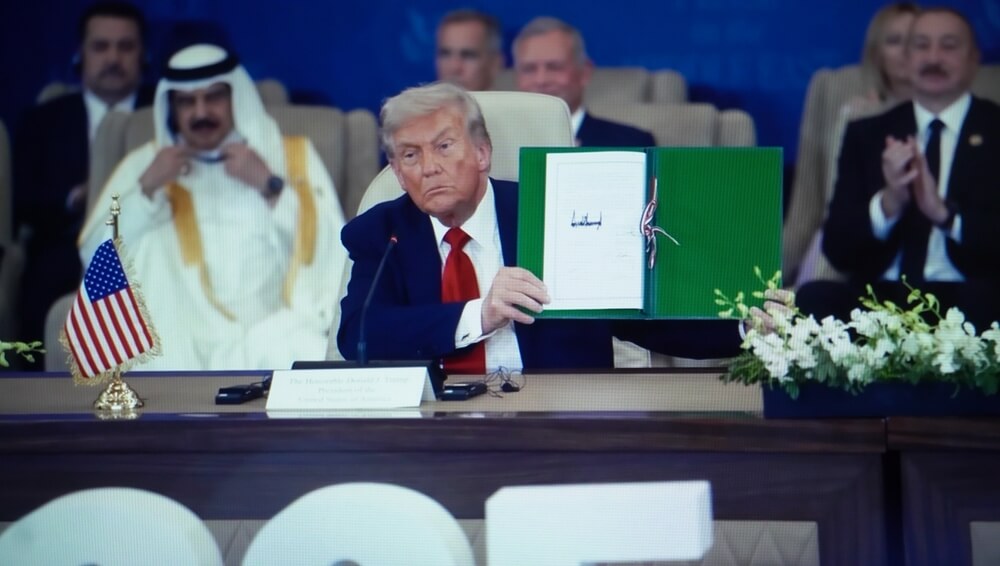 Kazakhstan is actively leveraging its ties with the US, with significant American investments in its economy and participation in the Board of Peace formed by Trump
At that time, Russian President Vladimir Putin immediately spoke publicly in Russian media, stating that Kazakhstan had such a large territory without historically deserving it.
After that, official Astana no longer dared to openly criticise the Kremlin regarding the war in Ukraine.
However, the absence of public, official criticism of Moscow by the Kazakh government does not mean that Astana is not preparing for various scenarios, including the worst-case ones.
Kazakhstan is actively leveraging its ties with the United States, with significant American investments in its economy and participation in the Board of Peace formed by Trump.
A separate track is strategic cooperation with China. Beijing has already stated its readiness to defend the interests of its strategic partners.
Finally, there is cooperation with Turkey within the framework of Turkic cooperation.
Ankara is ready to defend the interests of Turkic-speaking peoples on the international stage.
Therefore, Moscow should think carefully about whether it is worth damaging relations with the United States, China, and Turkey over Kazakhstan.
Oleksandr Levchenko, a former Ukrainian diplomat, is a professor at the State University (Kyiv) and a member of the Academy of Geopolitics and Geostrategy (Kyiv).
