With Brexit back on the British political agenda, I was almost tempted to see if there’s life yet in the now-defunct Centre for Brexit Studies at Birmingham City University, where I once was a visiting fellow.
The centre was shuttered at the start of 2025, in those halcyon days when Brexit was never more to be mentioned – not in politics, and apparently not in academia either.
How times have changed yet again, and what a difference a mere 18 months and a change of Labour prime ministers can make.
I admit it: when he first took over, I read Andy Burnham wrong and called him a ‘placeholder prime minister’ as far as the European Union was concerned.
Given his statements at the time, it was very hard to see him push for much progress on the relationship with the EU.
The temptation now would be to dig in and explain how, despite his recent protestations to the contrary, I still think that’s the case. Which is exactly what I plan to do.
I’m not being facetious. The fundamental mathematics of the UK-EU relationship have not changed, nor is it likely that they will in the foreseeable future.
Yet, as I indicated at the start, he has made one huge difference in taking Brexit out of the freezer and flash-thawing its gnarly corpse in the realm of heated public discourse.
Unfortunately, this could end up amounting to merely a clever domestic political manoeuvre rather than a serious foreign and economic policy initiative.
Granted, even a few months ago, the idea of a Labour politician rekindling the Brexit debate would have looked ludicrous, a recipe for electoral catastrophe.
And it probably would have been for Keir Starmer, although he didn’t need Brexit to end his stint as PM.
Burnham is a different sort of politician and leader, more in tune with the times than Starmer turned out to be.
And more able to voice ideas in ways that appeal to the electorate, while at the same time not having them drag him down, for now.
Well into Bregret territory
Even under Starmer, polls were already moving well into Bregret territory, with more voters rueing Brexit than favouring it. It was Starmer’s government, ever eager to find a reason to depress voters, that started tying Brexit firmly to economic damage to the UK.
In that sense, as in many others, Starmer laid the groundwork for Burnham’s current shift in the public debate on Brexit.
While the polls show significant majorities regretting Brexit, there’s no appetite for the consequences of rejoining
Burnham, much more than his predecessor, appears able to tread the fine line between keeping two ideas simultaneously in the public eye: (1) Brexit was a mistake and we should reverse it, and (2) there’s no way that’s going to happen in practice any time soon, if ever.
This seems to be exactly where the British electorate has landed, some ten years after the Leave referendum.
While the polls, as mentioned, show significant majorities regretting Brexit and even in favour of ‘closer ties’ with the EU, there’s no appetite for the consequences of rejoining, nor even for those of tightening the relationship by much.
This is not just because of the almost inevitable loss of the pre-Brexit British EU ‘carve-outs’ on joining the Schengen free travel zone and the euro, as well as the budget rebate.
The reality of borders and trade
More fundamentally, attitudes on migration have, in fact, hardened rather than softened in recent years.
And despite all the other issues that Brexiteers trot out as reasons not to be in the EU, migration – including control over borders that was wrapped in the ‘sovereignty’ argument – was the biggest decisive factor at the time, and it has only gained in importance in the British electorate’s mind.
That this is a fraught issue can be seen from the lack of progress on the very modest Youth Mobility Scheme between the UK and the EU.
Here, similar polling dynamics apply as to the whole Brexit debate. Even larger majorities are ostensibly in favour of such a scheme. But when looking at what the British electorate then expects vs what the EU wants to see, there are big gaps on numbers, duration, and the EU demand for home fee access to UK universities for its students.
Burnham and his ministers are trying to reframe the migration and border control issues as arguments in favour of closer ties with the EU, rather than against.
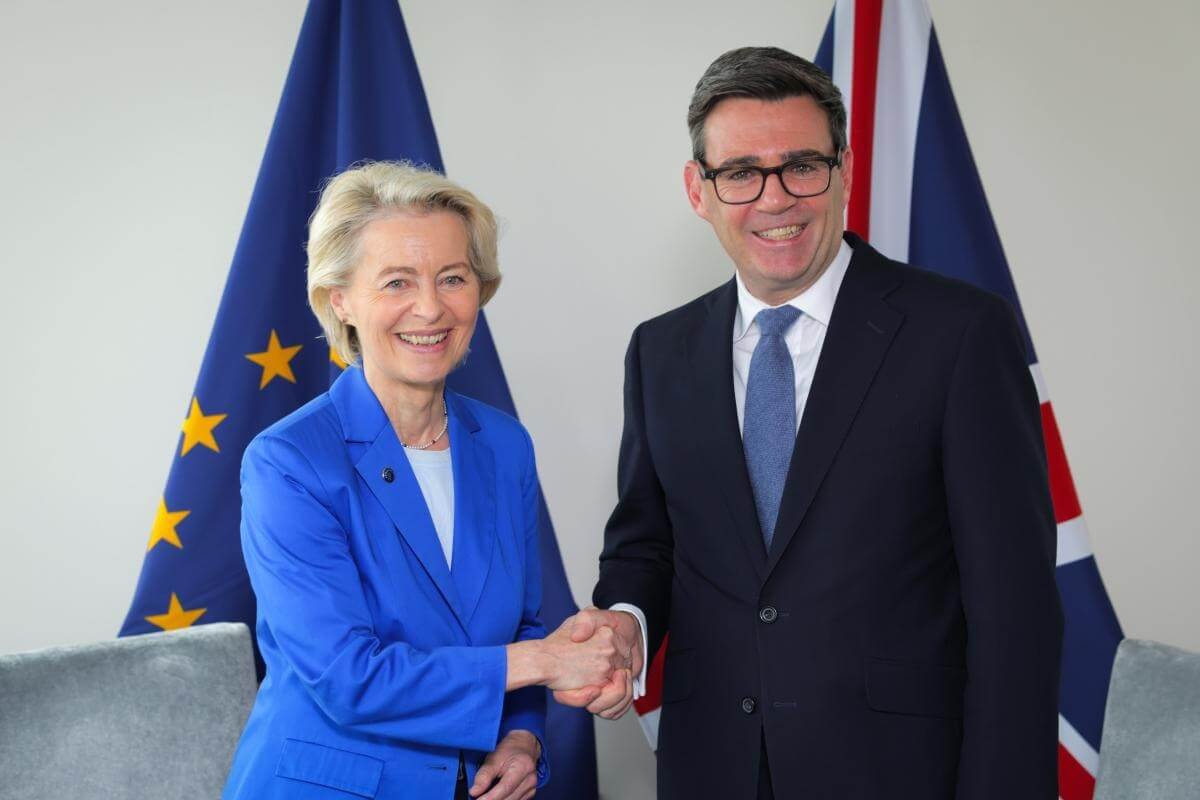 Closer alignment on trade would involve a series of mostly black-and-white choices, mostly on the part of the UK
Small boat crossings and irregular arrivals have grown dramatically since Brexit, as has legal immigration, from much farther afield than the EU.
Yet, the failure and recent lapsing of the ‘one-in, one-out’ agreement with France complicates this message.
On the one hand it could strengthen Burnham’s message that a comprehensive deal with Europe is needed, because the piecemeal approach does not work.
On the other hand, it shows the difficulties of agreeing on and implementing any kind of migration control with Europe – difficulties that even exist between EU countries.
Despite the huge resonance of the issue, migration might not be the most difficult hurdle to clear, certainly not when only considering closer ties rather than a full return to the EU.
On the trade and economic side, things are even more complicated, from a very real-world, administrative, logistical and financial perspective.
While compromises might be found on a range of migration, border and mobility issues, closer alignment on trade would involve a series of mostly black-and-white choices, mostly on the part of the UK.
Just like with the mobility scheme, much-ballyhooed talks on a comprehensive Sanitary and Phytosanitary (SPS) agreement to smooth food, agriculture and fish trade between the two sides are only progressing glacially.
On the economic and trade side, the EU is offering several such ‘dynamic alignment’ packages that would seem to fly in the face of its reluctance to allow cherry-picking.
To make sure that the UK cannot be seen as taking advantage of its outside-the-bloc status, these packages will be tightly circumscribed in ways that leave Burnham, or any other government, open to charges of making the UK become a ‘rule taker’ or even a vassal state.
Even if such agreements can in the end be struck, and almost everybody agrees they are necessary, there still remains the question of the way in which the rest of the UK economy can be reintegrated with the EU.
Britain, as a G7 economy, is a very different proposition from, for example, Switzerland.
The ‘both out and in’ balancing act
Thus, Burnham is unlikely to be able to sustain his ‘both out and in’ balancing act for long.
A longer-term failure to change the dynamic with the EU, i.e. to forge closer ties, could cost Burnham politically
A longer-term failure to change the dynamic with the EU, i.e. to forge closer ties, could cost him politically. Making the necessary concessions could equally backfire.
The only way in which these two can be reconciled is if Burnham more firmly starts articulating full UK membership of the EU as a final goal.
But taking that as a Labour manifesto pledge into the next, possibly early, election is still an unlikely prospect, despite the dizzying pace of change.
